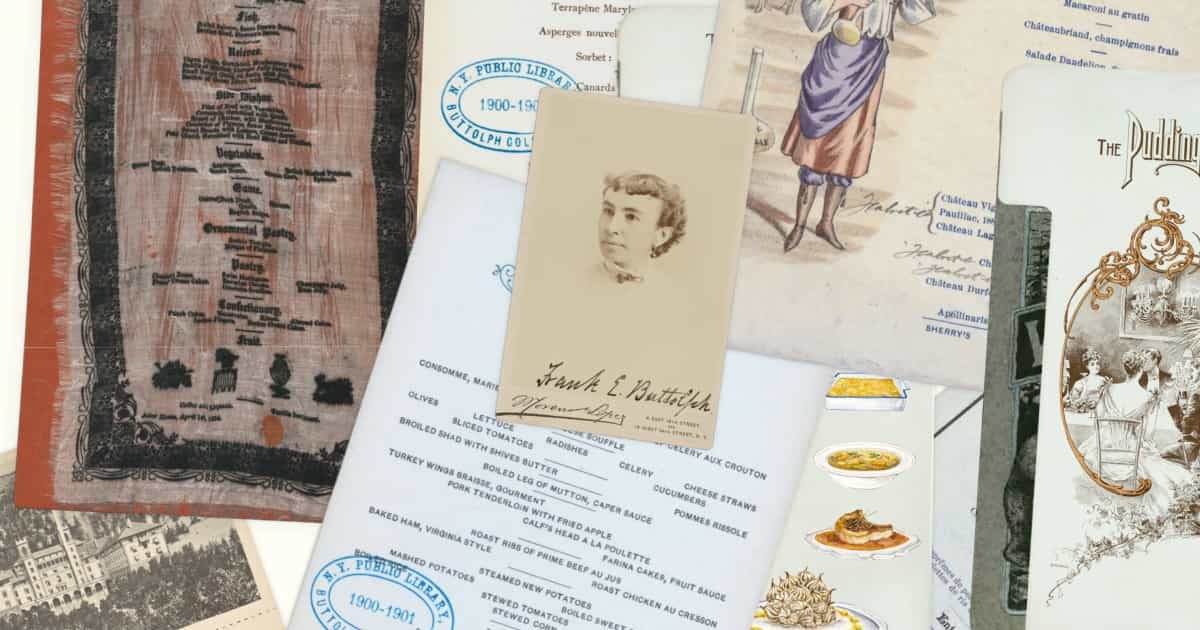
A History of Menus: 5,000 Menus from the Buttolph Collection
A new essay from The Pudding uses 5,000 menus from the New York Public Library's Buttolph Collection to trace how American restaurant dining changed between 1880 and 1920, from French banquets to the middle-class restaurant.
Five thousand menus, one collection
The data-visualisation publication The Pudding has published an essay, "A History of Menus is a Menu of History", built on the Buttolph Collection at the New York Public Library. The archive was assembled by Frank E. Buttolph, who spent decades collecting restaurant menus as a record of the culinary and social history of her time, and it documents a period of fundamental transformation in American life.
The essay's starting point is simple: a menu describes what a restaurant serves, but it also describes who is being served. Menus record class, gender, politics and technology, and the collection's thousands of menus trace the birth of the restaurant as we know it.
Ten dishes, 1880–1920
To tell that story, the author walks readers through a historic meal in ten dishes. It begins with oysters — "huitres" in French — and soup: the Consommé Châtelaine, a chicken soup, or a Bisque d'ecrevisses made with cognac and cream. Soup was the first true course of the decadent late-19th-century meals, followed by eight or more French classics or dishes given a European-sounding name.
Celery in a crystal celery vase comes next. Celery was one of the "relishes" with a key role on the aristocratic table, and it is the fourth most common item in the Buttolph menus after coffee, tea and olives. Later courses include a vol-au-vent of sweetbread à la Toulouse paired with champagne and, as the century turns, pork chops sauté with sauce Robert — French technique, but American culture coming through.
Restaurant dining in America began in the 1830s, and by the late 1800s elite restaurants catered to a new world elite that emulated French aristocracy. Writer George G. Foster described this kind of meal as "not merely a quantity of food deposited in the stomach, but ... in every sense and to all the senses a great work of art."
From French feasts to the middle-class restaurant
Between 1880 and 1920, the number of professional occupations doubled, as did the share of Americans working in management, while employment in the dining industry grew 400%. New formats followed: table d'hôte menus with fixed prices, beefsteak and chophouses, lunchrooms, and coffee and cake saloons, where middle-class women could eat without a male companion.
Immigration brought more: Italian and German restaurants were early challengers to French dominance, and Chinese, Russian and Syrian restaurateurs served local immigrant populations. Café Savarin, which opened in 1888, had by 1915 a menu drawing on French, German, Italian, Hungarian, British, Indian, Japanese and Caribbean cuisines. Delmonico's still serves baked Alaska, invented there in 1867. The Pudding has curated 5,000 of the menus for readers to browse.
SiTech — AI-powered web development
We build fast, modern websites and bring AI into real business workflows. Have a project or a question? We'd love to help.