How AI Helps Scientists Design the Next Generation of Medicines
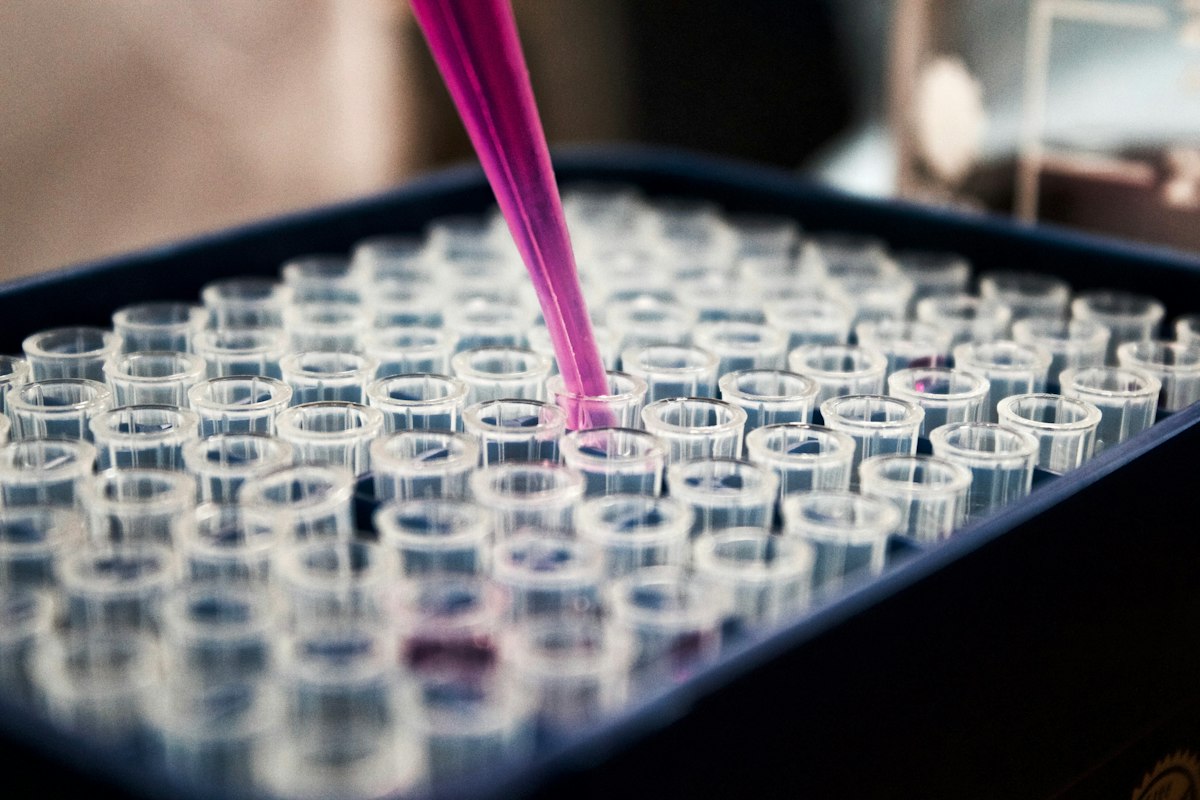
MIT Technology Review's in-depth analysis reveals how AI is transforming drug discovery — from protein structure prediction to clinical trials.
AI in Drug Discovery: How Artificial Intelligence Is Reshaping the Future of Medicine
For biologic medicines — therapies made from engineered proteins rather than synthetic chemistry — the complexity is even greater. Scientists must explore vast molecular landscapes, searching for the rare few candidates that bind to the right target, remain stable in the human body, and can be manufactured at scale.
Today, artificial intelligence is fundamentally rewriting that equation. As MIT Technology Review's in-depth analysis reveals, machine learning models have rapidly become a core part of pharmaceutical R&D, compressing timelines, reducing failure rates, and opening new therapeutic possibilities. McKinsey estimates that generative AI could cut drug discovery timelines by as much as 50%.
The AlphaFold Breakthrough: From Structure Prediction to Protein Design
Perhaps no single achievement better exemplifies AI's impact on biology than DeepMind's AlphaFold. For 50 years, predicting a protein's three-dimensional structure from its amino acid sequence was considered one of biology's grand challenges. When AlphaFold solved it in 2021, it didn't just accelerate research — it laid the foundation upon which a new generation of AI-driven drug design tools is being built.
Following AlphaFold, a wave of generative models has emerged — RFdiffusion, ProteinMPNN, and other diffusion-based architectures that can design entirely novel protein structures from scratch. Instead of merely analyzing existing proteins, scientists can now computationally generate new proteins optimized for specific therapeutic functions. This represents a paradigm shift: from understanding nature's designs to creating our own. Researchers have already used these models to design proteins that bind to specific targets with high affinity, create stable scaffolds for drug delivery, and engineer enzymes for industrial applications. The gap between computational prediction and experimental validation continues to narrow rapidly.
The Build-Measure-Learn Loop: Integrating AI into Laboratory Workflows
At the heart of modern AI-driven drug discovery is the build-measure-learn cycle. AstraZeneca's approach, detailed in the MIT Technology Review report, exemplifies this philosophy. AI generates or prioritizes candidate molecules computationally, predicting which designs are most likely to succeed. Scientists then focus laboratory resources exclusively on the top-ranked candidates, creating a tighter feedback loop with fewer dead ends.
"Everything we do, whether it's design, make, test, or analyze, is now computationally enhanced," says Puja Sapra, senior vice president and head of R&D biologics engineering and oncology targeted discovery at AstraZeneca. "The cycle times are getting shorter while productivity and innovation increase."
This approach is particularly powerful because the number of possible molecular combinations far exceeds what any human team can systematically explore. AI narrows the search space intelligently, learning from each experiment — successful or failed — to refine its predictions for the next round. The result is faster iteration, reduced costs, and the ability to pursue previously untreatable disease targets.
Designing Multi-Specific Biologics: Hitting Multiple Targets at Once
Traditional biologic drugs typically target a single disease pathway. The next generation of medicines, however, can engage multiple targets simultaneously or deliver therapeutic payloads with cellular precision. Achieving this requires optimizing across dozens of variables at once — potency, selectivity, stability, manufacturability, safety — a combinatorial challenge that exceeds human cognitive capacity.
AI models excel at this type of multi-parameter optimization, identifying which targets to prioritize based on underlying biology while simultaneously balancing potency, stability, manufacturability, and safety. "Drugging the undruggable is becoming a reality," says Sapra. "These technologies will eventually enable us to develop medicines against targets once thought impossible to reach. The potential for benefit to patients is remarkable."
For conditions like cancer, where tumors evolve resistance to single-target therapies, multi-specific biologics designed by AI could represent a quantum leap in treatment effectiveness.
The Data Moat: Why High-Quality Biological Data Matters
Every AI model is only as good as its training data. In drug discovery, that means ample quantities of high-quality, diverse biological data. AstraZeneca's proprietary datasets are multimodal, encompassing molecular structures, binding measurements, safety profiles, and manufacturing outcomes across multiple disease areas and drug types.
"Data is our differentiator," explains Sapra. "We've built an intentionally diverse portfolio across multiple disease areas and drug types. All of that data empowers us to fine-tune frontier AI models with richer, more representative training sets."
Importantly, every experiment generates a signal — whether it succeeds or fails. A failed binding assay tells the model something valuable about what doesn't work, shrinking the search space for future candidates. This virtuous cycle of data generation, model training, and experimental validation is what makes AI-driven drug discovery self-improving.
The Autonomous Lab: AI + Robotics as a Closed-Loop Discovery System
AstraZeneca is building what it calls a "lab of the future" in Kendall Square, Cambridge, Massachusetts — a facility where AI and robotic automation form a continuous, closed-loop discovery system. "Where a self-driving car uses sensors and models to navigate its environment, this system uses AI to make predictions, robotic systems to execute experiments, and instruments to generate data," explains Sapra. That data feeds directly back into the models, accelerating each subsequent cycle. Throughout this process, scientists remain central — providing oversight, judgment, and strategic direction.
Eventually, automated high-throughput systems will evaluate thousands of molecular interactions on a weekly basis. "This will generate AI-ready data at a scale that traditional workflows cannot match," Sapra says. "Robotic sample handling, automated quality checks, and integrated data pipelines also have the potential to accelerate early drug development timelines significantly."
This vision extends beyond individual laboratories. The integration of AI, robotics, and high-throughput experimentation points toward a future where drug discovery is accelerated by human ingenuity working in partnership with autonomous systems.
De Novo Design: AI-Generated Medicines from Scratch
The ultimate frontier is what scientists call de novo design — using AI to generate entirely new protein sequences that precisely match desired therapeutic properties, including structure, safety, immunogenicity, and manufacturability.
"The field is making great progress toward a completely AI-generated biologic, designed from scratch all the way to a clinical candidate," says Sapra. "I believe it will come. It's a matter of time." Key elements needed include richer training data, robust evaluation benchmarks, and teams at the intersection of ML and biology. Of all prerequisites, safety prediction may be the most consequential. AstraZeneca is tackling this with virtual clinical trials — advanced cell systems and micro-scale organ models paired with AI that learns from their outputs.
A significant shift underway is the move toward agentic AI systems that can simultaneously generate molecule candidates and predict both efficacy and safety. These autonomous workflows connect disease-level insights directly to molecule design, bridging previously separate data silos. As Sapra summarizes, "The complexity of the biology goes hand-in-hand with the design of the molecule."
The Human Element: Scientists and AI as Collaborative Partners
Despite rapid advances in automation, human expertise remains irreplaceable. "With more autonomous systems, human oversight remains at the heart of this approach," says Sapra. Scientists work hand-in-hand with AI, providing the judgment and strategic direction that models cannot replicate. AstraZeneca's teams develop systems that act as "thinking partners" rather than black boxes, tackling challenges in data fusion, optimization, and interpretability. As Sapra puts it: "The biologic medicines we can develop today, and those we'll design tomorrow, depend on combining world-class AI and engineering talent with deep scientific expertise."
The intersection of AI and biology represents perhaps the most consequential scientific frontier of the 21st century. From AlphaFold's breakthrough to autonomous laboratories to fully AI-generated medicines, the tools and techniques being developed today will shape the future of human health for generations to come.