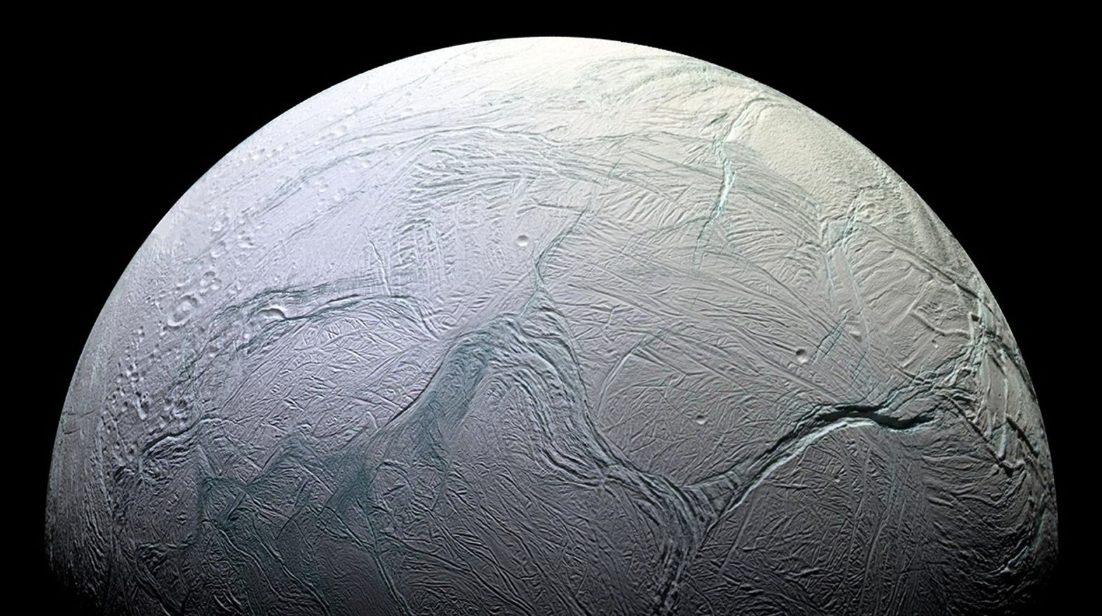
Alien Life Could Survive on Saturn's Tiny Moon Enceladus, Studies Suggest
Two new studies strengthen the case that microbes could survive in Enceladus's alkaline subsurface ocean, and that ice grains fired into space by its geysers may arrive pre-sorted for biosignature detection. A dedicated mission has yet to be approved.
Two new studies have strengthened the case that Enceladus, the tiny moon of Saturn, could host alien life, and that confirming it may be easier than scientists expected. The papers, covered in 404 Media's science roundup The Abstract, examine whether Earth-like microbes could survive in the moon's hidden ocean and how a future probe could detect them.
An ocean world in miniature
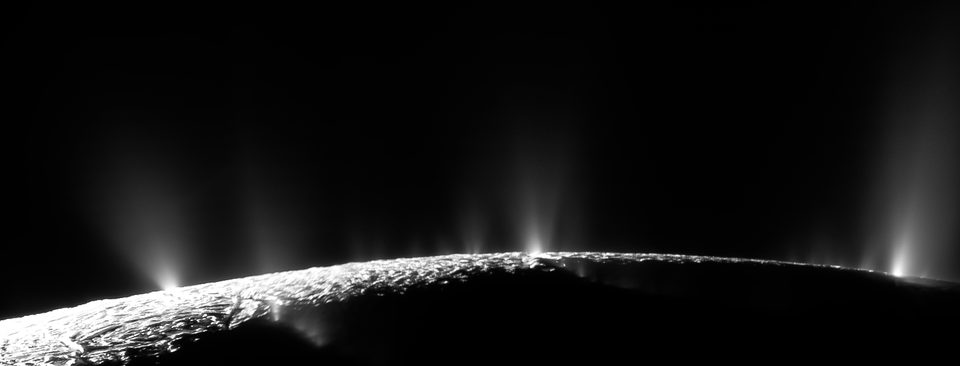
Enceladus measures only about 300 miles (roughly 480 kilometers) across, yet beneath its icy shell it holds a subsurface ocean and hydrothermal vents on its seafloor, which are hotspots of life on Earth. The moon also shoots that ocean's water through geysers on its surface, so passing probes can sample its seawater directly. NASA's Cassini spacecraft, which orbited Saturn until 2017, flew through this space sprinkler several times, but could not detect signs of life, known as biosignatures.
A microbe in a simulated "soda ocean"
In the first study, researchers built a laboratory version of Enceladus's "soda ocean," the alkaline, carbonate-rich water believed to lie beneath its ice. Into this stand-in they placed Methanothermococcus okinawensis, a heat-loving microbe that lives around deep-sea hydrothermal vents on Earth. The organism fared even better in the simulated habitat than expected, a result the team led by Vanessa Helmbrecht of Ludwig-Maximilians-Universität München says potentially widens "the habitability window of Enceladus' subsurface soda ocean."
Ice grains may arrive pre-sorted
The second study revisited Cassini's observations of ice grains sprayed into space by the geysers. The researchers found that ocean droplets freeze slowly in the vacuum, causing organic molecules to separate into concentrations of similar compounds. If those droplets carry biosignatures, the evidence may be conveniently pre-sorted for any instrument that captures it. "In the plume grains, each separated compound can then be found at strongly elevated concentrations in a relatively small fraction of ice grains," said the team co-led by Frank Postberg and Zenghui Zou of Freie Universität Berlin. They called the finding good news for future plume-sampling missions that can analyze ice grains individually.
A mission still on the drawing board
Mission concepts for a return to Enceladus have been floated for years but never approved, among them NASA's Enceladus Life Finder and the European Space Agency's L4 proposal. The moon is low-hanging fruit for astrobiology: the ocean, the chemistry and more evidence of habitability are there. What is missing is a dedicated spacecraft.
SiTech — AI-powered web development
We build fast, modern websites and bring AI into real business workflows. Have a project or a question? We'd love to help.