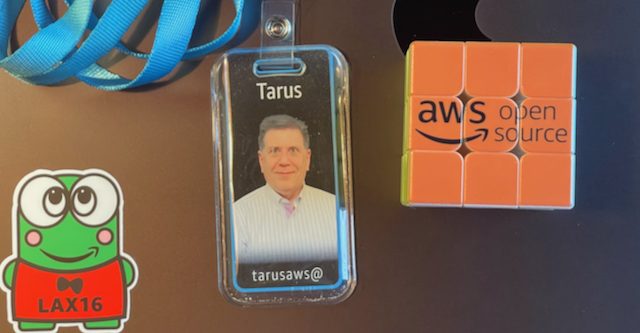
Four years and out: an AWS open-source liaison explains his relief
Tarus Balog has left AWS after four years and writes in a farewell post that being fired is a relief. He criticises the company's pivot to generative AI and what he calls a loss of focus on the customer.
Tarus Balog has left Amazon Web Services after four years, and in a farewell post on his blog Adventures in Open Source he does not hide his relief. “I have to say being fired from AWS is actually a relief,” he writes, adding that the company he joined in 2022 is no longer the one he wanted to work for.
“Fungible” employees
Balog joined through David Nalley, who hired him into OSSM, the Open Source Strategy and Marketing team, and convinced him the group was serious about making AWS a better citizen in open-source communities. His role was liaison to commercial open-source companies, which he simplified as “bring a human face to a huge, faceless corporation”.
What unsettled him was Amazon's habit of treating almost all employees as “fungible” — replaceable. The model that turns new hires into productive fulfilment-centre workers in a couple of weeks, he argues, does not transfer to information technology, where success depends on institutional knowledge earned over time. Nalley was promoted to run the entire Developer Experience organisation, and Balog's time with him fell to almost nothing.
The GenAI pivot
Last year, he writes, AWS turned “fully and almost desperately” toward generative AI. Colleagues boasted of using AI to summarise their email — “why don't we just write better emails?” — or of building a conference presentation from a single prompt. In an economy where attention is the most valuable commodity, that is a way of refusing to do the work. On slides with garbled AI-generated text left in, his verdict is blunt: “Good enough” is not customer obsession.
The deeper complaint is about direction. Instead of working backwards from a genuine customer need, AWS now seems to ship as many things as fast as possible and see what gains traction — content created by AI, ultimately consumed by AI. At re:Invent, he notes, it is hard to find sessions about the services that made the cloud revolution: S3, EC2, RDS.
One account restored
The achievement he is proudest of was getting a suspended account reinstated for a man in northern Africa whose decade-old AWS environment had been shut down with little notice and no recourse, and who was told his data had been deleted. Balog reached out, poked the right internal bear, and the support team restored the resources. The customer wrote it up; senior management appeared indifferent once the case closed, while colleagues he had never met messaged him on Slack to say he had renewed their faith in the company.
Layoffs and the road back to open source
Two rounds of mass layoffs — one in October, a worse one in January — cost him friends and, he says, his sleep and his blood pressure. He cites Cory Doctorow's essay on “reverse centaurs” and admits that no Amazonian could read it without some shame. Balog stresses that in four years he was never asked to do anything unethical or illegal, and says he does not blame his own exit on the meme he posted in an internal channel. After GrafanaCon this year he wants to return to his open-source roots — and asks how open source's promise of user control survives a generation of models reachable only by API.
SiTech — AI-powered web development
We build fast, modern websites and bring AI into real business workflows. Have a project or a question? We'd love to help.