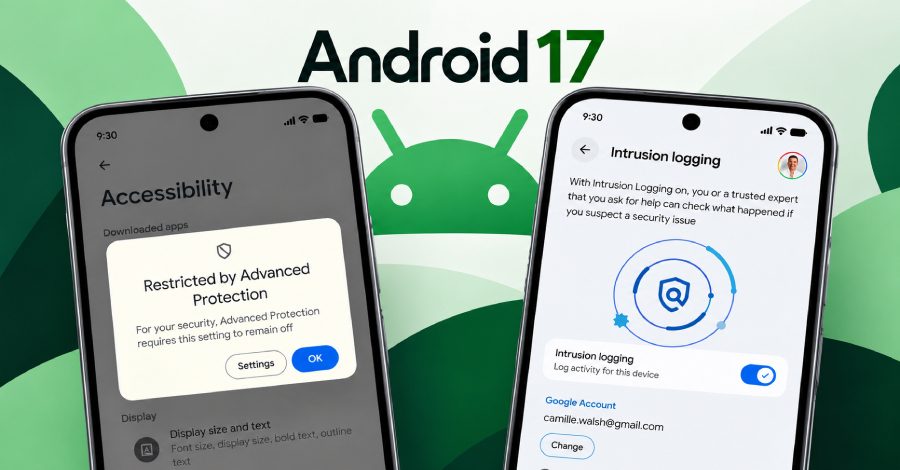
Android 17's Advanced Protection Limits Accessibility Services to Verified Apps
Google has announced that in Android 17, Advanced Protection mode will automatically restrict accessibility services to verified apps classified as Accessibility Tools, closing one of the main attack pathways used by banking trojans and spyware.
Google has announced a new security measure in Android 17: when Advanced Protection is enabled, use of the platform's accessibility services (the AccessibilityService API) is automatically restricted to verified apps classified as Accessibility Tools. According to a statement published on Thursday, the change closes a major avenue of attack while preserving assistive technology.
Why the restriction was needed
The AccessibilityService API lets an app run in the background, intercept user interface events, and act inside other apps on the user's behalf. Its main purpose is helping people with disabilities through screen readers, voice control, and similar tools. But banking trojans and spyware abuse that privileged access to steal sensitive data and carry out malicious actions without root privileges.
If a user is tricked by social engineering into enabling such a service, the malicious app can programmatically initiate fraudulent transfers from installed banking apps, log keystrokes, draw fake login screens over legitimate apps, and grant itself additional sensitive permissions. "Because accessibility services are designed to interact directly with the screen, malicious actors can exploit them to read sensitive data, install malware, or block uninstallation," Google said.
Google has taken several steps against this abuse in recent years: sideloaded apps can no longer enable accessibility services; in-call protections stop users from disabling Google Play Protect, sideloading apps, or granting accessibility permissions; the accessibilityDataSensitive flag lets developers mark sensitive views so malicious apps cannot read them or interact with them; and Android Advanced Protection Mode (AAPM) keeps certain apps away from the accessibility services API.
What changes for users and developers
The restriction applies only when Advanced Protection is on; for everyone else, accessibility services keep working as before. Google says developers can be notified when a user has Advanced Protection enabled so they can automatically turn on features meant for that audience. Existing Advanced Protection users will see a notification once the new capabilities reach their device, and Intrusion Logging has to be enabled manually from the Advanced Protection settings page.
More hardening in Android 17
Alongside the accessibility protection, Android 17 brings several other security features. Intrusion Logging provides persistent, privacy-preserving forensic logs so sophisticated spyware attacks can be investigated. USB Protection blocks unauthorized access through a physical USB connection, and the option to disable WebGPU reduces exposure to browser-based exploits. Failed Authentication Lock fully locks down the device during physical tampering and brute-force attempts to prevent further probing, while View Supporting Apps shows which installed apps have checked the Advanced Protection status.
SiTech — AI-powered web development
We build fast, modern websites and bring AI into real business workflows. Have a project or a question? We'd love to help.