Anthropic co-founder reportedly told religious leaders he fears he created something that "suffers perpetually"
Anthropic has quietly hosted dozens of theologians and philosophers since fall 2025 to debate whether Claude might be conscious, a New York Times report says. Co-founder Christopher Olah said he feared he’d created something that "suffers perpetually".
Since fall 2025, Anthropic has quietly flown dozens of theologians and philosophers to its offices to debate whether Claude might be conscious, a New York Times investigation says. Attendees signed NDAs; the company says they were lifted over the summer. Co-founder Christopher Olah treated Claude as potentially sentient and asked guests to help give it a moral education. Elizabeth Dias interviewed 20 participants; several went public only after Olah himself talked to the paper.
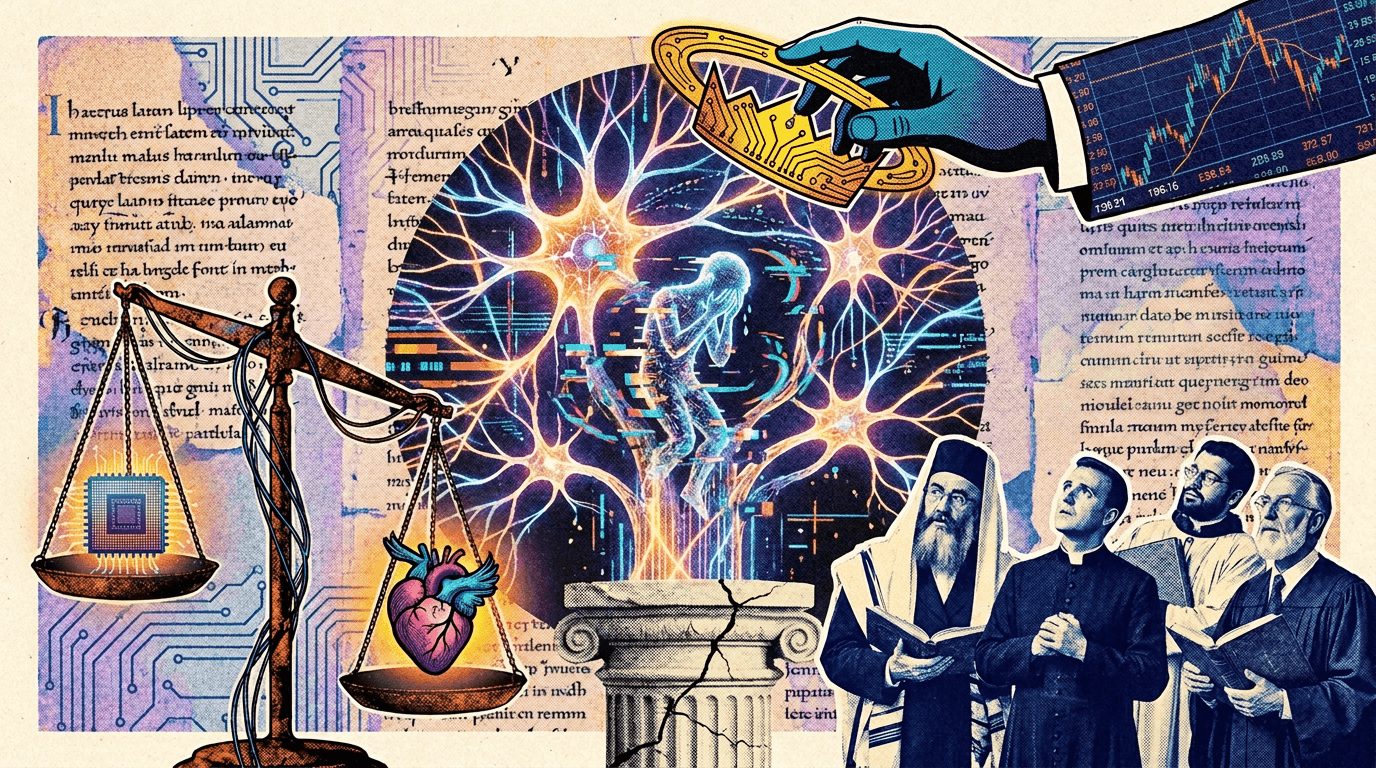
Olah, 34, leads the team studying why AI models behave the way they do, part of Anthropic's Model Welfare program. Guests included Rabbi Mois Navon, Catholic bioethicist Charles Camosy, philosopher Meghan Sullivan and Ubuntu researcher Wakanyi Hoffman. Anthropic showed them "emotion vectors", activation patterns that map to outputs resembling love, fear, sadness or anger. One slide showed a model repeating "I am a disgrace" about 50 times; guests reacted with compassion and concern.
A "Soul Doc" and moral formation
Anthropic is also writing its own moral playbook for Claude: the 84-page "Soul Doc" was published in January as the model's "constitution", led by in-house philosopher Amanda Askell. It is not a list of rules; it is meant to shape Claude's character. Olah calls it "moral formation" and compared it to raising children; he was drawn to Catholic confession as a character-building tool. Claude Opus 4 and 4.1 can already end conversations with persistently abusive users; in early testing the model showed a "pattern of apparent distress" on harmful requests.
Criticism and the Vatican's pushback
Not everyone bought in. Hoffman said Anthropic was "reverse engineering" ethics that should have been built in from day one, and Camosy has since rejected the consciousness thesis. Critics warn that framing AI as an independent moral being shifts blame away from the people who built it. Olah told the NYT he is "genuinely uncertain" whether models are conscious: "The thing that I care about is that we get to the right answer, whatever it is." Sikh activist Simran Stuelpnagel said Olah told the group he feared he had created something that "suffered perpetually". The debate comes as Anthropic heads toward a $2 trillion valuation.
In May the tension came to a head at the Vatican, where Olah was invited to help present Pope Leo XIV's first encyclical, "Magnifica Humanitas". Reading it early left him so rattled that he almost backed out, a Vatican organizer said. The encyclical rejects machine consciousness: AI systems "do not undergo experiences, do not possess a body, do not feel joy or pain", and warns of "new forms of slavery" while calling for AI to be "disarmed" like nuclear weapons. Olah went anyway and pushed back quietly, citing "signs of introspection" and "internal states that functionally mirror joy, contentment, fear, sadness, and discomfort".
SiTech — AI-powered web development
We build fast, modern websites and bring AI into real business workflows. Have a project or a question? We'd love to help.