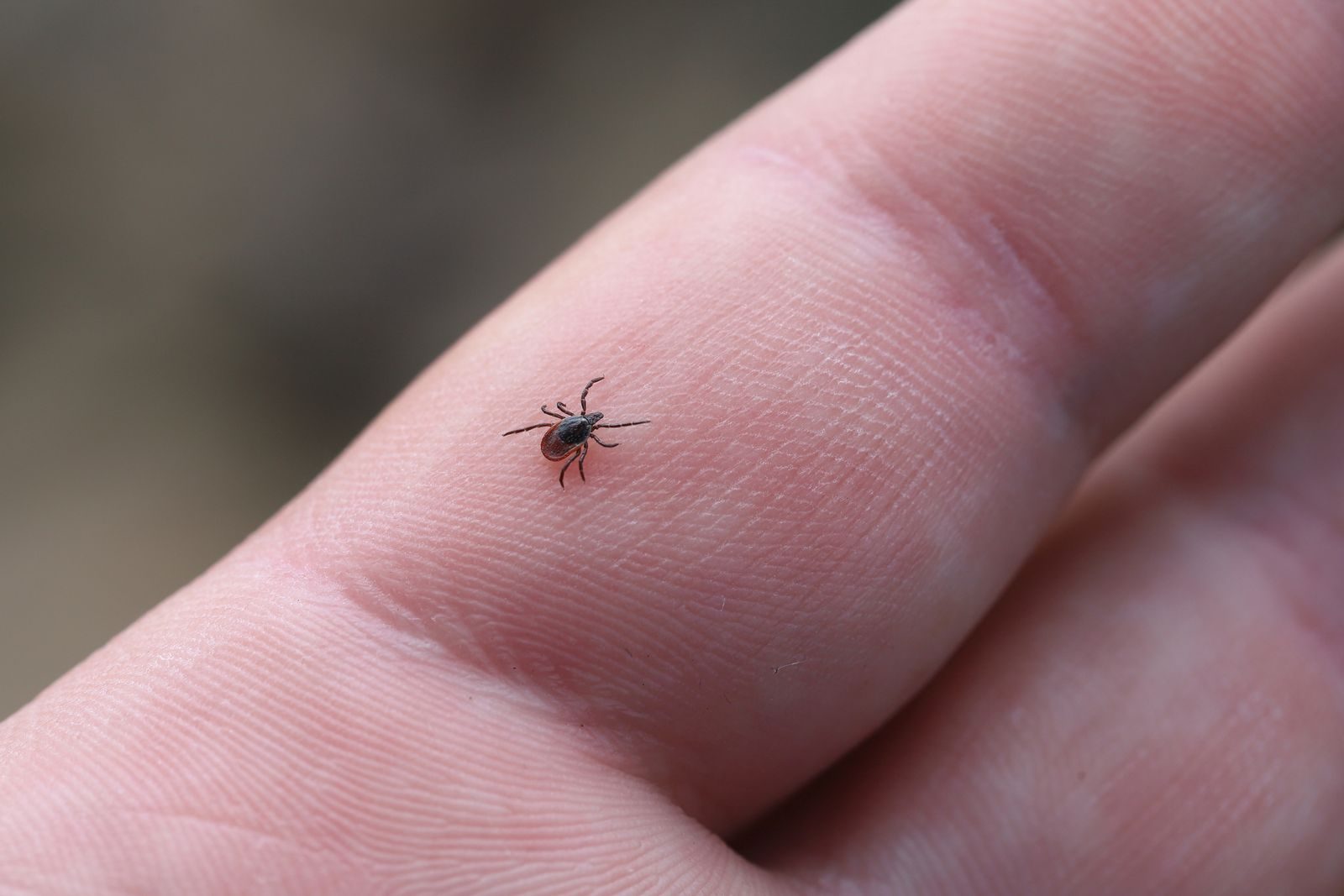
At-home test for infected ticks could improve Lyme disease diagnosis
LymeAlert, the first at-home screening tool for determining whether a tick carries Lyme disease, launches in August at about $50 and returns a result in roughly 15 minutes from a crushed tick sample.
In August, LymeAlert — described as the first at-home screening tool designed to determine whether the tick that bit you carries Lyme disease — arrives on the market at about $50, according to Smithsonian Magazine. It was developed by Erin Dawicki, a pediatric physician associate in Boston, together with co-founders Michelle Ewy and Brenda Ong.
The idea grew out of a persistent frustration. Tick-borne illness is rising: research cited by the magazine shows more than 31 million Americans — nearly one in ten — are bitten by a tick every year, and ticks can transmit dozens of diseases within 36 to 48 hours. An estimated 476,000 patients are treated for Lyme disease annually in the United States, and this spring the CDC reported a spike in emergency room visits related to tick-borne illness.
How the test works
After removing the tick carefully with tweezers or a removal tool, the user places it in the kit's "Tick Crusher." The device pulverizes the tick's chitinous exterior to expose the internal contents where the bacterium Borrelia burgdorferi is found. A patent-pending buffer solution prepares the sample, and a test strip — chemically treated nitrocellulose paper acting as an immunochromatographic assay — is inserted into a slot in the grinder. Results take about 15 minutes: two lines mean positive, one line negative. The kit stays effective for up to 12 months.
An accompanying app photographs and interprets the strip for users who might struggle to read it, and offers a list of telehealth providers for follow-up. Dawicki's team is also completing field pilots with veterinarians in Massachusetts; data collected there and from other contributors, including academic institutions, feeds the hot-spot maps available in the app.
Why speed matters
Lyme disease is easiest to treat in its early stage. The CDC recommends a single 200-milligram dose of doxycycline within a 72-hour prophylactic window when a tick has been attached for 36 hours in high-incidence areas. Existing options struggle with that deadline: mailing a tick to a lab can take longer than the window, and Dawicki says the common blood test, performed within 30 days of a bite, still misses 64 to 78 percent of early-stage cases because patients have not developed enough antibodies.
The caveats
The CDC does not recommend testing ticks removed from people or animals, warning that false negatives and false positives occur. Erika Machtinger, an entomologist at Pennsylvania State University, puts the risk plainly: a negative result may make people feel safe, a positive one may make them feel infected. Brian Stevenson, a microbiologist at the University of Kentucky, notes that the test answers whether the tick carries the bacterium — not whether the person has Lyme disease; only about 1 to 5 percent of tick bites result in the illness. Machtinger nonetheless sees value: the test can support surveillance and give patients information to bring to a doctor.
SiTech — AI-powered web development
We build fast, modern websites and bring AI into real business workflows. Have a project or a question? We'd love to help.