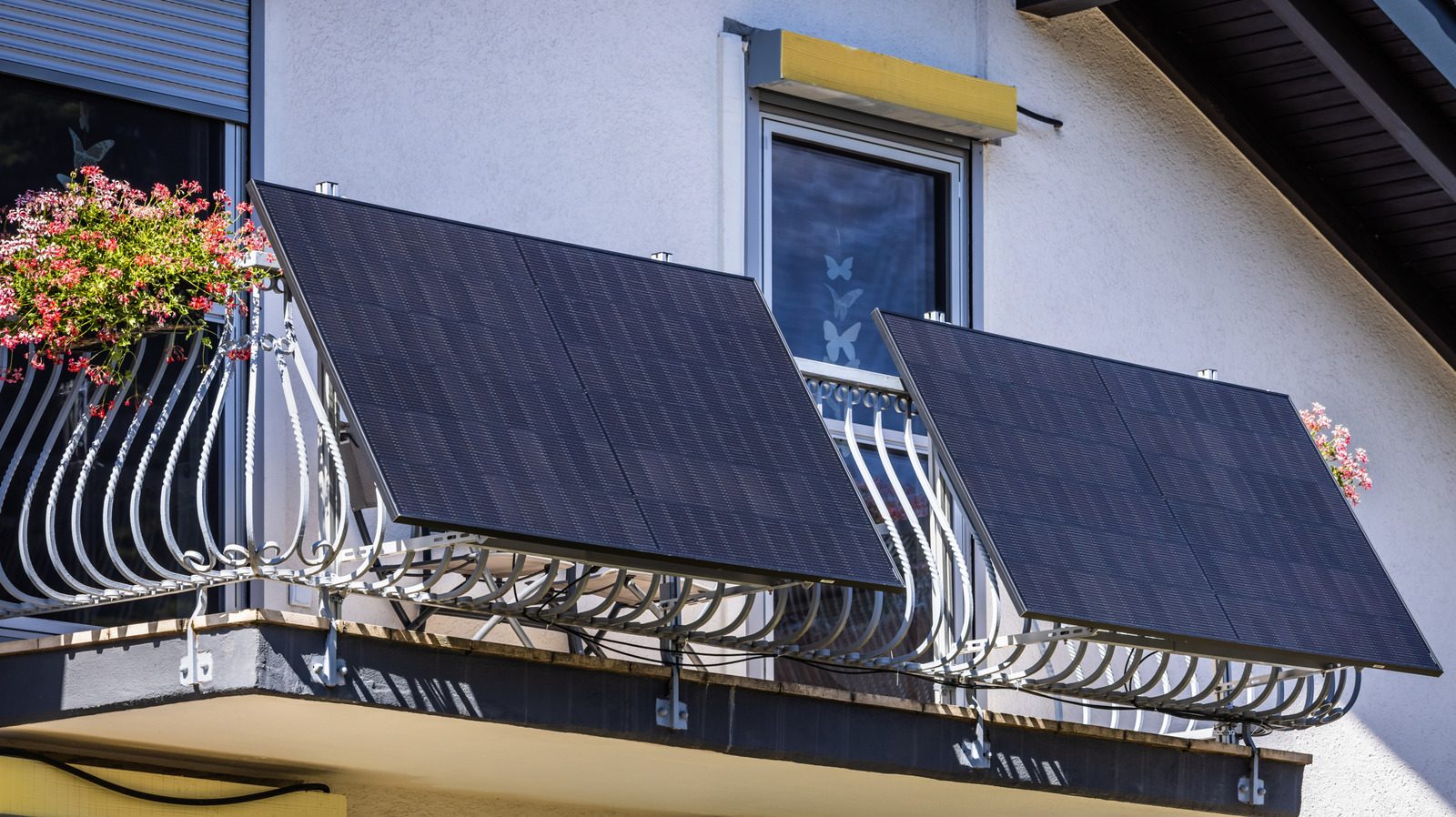
California legalizes plug-in balcony solar, joining nine other US states
California has legalized plug-in balcony solar, letting renters and apartment dwellers install small panels and plug them into wall outlets without utility permission. The law takes effect on January 1, 2027 and caps installations at 1,200 watts.
California has joined nine other US states in approving plug-in solar installations, more commonly known as balcony solar. The Plug and Play Solar Act (SB 868) passed with overwhelming bipartisan support and was signed into law by Governor Gavin Newsom on September 30. It takes effect on January 1, 2027.
"These small, easy-to-use solar panels will give everyone, including renters, the relief they desperately need on our outrageous energy bills," said the bill's author, state senator Scott Wiener.
How plug-in solar works
A balcony solar kit includes at least one solar panel and a microinverter that converts DC power into 120V AC, plus an optional battery backup for evening use. Owners can install the kits themselves and usually plug them into a standard AC socket, which makes them far cheaper than rooftop systems: there are no installation costs.
The kits are already popular in Germany, where they can be plugged into a standard wall outlet. Existing models sell for $300 to $2,200 depending on size. Plug-in systems will not need utility registration; California says the process will be simple, free and approved immediately.
What the California law allows
Installations are limited to 1,200 watts, enough to run a refrigerator and a few small appliances, and far below the 6,000-plus watts of a typical rooftop system. The cap matches most other states, though Colorado allows up to 1,920 watts.
Panels must carry UL or equivalent certification, and only one standard exists so far: UL3700. It requires protection against accidental contact with hazardous electrical parts, against overloads, and against current flowing in the wrong direction. Its defining requirement is a "uniquely configured, non-NEMA plug and receptacle system," which could require a certified electrician for many installations and make the kits impractical for renters.
A handful of products from Hoymiles, APsystems and Mango are already certified. The Environmental Working Group, the nonprofit that sponsored the bill, expects two more companies to be approved by the end of the year; senior vice president Bernadette del Chiaro told the LA Times that products would reach shelves "not long after that in 2027."
Why it matters
California is America's most populous state, making this the country's largest plug-in solar market. It gives renters, apartment dwellers and people with unsuitable roofs a way to lower their electricity bills, which have risen substantially in recent years; many Californians had already installed the panels in a legal gray area.
Large utilities PG&E and SDG&E opposed the bill, citing safety concerns and warning that the technology could push up prices for customers who cannot generate their own solar power. Newsom also signed SB 905 and SB 913 the same day; advocates for small-scale solar and home batteries had pushed for both.
SiTech — AI-powered web development
We build fast, modern websites and bring AI into real business workflows. Have a project or a question? We'd love to help.