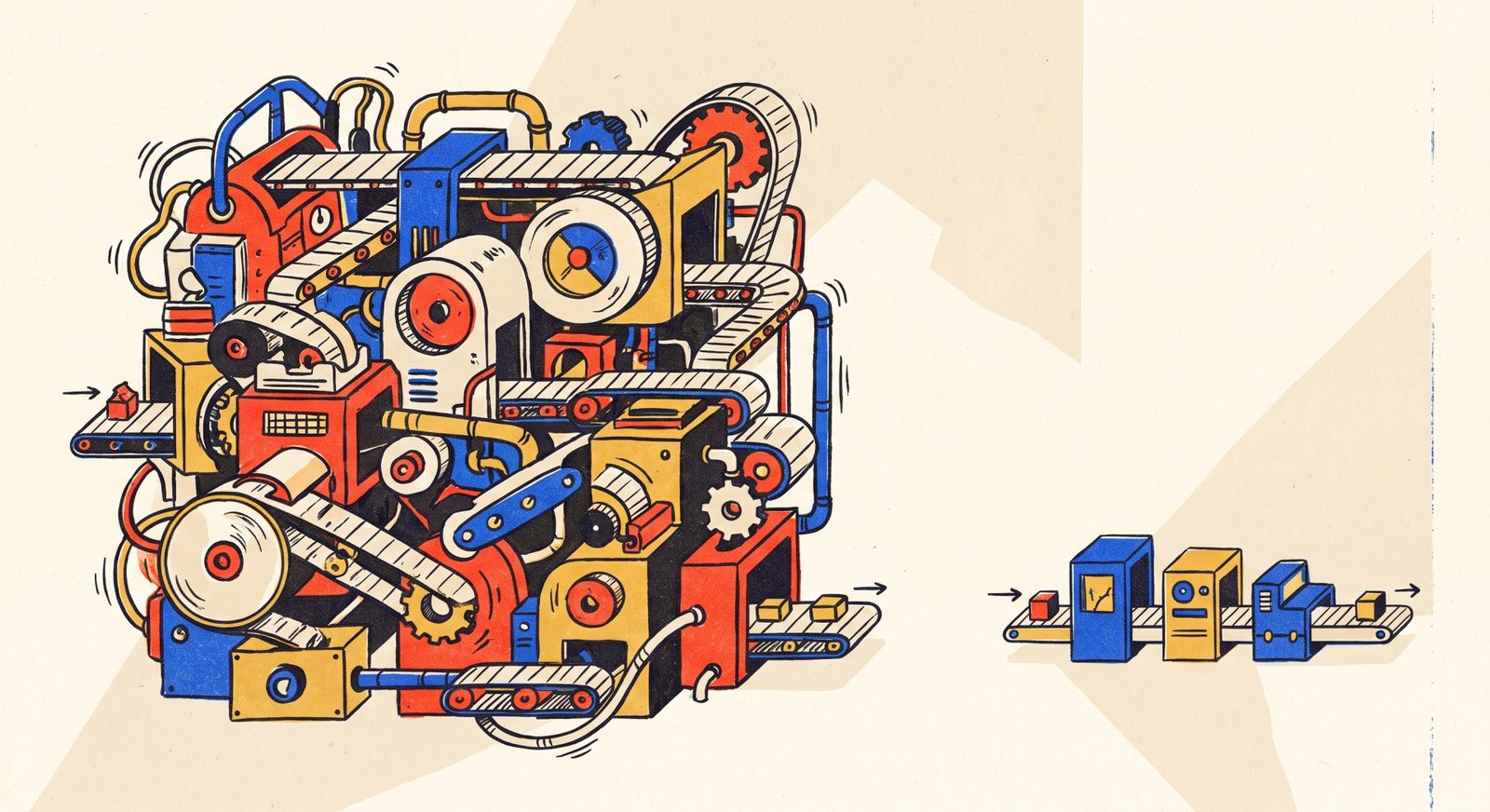
Bytedance argues most AI training phases are unnecessary
A team from TikTok parent Bytedance and several US universities says complex AI training pipelines have become too nested, and aims to show three steps are enough. The work is backed by a competitive open model, according to a new paper.
A team from TikTok parent Bytedance and several US universities argues that many AI training phases may be unnecessary. According to a new paper, the team aims to show that three steps are enough for capabilities such as web research, code execution, and multi-step task solving. The claim is backed by a competitive open model.
Training pipelines are becoming more nested
AI agents increasingly rely on complex training pipelines. AI models are expected to research the web on their own, run code, and solve multi-step tasks. According to the paper, the training methods behind these capabilities are growing more and more nested, with many developers stacking numerous training phases one after another.
The paper argues that it has become almost impossible to tell which step actually helps, and that reproducing the work is getting expensive.
A simpler training claim
The Bytedance team and several US universities aim to show that three steps are enough. The paper backs this argument with a competitive open model.
Why the argument matters
As AI systems take on tasks such as web research, code execution, and multi-step problem solving, training pipelines have become more elaborate. The paper's argument centers on whether so many stacked phases are needed at all, at a time when reproducing the work is getting expensive.
Sources: The Decoder
SiTech — AI-powered web development
We build fast, modern websites and bring AI into real business workflows. Have a project or a question? We'd love to help.