CRISPR-Cas12a2 shreds cancer cells that carry a mutation found in half of all cancers
Researchers at UC Berkeley's Innovative Genomics Institute programmed Cas12a2 to read a mutant RNA signature and destroy the whole cell, leaving healthy cells almost untouched in lab tests.
A CRISPR system engineered at the Innovative Genomics Institute (IGI) at UC Berkeley can selectively destroy cancer cells that carry a mutated p53 gene by shredding their genetic material from within. The work, published on 8 June 2026 in Nature, was carried out with UC San Francisco, the Gladstone Institutes and collaborators at the University of Utah and Utah State University.
Targeting a mutation that drugs cannot reach
The p53 transcription factor is altered in roughly 40–50% of cancers and in up to 70–90% of some of the hardest-to-treat types, including ovarian, pancreatic and non-small cell lung cancer. Such mutations are usually called “undruggable”: the mutant proteins lack well-defined pockets for a drug to bind, and restoring the normal function of the broken protein has proved difficult. First author Jingkun Zeng, a postdoctoral researcher in Jennifer Doudna's lab, took the opposite route — instead of repairing the gene, find the cells that carry the mutation and eliminate them.
From bacterial suicide pill to cancer killer
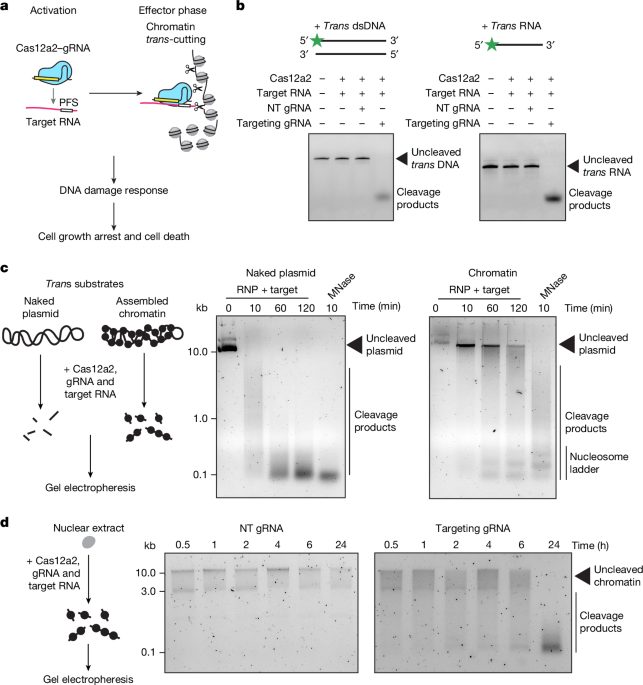
The team used CRISPR-Cas12a2, an RNA-guided nuclease that in bacteria acts as a suicide pill, killing an infected cell to stop a virus from spreading. In the engineered version, the enzyme looks for the RNA transcript produced only by cells with the mutant cancer gene. Once it detects that cancer signature, Cas12a2 activates and begins “chromatin shredding”, slicing up the cell's genetic material, which triggers DNA damage responses and cell death.
The approach returns CRISPR to its natural role. “People generally, and especially in the gene editing field, want to fix genes or knock out genes,” Zeng said. “But what I wanted to do here is completely different. I wanted to destroy abnormal cells, precisely and safely.”
Selectivity in cell culture
To test precision, the researchers introduced the system into mammalian cell cultures containing both healthy and cancerous cells. It distinguished between them: chromatin shredding and cell death occurred only when the mutant RNA was present, while cells carrying the healthy, wild-type version of the gene were left almost entirely unharmed.
Doudna, an IGI founder and co-author, said the method “reimagines how CRISPR can be used as a precision tool to find and eliminate cancer cells across a variety of cancer types” and may open up previously undruggable targets. Because the system is programmable like conventional CRISPR editing, Zeng argues that matching a new mutation with a new guide RNA is far faster than developing a small-molecule drug or an antibody therapy. The experiments reported so far were performed in cultured cells rather than in animals or patients.
SiTech — AI-powered web development
We build fast, modern websites and bring AI into real business workflows. Have a project or a question? We'd love to help.