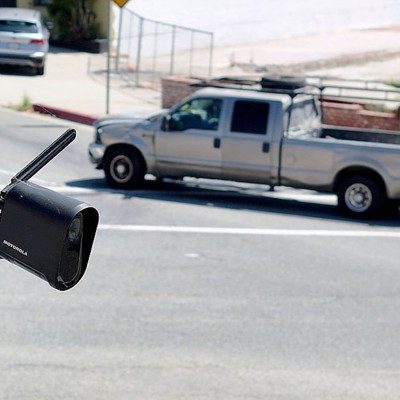
Senators criticize license plate readers as ALPR company CEOs skip hearing
A Senate Judiciary subcommittee criticized automatic license plate readers at a hearing on Wednesday, saying they enable warrantless searches and lack cybersecurity safeguards. The CEOs of Flock, Axon, Motorola and Verkada declined to appear.
Members of the Senate Judiciary Subcommittee on Crime and Counterterrorism criticized automatic license plate readers, or ALPRs, at a hearing on Wednesday, saying the systems enable warrantless searches that could target particular groups and lack cybersecurity safeguards. Witnesses urged Congress to pass a law protecting citizens' data.
Bipartisan criticism and a letter to the Justice Department
Sen. Josh Hawley, R-Mo., said ALPRs operate in practically every state, with hundreds of thousands of cameras recording billions of images every month. He asked where those images go, who uses them and what privacy protections apply, adding that such surveillance must be constitutional.
Sen. Katie Britt, R-Ala., said she and Sen. Raphael Warnock, D-Ga. asked the Justice Department in a letter to issue guidance for state and local agencies on preventing misuse of the technology.
Democratic lawmakers echoed the privacy concerns and added worries that the systems could be abused for immigration enforcement. Chad Marlow, senior policy counsel at the ACLU, told the subcommittee that ICE could conduct immigration enforcement through formal 287(g) agreements with local agencies, or through the informal help of a single officer. Asked by Sen. Alex Padilla, D-Calif., how to close that loophole, Marlow said: "You ban them, sir." Marlow also said the systems could be used to track women seeking reproductive care across state lines; Hawley cited gun stores and pregnancy centers.
ALPR company CEOs decline to testify
The CEOs of Flock, Axon, Motorola and Verkada were invited but declined, according to Hawley. He criticized ALPR vendors for relying on agency customers to self-police and for claiming their systems do not use facial recognition when they do. He also challenged Flock's claim that it has never been hacked.
"In the general definition of accessing unauthorized data, yes, I would say they've been hacked," said Benn Jordan, a cybersecurity engineer who raised the alarm about Flock last year. The hearing follows Washington Post investigations into officers' abuse of Flock's systems.
Proposed safeguards
Witnesses offered fixes. Jordan called for independent security testing and inspections of ALPR vendors, plus a federal data privacy law comparable to the EU's GDPR. Alasdair Whitney of the Institute for Justice said Congress could require federal agencies to obtain warrants before searching historical location data and limit how long ALPR data is kept.
Flock sent Hawley a letter outlining new guardrails, the Wall Street Journal reported Wednesday: a dropdown menu for users to justify database searches and a requirement that law enforcement enter a case number before a search.
SiTech — AI-powered web development
We build fast, modern websites and bring AI into real business workflows. Have a project or a question? We'd love to help.