Renault builds electric motors without rare earths, with a third generation due in 2027
Renault Group has mass-produced magnet-free electric motors since 2012, while around 90% of electric cars still rely on rare-earth magnets. The third-generation E7A unit is set to be built at the Cléon plant from 2027.
Renault Group has built its electrification strategy around a motor technology most of the car industry avoids: synchronous machines that use no permanent magnets, and therefore no rare earths. According to the manufacturer, roughly 90% of the electric cars on the market today rely on motors with magnets.
A pioneer since 2011
The first generation of Renault electric motors appeared under the bonnet of the Kangoo Z.E in 2011 and the Zoe in 2012 — the year the group began mass-selling EESM units (electrically excited synchronous motors). Unlike a permanent-magnet machine, an EESM creates its magnetic field with a current running through a rotor winding, which removes the need for rare-earth materials.
The second generation of EESM motors entered production in 2021 under the internal reference 6A. Renault Megane E-Tech electric was the first model to ship with the new 6AM unit in early 2022: a smaller, lighter and more powerful motor rated at up to 160 kW.
The current range
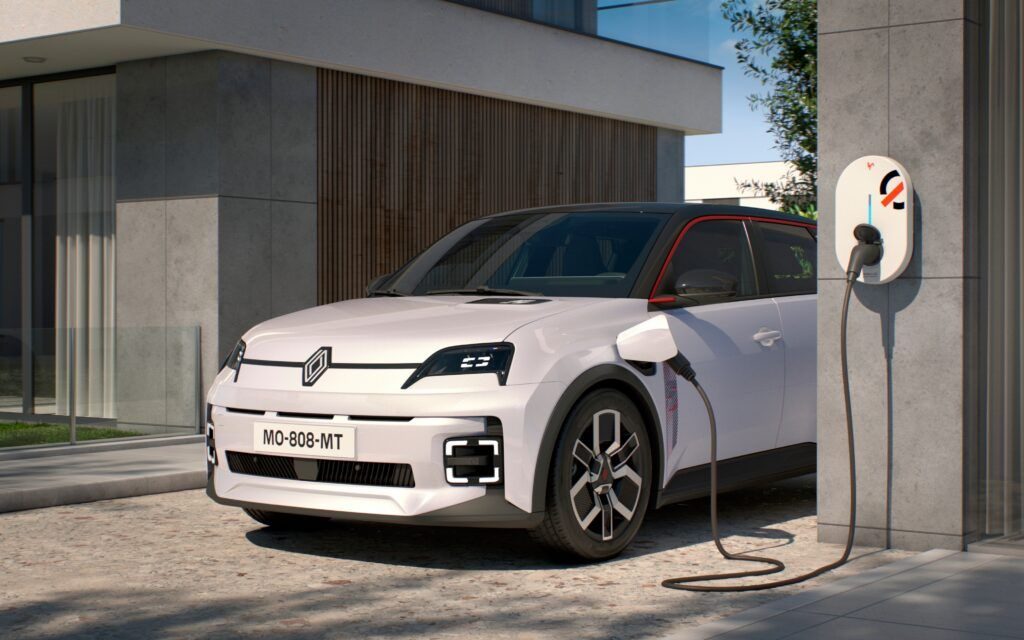
The 6AM motor later reached the Scenic E-Tech electric, voted Car of the Year 2024. The Renault 5 E-Tech electric, launched in October 2024 and named Car of the Year 2025, uses a 6AK motor with 110 kW of output, as does the Renault 4 E-Tech electric, available to order since March 2025. Alpine's A390, unveiled in September 2025, pairs a 6AM unit on the front axle — as in the A290 — with a new twin-motor layout on the rear axle.
A third generation: E7A in 2027
Renault engineers started work on the third EESM generation, called E7A, in 2021. Development is still under way, but the specifications are frozen: 200 kW (around 270 hp) and 400 Nm of torque, an all-in-one architecture some 30% smaller than the previous generation, a carbon footprint reduced by 30% and efficiency of around 92%.
The group has not given a precise launch date, but confirms that the Cléon plant — which has produced Renault powertrains since 2015 and the motors for the Zoe, Twingo ZE, Kangoo ZE, Master ZE, Megane E-Tech, Scenic E-Tech, Alpine A290, R5 and R4 — will build the new 200 kW motor from 2027. The choice matters beyond engineering: rare-earth supply chains are concentrated in a handful of countries, and magnet-free motors cut exposure to both price swings and export restrictions.
SiTech — AI-powered web development
We build fast, modern websites and bring AI into real business workflows. Have a project or a question? We'd love to help.