Eve Is Next.js for Agents: How to Start Building One
Dom Sipowicz's Agent Conf 2026 writeup explains how Vercel's open-source Eve framework brings Next.js-style conventions to durable agents, and why starting from a template beats a blank folder.
Developer Dom Sipowicz published a discovery-version writeup on dev.to on September 23 about Eve, Vercel's open-source framework for durable agents, following his live walkthrough at Agent Conf 2026.
The Next.js mental model, applied to agents
Next.js made a website feel like a folder with conventions; Eve applies that idea to durable agents — one directory, a few optional building blocks, grown only when needed. An instructions.md persona is enough for a real agent, while skills, tools, channels and schedules can be added later.
The framework arrives with Vercel's "self-driving infrastructure" pitch — infrastructure that understands the application and operates itself. For agents that means durable runs, channels, sandboxes and post-deploy inspection. At Agent Conf the whole room had used Next.js; almost nobody had used Eve.
Start from a template, not a blank folder
A project can start empty with npx eve@latest init my-agent, but for a first agent Sipowicz recommends a template from eve.dev/templates: their Markdown files and optional configs are readable.
The catalogue covers real jobs: a persisted Next.js chat with memory and auth; a Slack integration on webhooks and Vercel Connect; and the software factory Foreman, which wires GitHub and Linear through four agent roles into a draft pull request. Skills work the same way — Markdown playbooks loaded only when relevant, shared at skills.sh.
Deploy on day one, then watch the runs
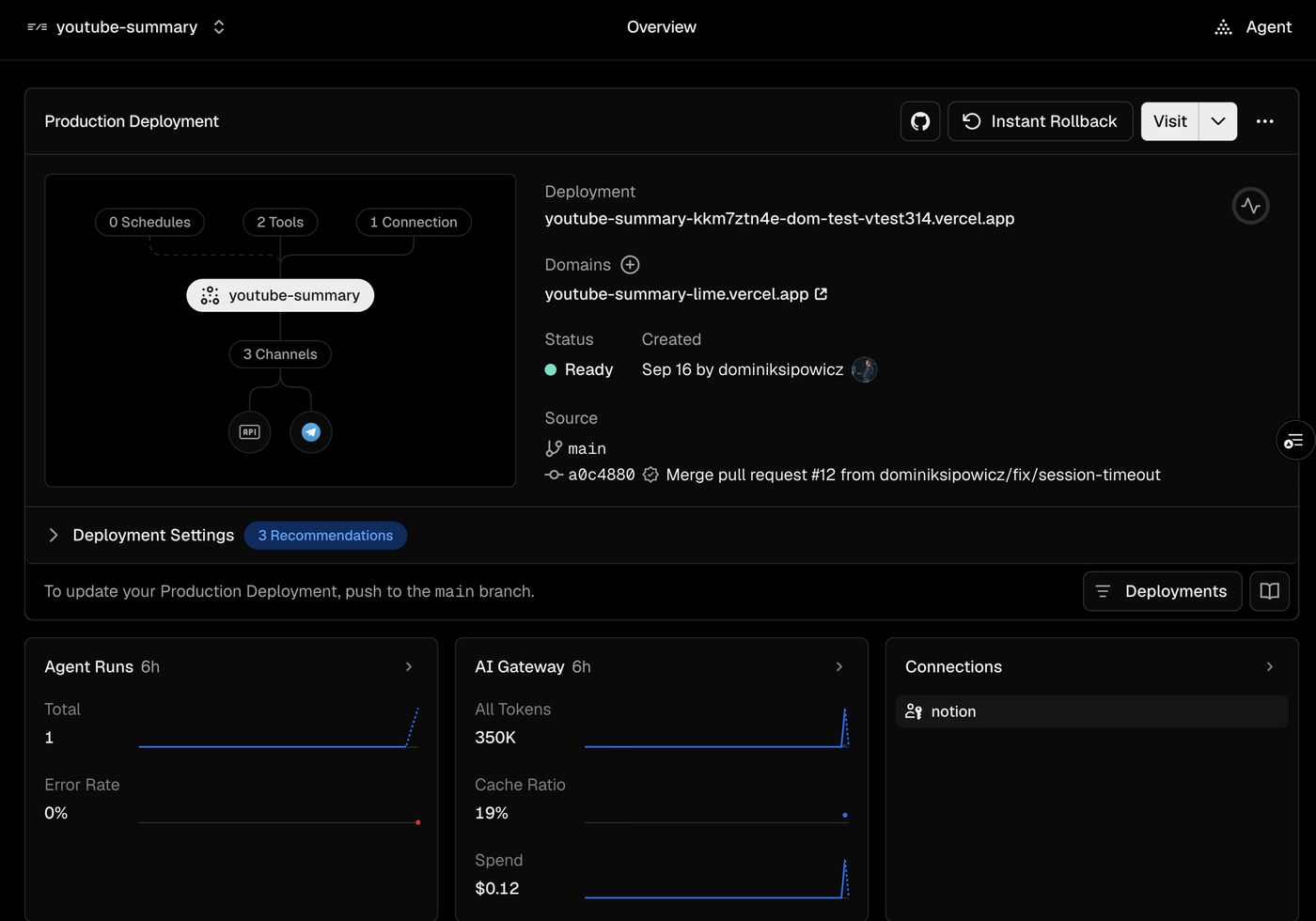
Deploying early is the point the author stresses most: Eve on Vercel is where the agent becomes inspectable, not just hosted somewhere else. Agents wait and call tools between turns, and on Fluid Compute idle think-time is not billed like always-on servers. One CLI deploy puts the agent in production with channels, runs and a readable overview.
Debugging and evals from real sessions
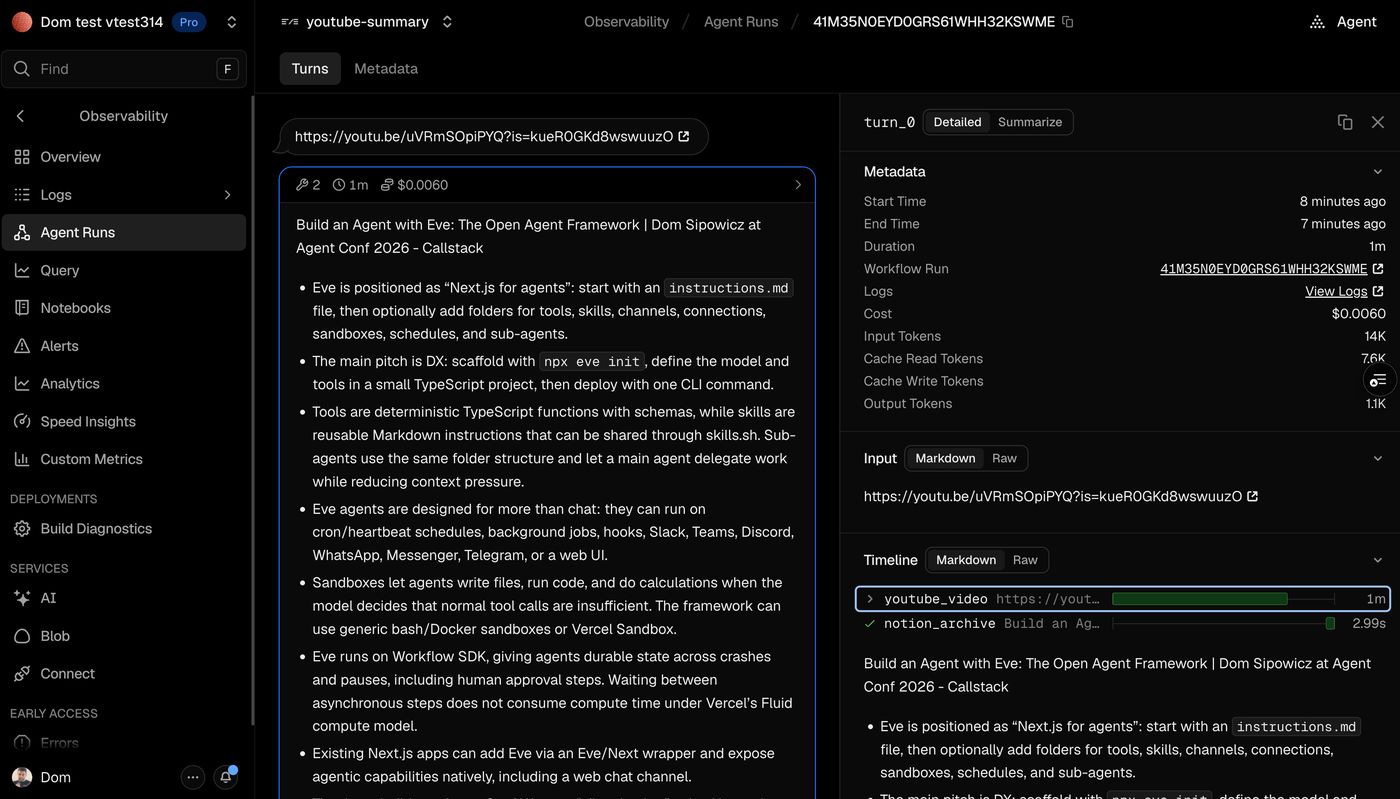
Debugging is closer to reading a Next.js deployment than to chasing logs across machines: a run shows which tool fired, token use, timing, cost and cache tokens. Evals grow from the same material — Sipowicz argues the best come from real conversations, not invented golden answers. His order: deploy early, then runs exist; then debug; then write evals that match production; then change the agent without fear, and only afterwards wire it into a Next.js app with withEve and useEveAgent.
SiTech — AI-powered web development
We build fast, modern websites and bring AI into real business workflows. Have a project or a question? We'd love to help.