
Flip Fluid on Flip Dots: a fluid simulation on an electromechanical display
The engineer known as mitxela has put a FLIP fluid simulation on a flipdot display, an electromechanical panel of flipping disks, and published the full build. The installation ran without fault for four days at the UK hacker camp EMF2026.
The engineer known as mitxela has run a FLIP (Fluid Implicit Particle) fluid simulation on a flipdot display, an electromechanical panel whose pixels are physical disks. He built it for EMF2026, the UK hacker camp, where it ran without fault for four days.
His motivation, he says, was wordplay: earlier simulations moved in LEDs and stayed silent, while an electromechanical display makes the noise itself. Flipdot panels are also very expensive, with only one manufacturer left.
How a flipdot works
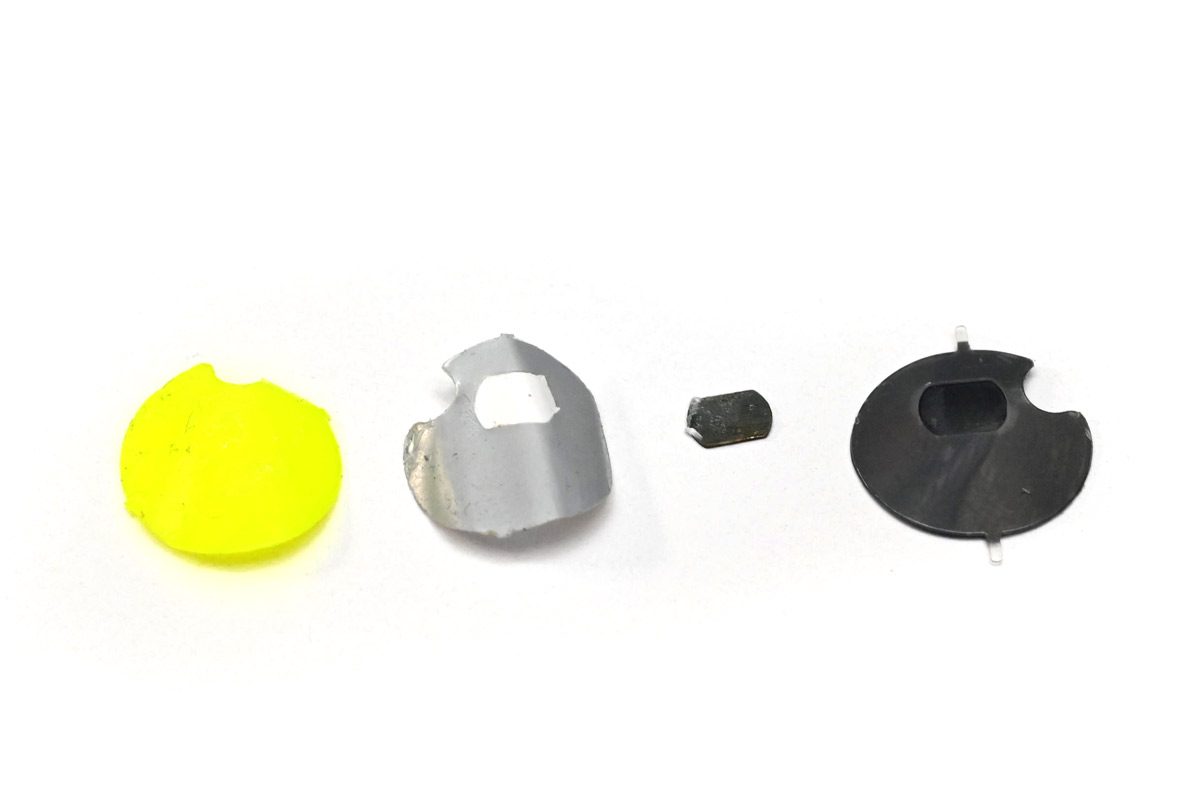
The dots are non-volatile: they hold their position after the power is removed. Each has two permanent magnets, one inside the disk and one in the base, plus two cores that are polarised to set its state.
The panels came from the musician Sam, known as Look Mum No Computer, whose museum of obsolete technology receives old equipment; they were probably reclaimed from buses. The panel pictured has a 2007 date code, 13 by 28 dots and a 15.24 mm pitch.
Cheap driver chips instead of the original matrix
The original circuit takes about a second to update the panel, which is wired as one large matrix. Mike, of mikeselectricstuff, showed that a dot needs around 60 milliseconds to flip but only a millisecond-long pulse to polarise its cores. The author therefore used cheap H-bridge motor driver chips (MX6208, BE6208, LK6208), SOIC-8 parts rated for 0.5 A at 12 V: one chip drives one dot, and a 595 shift register covers eight.
The power problem
The first board flipped single dots but failed when all of them flipped at once: that needs roughly 50 A for a millisecond, the supply sagged and the weakened pulses demagnetised the cores. The second revision used 47 uF electrolytics instead of ceramics, added a cutout below 9 V, and fitted eight 1000 uF capacitors per panel.
Demo, power and cost
The two-panel prototype has 28 by 26 dots and runs the FLIP simulation at about 40 FPS on a Raspberry Pi Pico 2. Each panel is driven by a CH32V003, with 52 shift registers per panel. The finished display stacks eight panels in a plywood frame, powered by a 3S LiPo battery or a 40 A supply set to 13 V; an STM32H7R3 motherboard distributes data over RS485, and the average draw is 10 to 15 A.
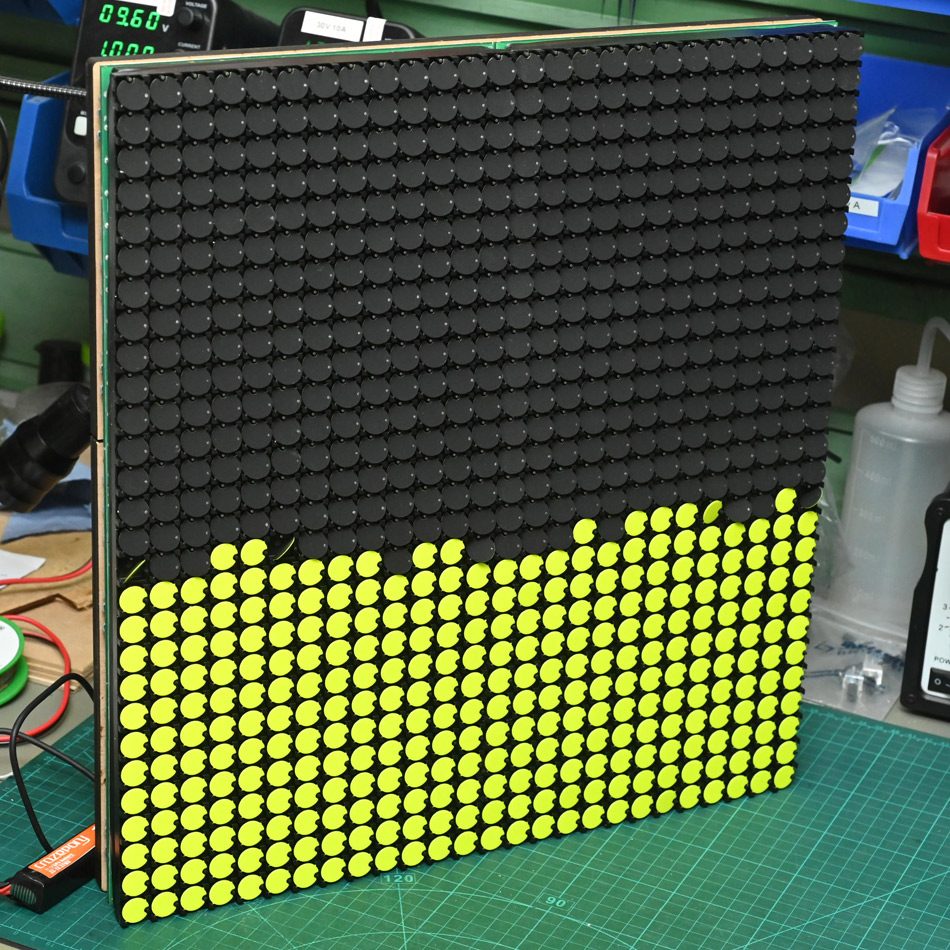
Excluding the donated panels and his own time, the project cost under £500, or about £0.17 per dot; commercial flipdot displays start at five or six figures. The PCB designs for the 13x28 Hanover panels are on GitHub.
SiTech — AI-powered web development
We build fast, modern websites and bring AI into real business workflows. Have a project or a question? We'd love to help.