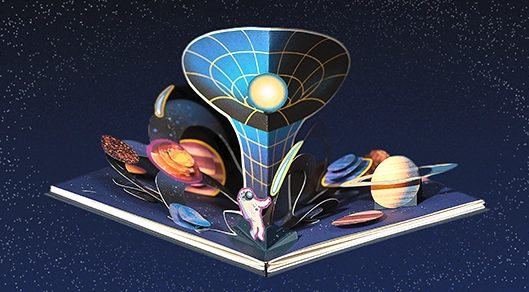
What the Holographic Principle Says About Gravity and Reality
A new essay in Quanta Magazine examines the holographic principle: the contents of any region of space might be reconstructed from its surface alone. Physicists still disagree about which picture of the world is real.
Quanta Magazine published an essay by physics journalist Charlie Wood on 25 September about the holographic principle. The idea holds that the contents of any region of space can be reconstructed by measuring its surface alone. Wood calls it the most profound proposal in theoretical physics of the past 30 years.
What the principle claims
Holography says that repeated measurements on the surface of a box reveal everything happening inside it, from gas molecules to colliding black holes. The stuff that fills a volume would equal the paint needed to cover its boundary, erasing the difference between square and cubic meters. Bartek Czech, a theorist at Tsinghua University in China, compares this to a CT scan of the brain, which rebuilds its structure without looking inside.
The argument starts with gravity. In electromagnetism, positive and negative charges cancel each other, so different interior arrangements can produce the same field at the surface. Mass has no negative counterpart, so the warping of space-time at the boundary always reveals the true arrangement inside. According to Laurent Freidel of the Perimeter Institute for Theoretical Physics, this is why holography looks plausible.
Black holes and AdS/CFT
The first clues appeared in the 1970s, when Jacob Bekenstein and Stephen Hawking calculated the entropy of black holes and found it growing with surface area rather than volume. In the 1990s Leonard Susskind, a physicist at Stanford University, proposed that a black hole is literally a hologram.
The second pillar is the AdS/CFT correspondence. Anti-de Sitter space curves so that its infinite extent fits inside a finite snow globe; its interior responds to particles and produces gravity, while its rigid surface carries none. Three papers published in the late 1990s showed that the two worlds are mathematically the same.
Three readings of reality
Our cosmos expands at an accelerating rate, so it has no obvious surface on which to project a hologram. Vijay Balasubramanian of the University of Pennsylvania lists three options: the quantum surface is real, the gravitational volume is real, or neither is. In the most popular reading among holography researchers, space is as illusory as water that resolves into molecules on close inspection.
The second option makes the three-dimensional world real and holography a mathematical coincidence. The third treats both gravity and quantum mechanics as rough drafts of an unknown, sharper theory. Recent models of holographic de Sitter space compress every dimension into a single quantum point.
SiTech — AI-powered web development
We build fast, modern websites and bring AI into real business workflows. Have a project or a question? We'd love to help.