Gritt Exits Stealth with $34 Million for Robots That Build Solar Plants — Then, Everything Else
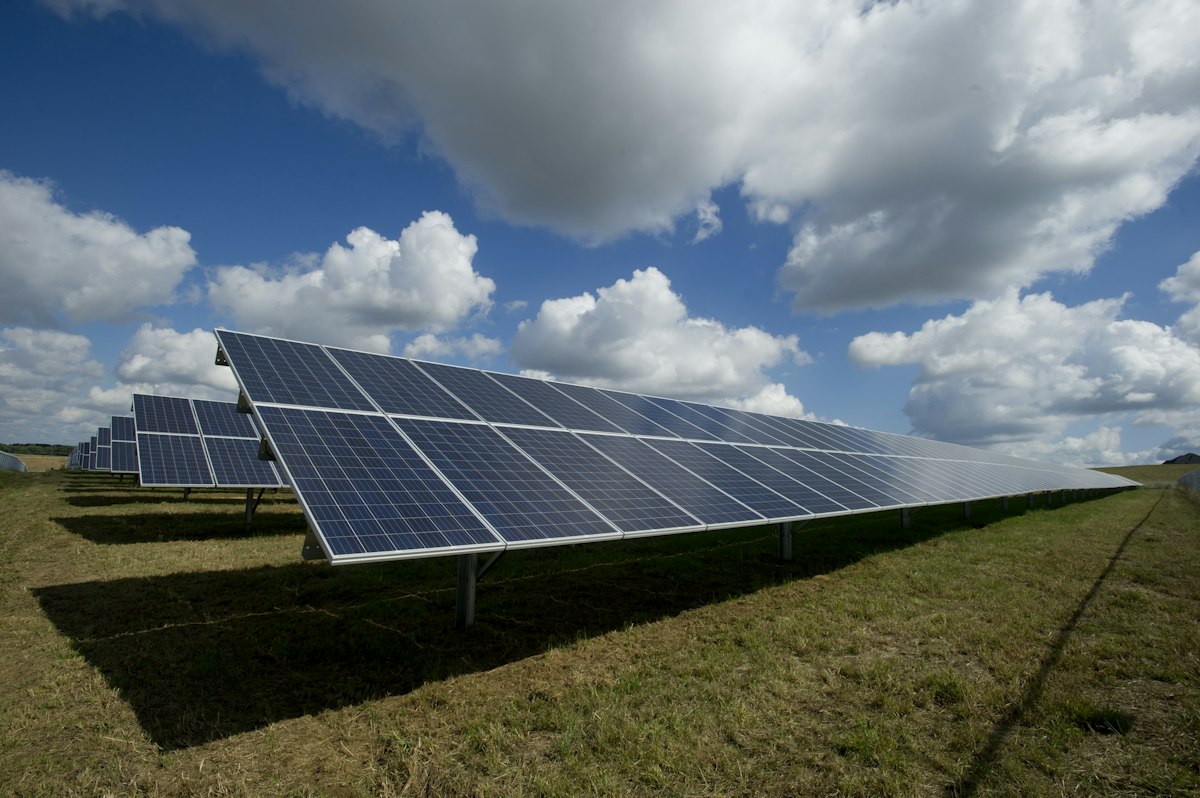
Carnegie Mellon-trained roboticists' startup Gritt exits stealth with $34M, deploying AI-powered robots to install solar panels — with ambitions to automate all manual construction labor.
The Solar Boom Meets a Labor Crisis
One of the most consequential undertakings on Earth today is the global solar energy build-out. Nations and corporations alike are racing to deploy photovoltaic panels and battery storage at unprecedented scale — driven by the dual imperatives of energy independence and climate change mitigation. Solar installations have been breaking records year after year, and the trajectory only points up.
Yet there is a bottleneck that threatens to slow this momentum: a chronic shortage of skilled labor. There simply aren't enough trained workers to install the millions of solar panels the world needs. Robots have long been proposed as the solution, but traditional industrial automation has struggled in the chaotic, unstructured environments of outdoor construction sites — until now. The latest generation of AI models has fundamentally changed what machines can perceive, learn, and do in the physical world.
Enter Gritt, a startup founded by Carnegie Mellon-trained roboticists CEO Puneet Puri and CTO Vishal Dugar. The company emerged from stealth on July 21, 2026, announcing a $26 million Series A round led by Obvious Ventures with participation from Union Square Ventures and Active Impact Investment, bringing total funding to $34 million. Earlier seed investors include First Round Capital, Climactic, Congruent Ventures, and VSC Ventures. Gritt's mission, in Puri's words, is to "help civilization build infrastructure faster."
Off-the-Shelf Hardware, AI Brains
What makes Gritt's approach distinctive is its hardware strategy. Rather than designing and building custom robots from scratch — a capital-intensive path taken by competitors like Luminous Robotics, Cosmic, and China's Trinabot — Gritt retrofits off-the-shelf industrial equipment. So far, that has meant rented skidders (heavy forestry vehicles) and robotic arms from manufacturers like Kawasaki, all controlled by Gritt's proprietary AI models.
The first task Gritt's systems tackle is one of the most physically demanding jobs on a solar site: unloading large glass photovoltaic panels, transporting them to the metal racking structures, and positioning them with sub-millimeter accuracy so human workers can fasten them in place. This removes the most dangerous, repetitive, and injury-prone part of the workflow — workers no longer have to lift 100-pound (45 kg) panels overhead dozens of times per shift.
"There are people who used to build rockets that went into space and had infinite budget for the smallest little part, and then there are people who know what it means to get into dirty, dull, and dangerous jobs and scale them like mad," said Andrew Beebe, the Obvious Ventures partner who led Gritt's Series A. "These guys are in the second camp, and that's a special kind of entrepreneur that has the technical chops, the AI, and the machine vision skills to make it work."
4–5x Productivity Gains — Already in the Field
Gritt already has two systems deployed on active construction sites, continuously collecting data to refine their performance. According to Puri, a typical eight-person crew working manually can install roughly 800 solar panels per day. With Gritt's systems assisting the same crew, that number jumps to 3,000–4,000 panels per day — a 4–5x improvement in productivity.
The company is now contracted to help install 2.8 gigawatts of solar capacity over the next 18 months. Its customer roster includes three of the top 10 power construction firms in the United States. Gritt plans to scale rapidly, aiming to have 48 systems operational within the next six months.
TechCrunch spoke to one Gritt customer who declined to be named for competitive reasons but was enthusiastic about the technology's impact. He highlighted two major benefits: the ability to work efficiently at remote sites where attracting labor is notoriously difficult, and a sharp reduction in workplace injuries since workers no longer perform the most physically punishing tasks repeatedly.
Why Now? The AI Tipping Point
Gritt's founders are candid about what made their vision viable: the rapid advancement of AI. "Making a system for one solution was still possible to some extent five years ago," Puri said. But today's AI models are generalizable — the same core software pipeline can be reused and improved across different tasks, dramatically reducing the time and cost of expanding into new capabilities.
The evidence is striking. Training Gritt's system to stack cinder blocks took weeks. Training it to tie rebar (steel reinforcement bars used before concrete pouring) using the same software stack took just one day. This accelerating learning curve is the key to Gritt's expansion strategy: once the AI understands how to perceive, navigate, and manipulate the construction environment, adding new skills becomes exponentially faster.
Beyond manipulation, Gritt envisions its sensor-packed systems becoming a "physical AI layer" on construction sites — capable not only of doing heavy lifting but also of enhancing decision-making. For example, the system might notice an open trench as a storm approaches and alert workers to cover it before rain damages components, or flag missing inventory in real time. "Gritt becomes this layer of physical AI, which is doing this dextrous, labor-intensive task, plus it can help you take decisions on the site," Puri explained.
The Road Ahead: From Solar to Everything
Gritt's roadmap extends well beyond solar panel installation. The company plans to add new manipulation capabilities: fastening panels, drilling posts, assembling rack structures, and eventually moving into other common construction tasks like tying rebar, laying cinder blocks, and even concrete work. The long-term vision is nothing less than to automate the most physically demanding, dangerous, and repetitive tasks across the entire construction industry.
This story resonates far beyond Silicon Valley. For Georgia and other developing markets, technologies like Gritt's could accelerate the green energy transition, reduce construction costs, and improve worker safety. The global implications are profound: if solar farms can be built 4–5x faster with AI-powered robots, the economics of renewable energy become even more compelling, bringing us closer to a sustainable energy future.
Gritt represents a convergence of three powerful trends — AI, robotics, and climate technology — into a company that might genuinely change how we build the world. And if its founders are right, this is just the beginning. Solar plants today. Everything else tomorrow.