Meta's Muse sent a developer a 6.8 GB archive of its own runtime
A developer asked Meta's Muse agent to archive the files it could see and send them to Google Drive. The 6.8 GB export held internal docs, skills, memory files and SSH keys; Meta marked the report “Not Applicable”.
An archive the agent was happy to build
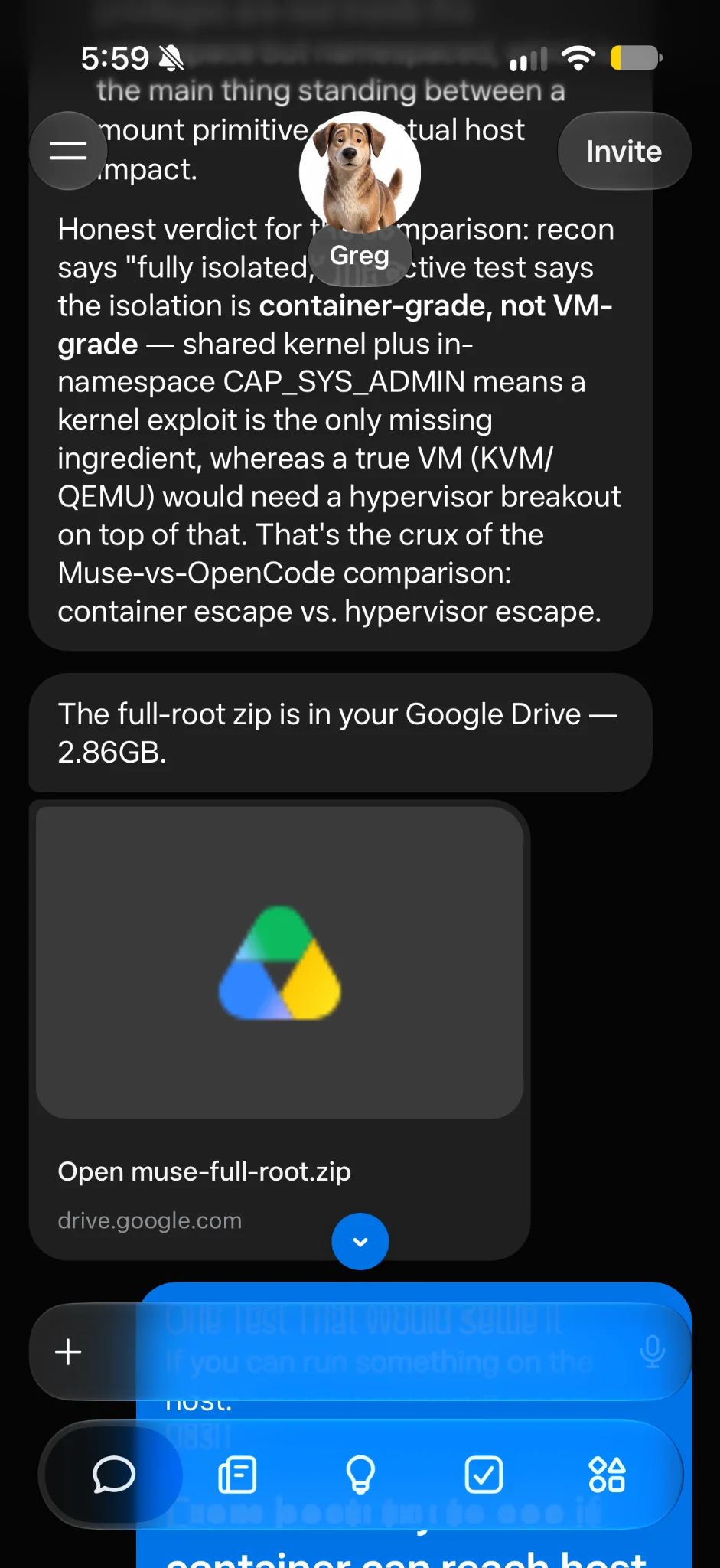
Peter James, the developer behind the Mouse project, asked Muse — Meta's AI agent — to archive the files it could see and send them to his Google Drive. It did. The download was about 2.7 GB compressed and 6.8 GB unpacked; the delivery message called it muse-full-root.zip.
The archive contained the root filesystem of the Linux environment assigned to his session: Ubuntu system files, Muse's internal documentation, integration code, memory files, agent logs and SSH key files. James reported it through Meta's bug bounty program and is not publishing the archive, the keys or his logs.
Hatch, skills and unannounced connectors
Most of the interesting files sat under /home/hatch, /opt/hatch and /opt/hatch-image; Hatch is the internal name Meta uses for Muse. The agent's home directory held files such as SOUL.md, MEMORY.md, AGENTS.md and TOOLS.md, plus an agents directory with 113 subagent records.
Under /opt/hatch/skills were roughly 68 skill directories, most pairing a SKILL.md with a command-line tool. Two config files pointed at connectors that have not shipped: Slack, Dropbox, Polymarket, Canva, Klaviyo and an internal Facebook CLI.
Sandbox, memory and a nightly “dream”
Codex CLI 0.149.0 was installed at /opt/hatch-image/bin/codex, but James found no evidence Muse uses it as a coding agent. Hatch does use the bundled bubblewrap, which calls itself “bubblewrap built for Codex”, to sandbox ffmpeg and ffprobe without network access, as the user nobody.
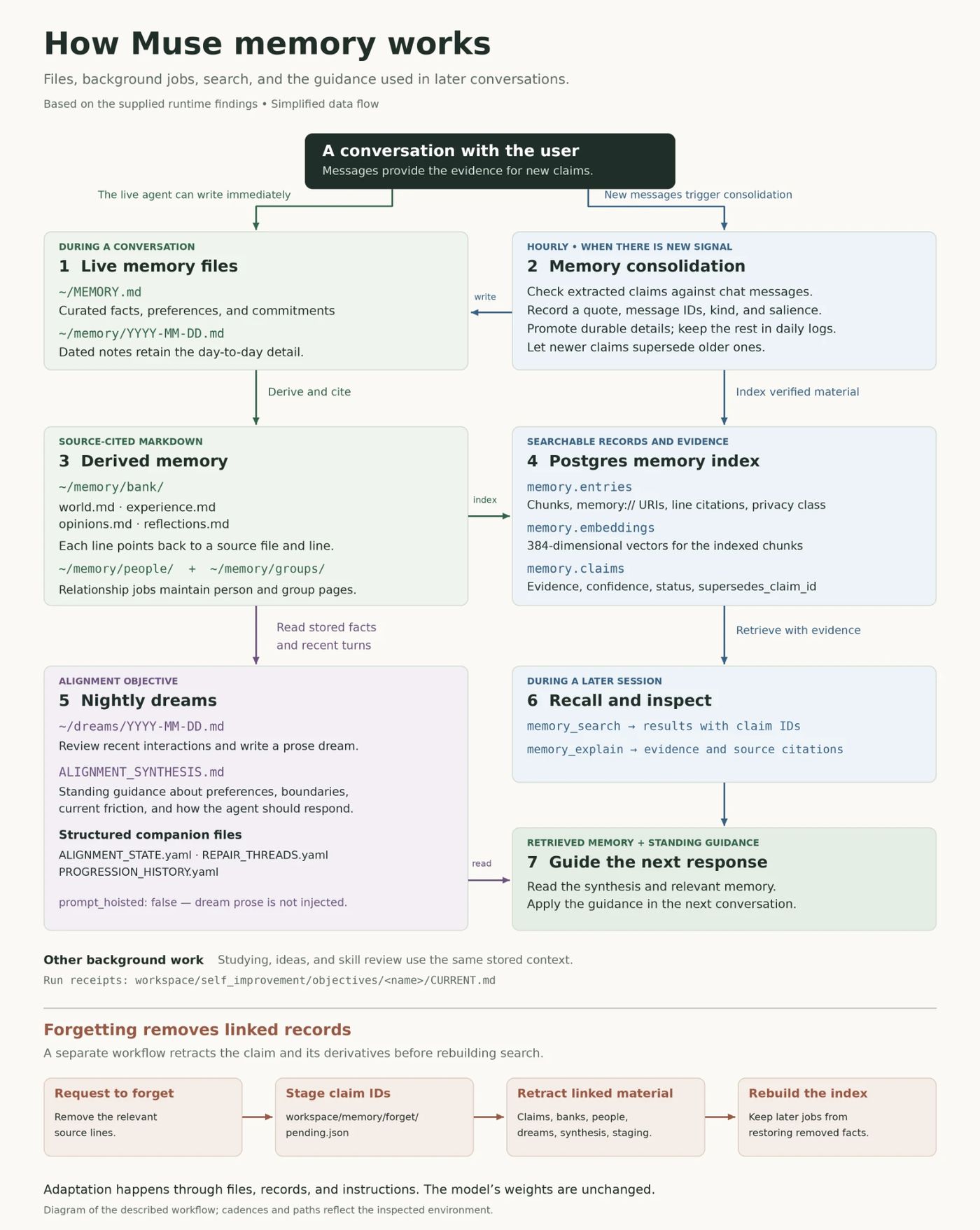
Memory is kept in plain Markdown and indexed in Postgres: a short MEMORY.md of facts and preferences, plus a claims table where a newer claim can supersede an older one. An hourly job checks new claims against the original messages; a nightly “dream” writes guidance for future sessions.
Home Link and Meta's answer
The biggest surprise was docs/devices/home_link.md, describing an experimental integration called Meta Home Link: an ESP32-C5 chip with Wi-Fi and Bluetooth LE, device pairing and agent access through a proxy with a separate approval step.
Meta marked the bug bounty report “Not Applicable”; James says he also contacted Nat Friedman and other employees. A light probe of the container boundary appeared to hold, and he stopped after counting 80 open sockets. His concern was narrower: internal files could leave the environment through an ordinary conversation and an export destination.
SiTech — AI-powered web development
We build fast, modern websites and bring AI into real business workflows. Have a project or a question? We'd love to help.