A 1930 expedition found a million people in New Guinea's highlands
An essay retraces the 1930 encounter between Australian prospectors and a million highlanders cut off from the outside world for 10,000 years, and asks how that isolation still shapes Papua New Guinea.
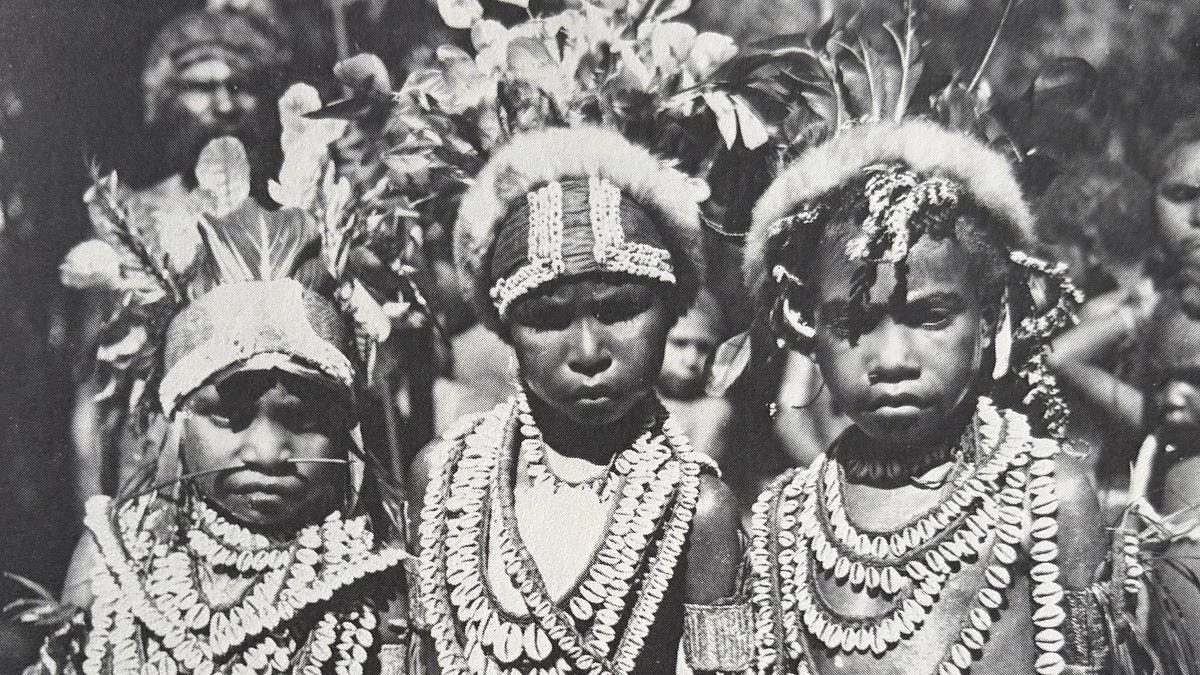
In 1930 the Australian prospector Mick Leahy walked up from the Markham valley near Lae looking for gold and found something no colonial government had suspected: highland valleys full of people — about a million of them, according to the book First Contact by Bob Connolly and Robin Anderson. A new essay by Daniel Frank retells that encounter and asks how a group of that size went unnoticed for so long.
An island nobody had mapped
New Guinea was nominally divided in 1930 — the western half Dutch and now part of Indonesia, the eastern half Australian and today Papua New Guinea — but real governance was thin. The coast meant malaria-ridden rivers, swamps and jungle; the highlands sit on the equator yet hold glaciers and peaks just below 5,000 metres, and from outside they looked like cloud-covered walls where nothing could live. Gold found in 1926 pushed prospectors inland, and Leahy's party carried stills and a movie camera, so the meeting survives in thousands of photographs and hours of film.
10,000 years apart
People reached New Guinea about 50,000 years ago, island-hopping from Southeast Asia, and invented agriculture there independently around 10,000 years ago — taro, bananas and sugarcane — in the same era that wheat was domesticated in the Middle East. As the valleys filled, the highlanders lost contact with the coast. Root crops rot within weeks, there were no draft animals and no writing, so no surplus could be stored, taxed or traded in bulk and no larger state formed: groups of a few hundred lived side by side in constant warfare under big man leaders chosen through competitive gift-giving. Goods moved where knowledge did not — the sweet potato arrived 300 to 400 years ago by passing from garden to garden as women married into neighbouring clans, and shells travelled inland for 10,000 years while losing their origin.
Genes, languages and a weak state
The isolation shows in genes and language. Coastal populations carry 10 to 30 percent Austronesian ancestry from seafarers who arrived about 3,300 years ago; sampled highlanders have none, and they also lack the malaria-protective mutations common on the coast. Almost all highland languages belong to one family, Trans-New Guinea, while dozens of unrelated families cluster along the north coast. The state remains weak: Port Moresby has no road to any other major city, the roughly 700-kilometre Highlands Highway from Lae is often closed by landslides and robbery, most travel is by propeller plane, and nobody knows whether the population is 10 million or 17 million.
SiTech — AI-powered web development
We build fast, modern websites and bring AI into real business workflows. Have a project or a question? We'd love to help.