Matt Duggan's Essay: Why He Is Tired of Being on the Network
In a personal essay on his blog, developer Matt Duggan argues the smartphone has turned into a tax he cannot refuse, and describes how an FPGA board that stays offline became his way out of it.
On September 25, developer Matt Duggan published an essay on his blog explaining why he has grown tired of being permanently connected. The text drew attention on Hacker News. It is a personal opinion piece rather than reporting: Duggan writes about his own devices, habits and irritation.
From enthusiast to unwilling payer
Duggan presents himself as a former believer. He says he researched every new phone model, switched between iOS and Android to taste each release, and once queued at 3 a.m. for a first-generation iPhone. Today he cannot say which model is in his pocket, nor name a single reason to upgrade beyond a battery that wears out. His conclusion is blunt: the smartphone has become a tax. In his words, he may choose who collects it, Apple, Samsung, Google, Nothing or Fairphone, but not whether to pay.
Denmark, where the phone is mandatory
The essay is rooted in his daily life in Denmark. He lists the apps he is expected to carry: Aula for school communication, Rejsekort for trains, MitID to prove to the state that he is who he is, and e-Boks for official messages from the government. Airports, hotels and gyms assume the same, he adds. Calling this a free choice, he argues, is misleading, and he calls it compliance instead. His comparison is the offline option that exists like a ramp installed after the fact at some stations, built to satisfy a regulation and pitched at an angle nobody can climb.
Ads, sameness and a closed loop
Much of the essay catalogues what he sees on a screen. The App Store, he writes, puts ads on top of ads; his maps carry ads, his podcast app plays him an ad for a podcast about digital detox, and an HBO series counts down "ad one of seven" before firing sports-betting commercials. Sameness irritates him too: the same phrases looping endlessly, streaming shows written for the least attentive viewer, and documentaries assembled from social-media clips. The network, in his reading, mostly talks about itself.
A board that asks nothing
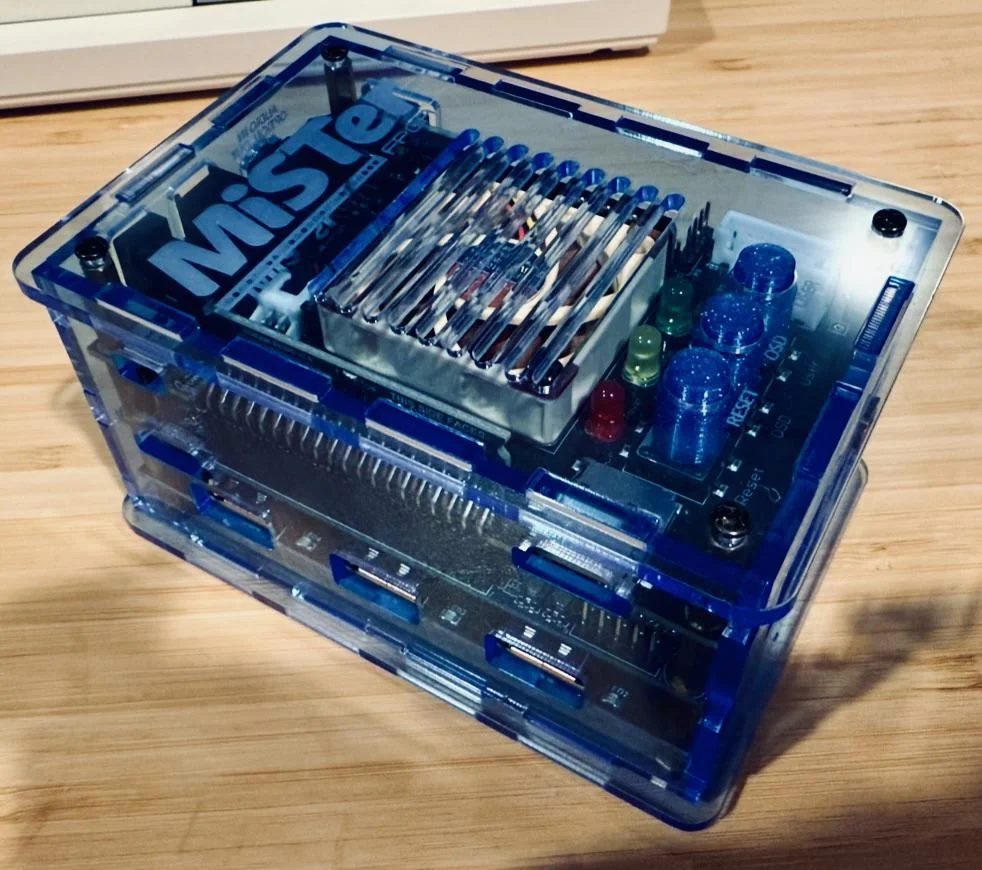
His answer is not a detox plan but a piece of hardware: a MiSTer, an FPGA-based board that rebuilds the logic of old consoles at chip level instead of emulating them in software. Setup was simple, he writes: flash an SD card, run an update script and copy the games over. After he pulled out the network cable, the device kept working exactly as before. An NFC card system, TapTo or Zaparoo, starts a game with a single tap, closer to taking a cartridge off a shelf than scrolling a menu. Duggan admits the device is not perfect: the interface is clunky and pairing a first controller is awkward. Still, it does one job, he writes, much like the Macintosh LC II of his childhood. The closing line is the point: it asks nothing of me and knows nothing about me.
SiTech — AI-powered web development
We build fast, modern websites and bring AI into real business workflows. Have a project or a question? We'd love to help.