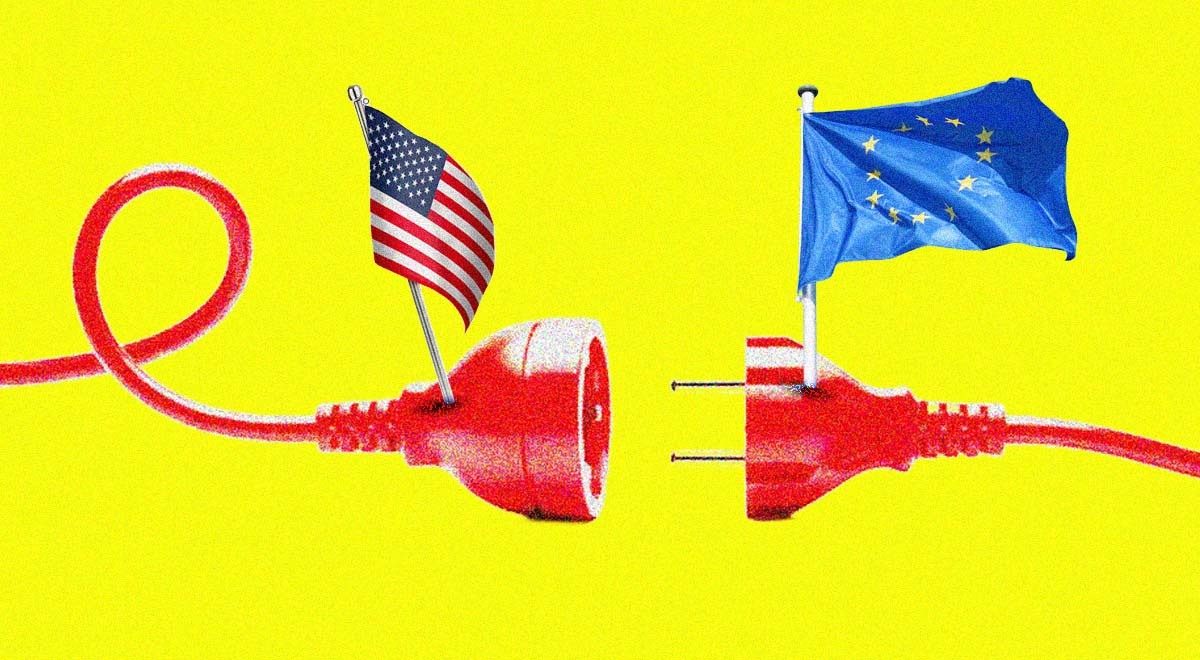
US ICC Sanctions Reignite European Tech Sovereignty Debate
US sanctions on the International Criminal Court have cut sanctioned officials off from email, payment cards, and cloud services, renewing concerns in Europe over its dependence on American technology providers.
Sanctions expose digital vulnerabilities
The US sanctions imposed on the International Criminal Court on October 9, 2026, have renewed concerns about Europe's reliance on American technology providers. Sanctioned ICC officials reported losing access to email, payment cards, cloud services, and other digital tools, illustrating how quickly US measures can disrupt daily operations far beyond American borders.
When the Trump administration sanctioned ICC prosecutor Karim Khan in 2025, he reported losing access to his professional Microsoft email account, which the company denied. The court subsequently switched from the Microsoft Office Suite to the German-made openDesk, with some governments following suit. Canadian judge Kimberly Prost, also sanctioned in 2025, said her credit cards issued in the Netherlands and Canada were canceled, and that services from Amazon and Google stopped working, even Apple's voice assistant Alexa. French judge Nicolas Guillou described life under sanctions as a nightmare, saying he cannot use Visa or Mastercard cards, lacks access to most digital services, and cannot place online orders when an American intermediary is involved.
Deep dependencies on US tech
Three American giants, Amazon, Google, and Microsoft, control about 70% of the European cloud market. More than 74% of publicly listed European companies rely on US-based tech services such as Google and Microsoft, according to a survey by Proton. US card schemes Visa and Mastercard accounted for over 60% of card transactions in the EU in 2022, according to European Central Bank data, underscoring deep-rooted dependencies.
Peter E. Harrell, a visiting scholar at Georgetown's Institute of International Economic Law, noted that the US issued general licenses for ongoing ICC transactions until April 2027, including payments by member states, rent, and utilities. The GL 14 license covers services incident to the exchange of communications over the internet, including email, web hosting, and video conferencing, which Harrell called a win for the US tech sector as Europeans pursue digital independence.
Europe weighs response
Guillou told Euronews that the only effective response to the sanctions is to build one at the European level, because it needs to be economically strong with a sufficiently powerful political and economic scope. The case may strengthen EU efforts to build local technology and payment alternatives, weeks after the bloc adopted its Tech Sovereignty package aimed at increasing digital autonomy.
US Secretary of State Marco Rubio reportedly instructed diplomats in July to push back against talk of a hypothetical kill switch, in which the US government could order American companies to disable services for European customers. In December, the US imposed visa bans on former EU commissioner Thierry Breton and four civil society figures involved in regulating US digital platforms, although a federal judge later paused the decision.
Sources: Cybernews
SiTech — AI-powered web development
We build fast, modern websites and bring AI into real business workflows. Have a project or a question? We'd love to help.