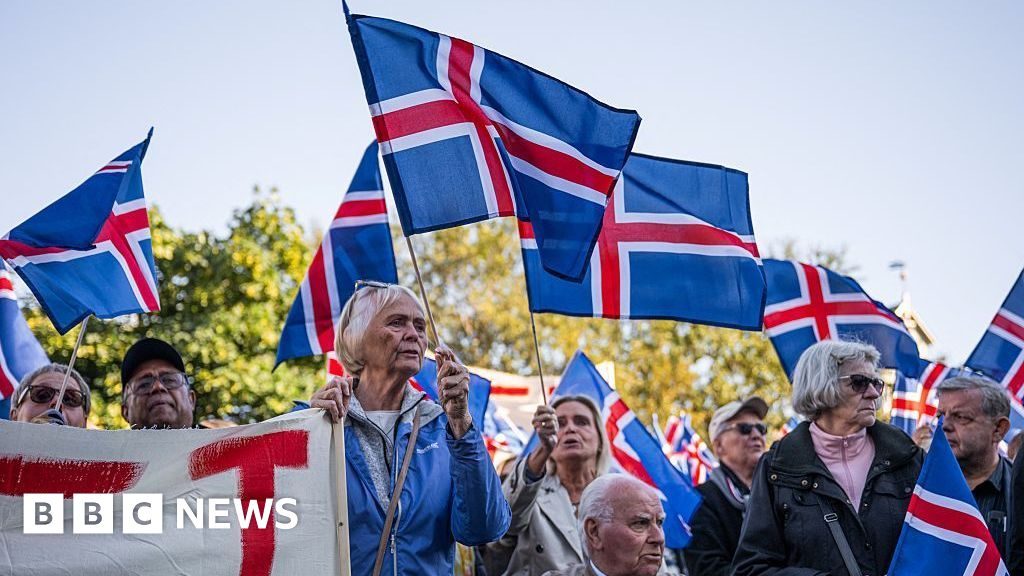
Iceland votes on whether to restart EU accession talks
Icelanders are voting in a referendum on whether to resume European Union accession talks 13 years after they were suspended. Polls suggest a result too close to call.
Icelanders are voting in a referendum on whether to resume accession talks with the European Union, 13 years after the negotiations were broken off. Polls opened at 09:00 GMT and close at 22:00 GMT on Saturday, with the result expected in the early hours of Sunday.
The race is too close to call: the latest opinion poll put the No campaign ahead with 51.6%, while an earlier survey had the Yes side in front. The referendum was brought forward because of turbulent international affairs. Iceland has a population of under 400,000, and public broadcaster RUV reported that more than one in five voters had already cast a ballot in early voting.
What is on the ballot
The question reads: "Should Iceland resume accession negotiations with the European Union?" Iceland already belongs to the EU single market and the Schengen border-free zone through the European Economic Area, but full membership would bring it into the customs union and eventually the euro.
Its application was well advanced when talks were put on hold in 2013, and European Commission officials have indicated negotiations could be finalised in one or two years: of the 35 chapters of talks, 27 had been opened and 11 provisionally completed. A Yes vote would not be a final decision on membership — it would still require a second referendum, approval by parliament, an amended constitution and sign-off from all 27 EU member states.
Fisheries and sovereignty
The campaign has been fought less over security than over Iceland's fishing industry and sovereignty. Fishing and marine products account for almost 40% of exports, and the No campaign fears losing control of Iceland's fishing grounds under the EU's Common Fisheries Policy, vowing never to share the country's waters. Brussels has indicated Iceland could earn some kind of exemption, but that is considered potentially the biggest obstacle to any agreement.
After the 2008 financial crisis and the collapse of its banking system, Reykjavik began accession talks in 2009, only to halt them in 2013. Iceland is now one of Europe's most affluent nations; Eirikur Bergmann, professor of politics at Bifröst University, told the BBC that "many people attribute this to Iceland's independence". It has the fifth highest GDP per capita, yet interest rates stand at 8% and inflation has climbed to 5.6%. Yes campaigners argue that the economic benefits of EU membership would help bring rates down.
Security and the campaign
Iceland is a founder member of Nato but has no military and relies on allies for defence; a bilateral US defence agreement has been in place since 1951. The No campaign says the country's security rests on Nato and the US and that EU membership is not a substitute. This year the EU and Iceland signed a security and defence partnership.
In a televised debate, the Yes team was headed by Prime Minister Kristrún Frostadóttir and the No campaign by Guðrún Hafsteinsdóttir, chair of the opposition Independence Party. Frostadóttir said membership would be "one of the biggest risk-reducing steps we can take", while Hafsteinsdóttir stressed the vote was not about working well with Europe but about handing decision-making powers to Brussels.
SiTech — AI-powered web development
We build fast, modern websites and bring AI into real business workflows. Have a project or a question? We'd love to help.