Scott Jenson at Akademy 2026: ideas on modernizing the open-source desktop
UX veteran Scott Jenson told KDE's Akademy 2026 that the open-source desktop has stalled on the decades-old WIMP model, and showed prototypes for widescreen layouts, a window stash area, a persistent clipboard and a private browsing-history view.
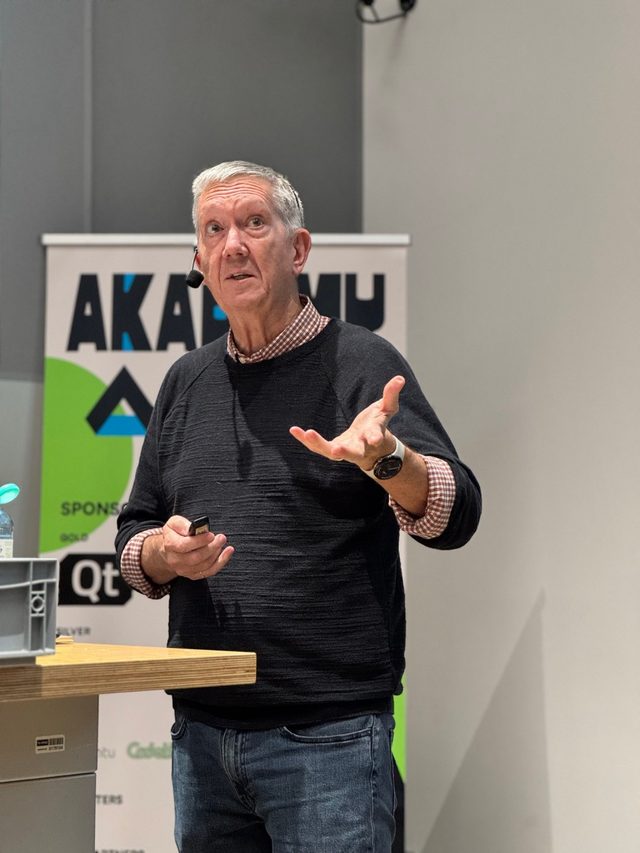
Scott Jenson, a UX designer who worked at Apple and Google, told KDE's Akademy 2026 conference in Graz, Austria, that the open-source desktop has settled into the old windows, icons, menus, pointer (WIMP) model and should start experimenting again.
Jenson spent much of his career doing UX at Google, including the Chrome team, and now works with Mastodon and Home Assistant. Open source needs a lot of help with UX design and is understaffed, he said.
The desktop stopped moving
Desktop UX has barely changed in twenty years, he said: the ideas came in the 1980s and 1990s, then the field stabilized. Linux desktops largely copied Windows and the Mac, and the community let Microsoft and Apple take the risks and make the mistakes.
He meets three pushback arguments — that mobile won, that WIMP is finished, that people don't want their desktop touched — but mobile won consumer markets, not productivity, and desktops are "silently awesome".
Mouse-up, working memory and failed predecessors
Details matter: a Mac window raises on mouse-up, making it easy to drag a file out of a background window, while most Linux systems raise it on mouse-down. After Jenson raised this on Mastodon two years ago, a KDE developer implemented a fix within hours.
The larger theme is working memory: the desktop is stateless — "the curse of direct manipulation" — so the clipboard forgets and context must be rebuilt; he suspects the many desktop environments, window managers and clipboard managers exist because of that gap. Earlier projects such as Microsoft's WinFS and KDE's NEPOMUK failed, he argued, because the hardware of the time let them down, not the ideas.
Prototypes and the privacy question
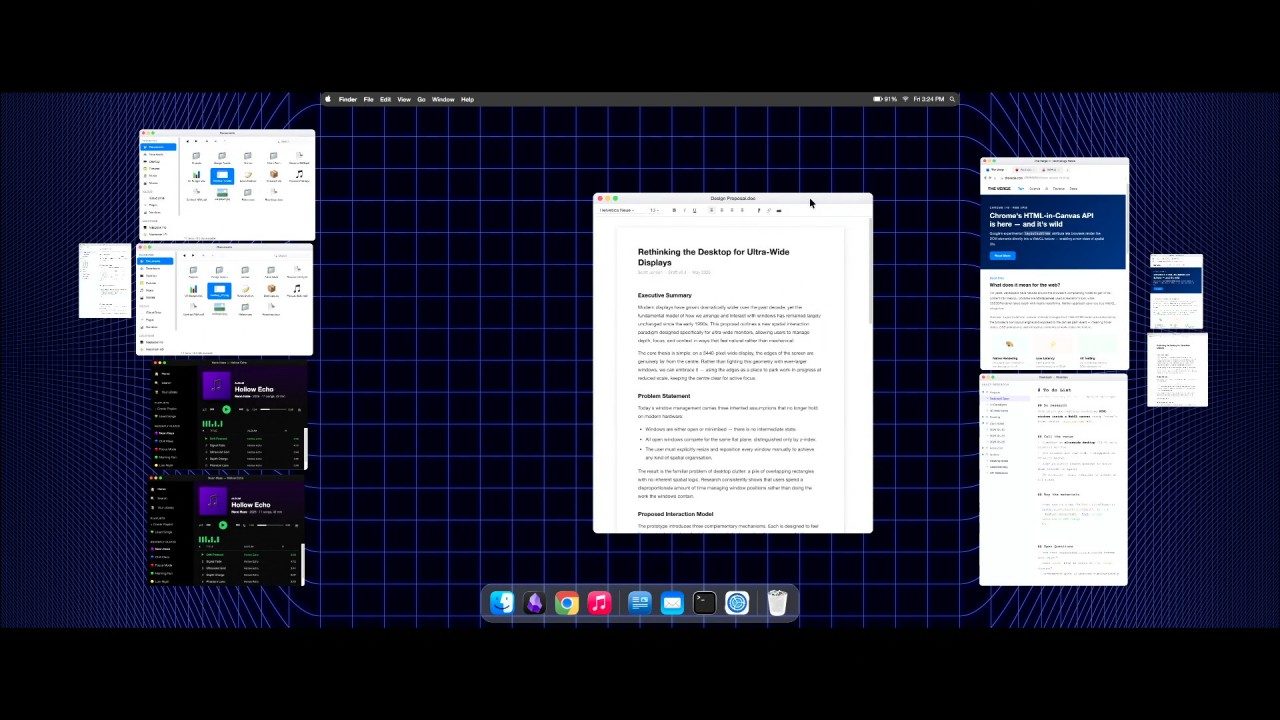
His prototypes, 29 minutes into the talk video, include a widescreen-first desktop that keeps attention in the middle of large monitors and tiles the rest Exposé-style; a "stash area" where a window dragged to the screen edge becomes a widget; a clipboard inspired by Obsidian's Canvas, where files, text and images form a persistent collection; and a browsing-history map built with "simple math", not AI.
Asked how such a history would avoid Windows Recall's privacy problems, he said it would collect telemetry — "not interesting information" — that attackers would care less about, with encryption designed later. On AI he was brief: it "sucks up all the oxygen", and he prefers openly trained models that run locally, such as Apertus from the Swiss AI Initiative.
His appeal to the room: start taking the desktop apart. "No one else is going to try, and I think someone's got to start".
SiTech — AI-powered web development
We build fast, modern websites and bring AI into real business workflows. Have a project or a question? We'd love to help.