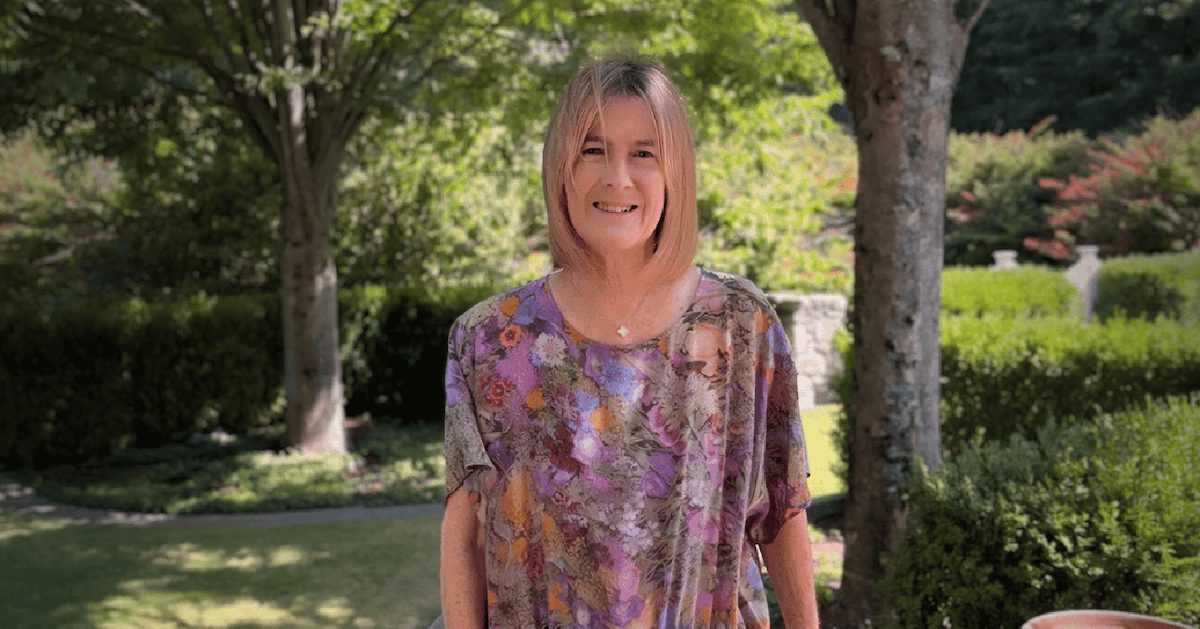
Stephen Wolfram Publishes a Memorial Essay for His Wife, Mathematician Elise Cawley
Wolfram has published an essay about his wife, the mathematician Elise Cawley (1961–2026), who died in August 2026 after a sudden cardiovascular event while recovering from heart surgery.
Stephen Wolfram has published a memorial essay on his writing site about his wife, the mathematician Elise Cawley (1961–2026), who died in August 2026 after a sudden cardiovascular event. The couple had been together for 36 years.
What happened
According to the essay, Cawley was recovering at home after urgent open heart surgery and had just attended virtually a celebration for one of their children when she collapsed and died instantly. Wolfram wrote that a long-standing congenital heart condition had been worsening. He said his only solace was that the end came instantly, after a day filled with nothing but joy.
A mathematician's career
Cawley was born in 1961 in Urbana, Illinois, and grew up mostly in Columbia, Maryland. She studied at MIT, took degrees in mathematics and physics at the University of Maryland and completed a PhD at Berkeley with a thesis on "Smooth Markov Partitions and Toral Automorphisms". Supported by a Hertz Foundation fellowship, she worked on dynamical systems, Teichmüller spaces and Gibbs theory, and held a postdoctoral position sponsored by the mathematician Dennis Sullivan, spent partly at CUNY in New York and partly at IHES near Paris.
She met Wolfram on September 17, 1990, in New York City; they married in 1994 and had four children. From 1993 she held a position at the University of Chicago, where she taught Gibbs theory and helped devise a professional master's degree in financial mathematics that still runs today. Later she served on the board of the Hertz Foundation and on Stanford Online High School's community advisory group, and designed the family's house in Concord, Massachusetts.
Why it matters
Wolfram wrote that he had chosen to say little about his family in public, but that after her death he could not restrain himself from telling the world about her. He described her as a forceful intellect, drawn to elegance and to the human side of mathematics, and said that on the question of whether mathematics is ultimately an axiomatic formal system he had come to realise that she had been right all along.
SiTech — AI-powered web development
We build fast, modern websites and bring AI into real business workflows. Have a project or a question? We'd love to help.