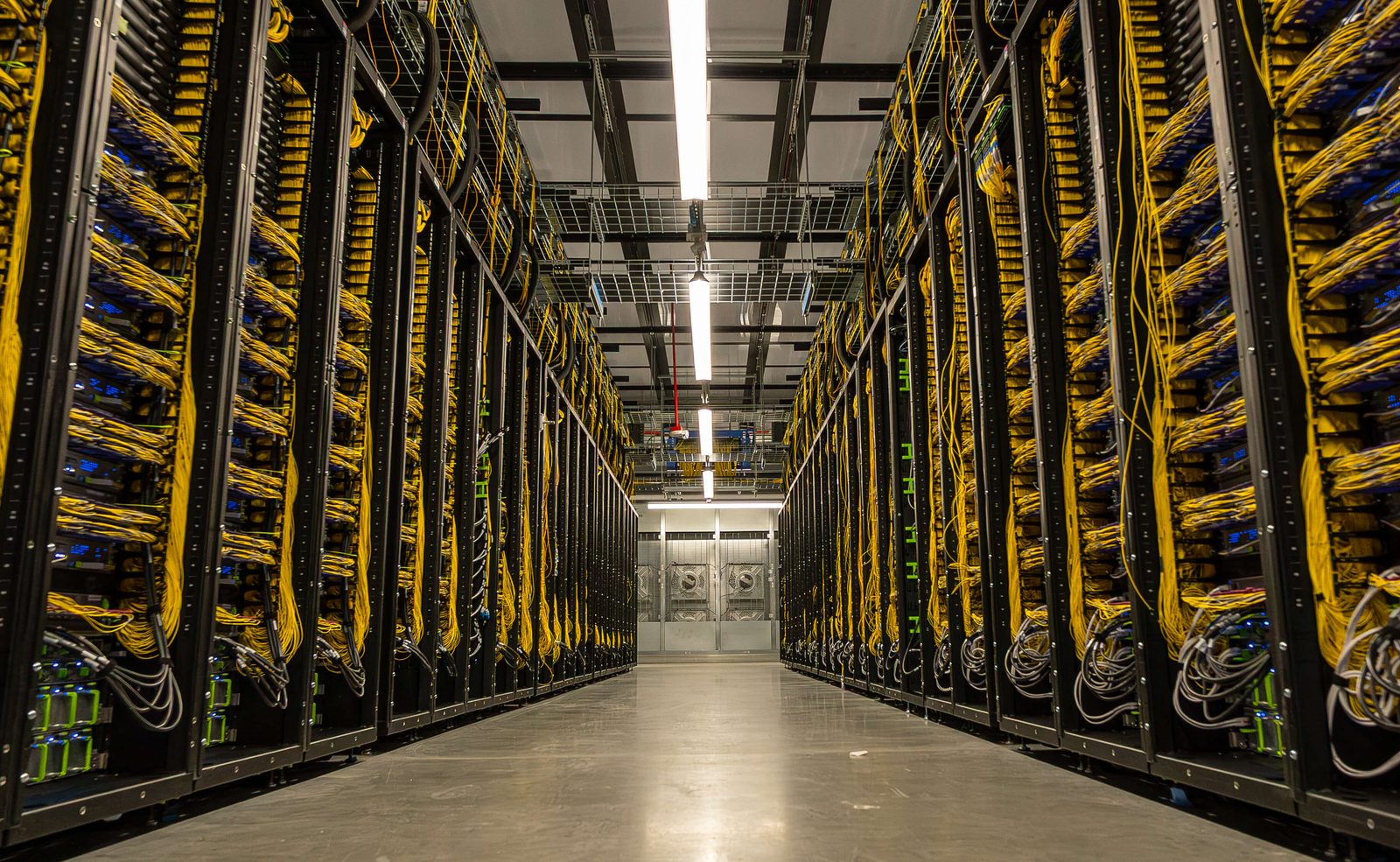
Inside Prometheus: Meta's Gigawatt-Scale AI Supercluster in New Albany
Meta's Prometheus supercluster in New Albany, Ohio, has completed its first phase, training the Muse family of foundation models on hundreds of thousands of GPUs with plans to scale to roughly one million.
Meta has completed the first phase of Prometheus, its gigawatt-scale AI supercluster at the New Albany, Ohio data center site. The facility, previously a conventional web traffic data center two years ago, now hosts training for frontier foundation models including the Muse family.
A Million-GPU Scale
Prometheus comprises hundreds of thousands of GPUs across multiple interconnected buildings, linked by miles of fiber to operate as a single machine. At full scale it will comprise roughly one million distributed GPUs. The system currently runs two NVIDIA platforms, with a third based on the Vera Rubin NVL72 arriving soon. The GB200 NVL72-based Catalina delivers 72 GPUs with 13.4 TB of HBM3e and 720 peak PFLOPS of FP8 compute, while the GB300-based Clemente raises memory to 288 GB per GPU and exceeds one exaFLOP of peak FP4 compute.
Networking and Reliability
Beyond the standard data center network, a dedicated Ethernet Back-End network enables direct GPU-to-GPU communication within and across buildings. Building-level fabrics interconnect up to 20,736 GPUs, while the Backend Aggregation network spans 2 km to over 100 km with multiple Pbps of regional bandwidth. Meta reports over 85% goodput on pre-training runs and over 90% on reinforcement learning runs, with firmware fixes raising mean time between interruptions from roughly 47,000 to more than 54,000 GPU hours.
Stability Engineering
Interruptions peaked near 1,000 events per 8K GPUs daily in mid-2025; a year of cross-functional work reduced that rate by 99%. Targeted fixes addressed NVLink signal integrity across more than 600,000 connections, HBM and LPDDR memory faults, switch health, and backend network events. Each 72-GPU NVL72 domain runs a 64-GPU slice with eight in-rack spares, and fault recovery combines parallelism-aware fault tolerance with asynchronous distributed checkpointing. Power transients of 30-40% are managed by the Dynamo Dimmer capping framework backed by rack batteries and facility storage, while a mix of air-assisted and facility liquid cooling supports the heterogeneous fleet.
Sources: Engineering at Meta
SiTech — AI-powered web development
We build fast, modern websites and bring AI into real business workflows. Have a project or a question? We'd love to help.