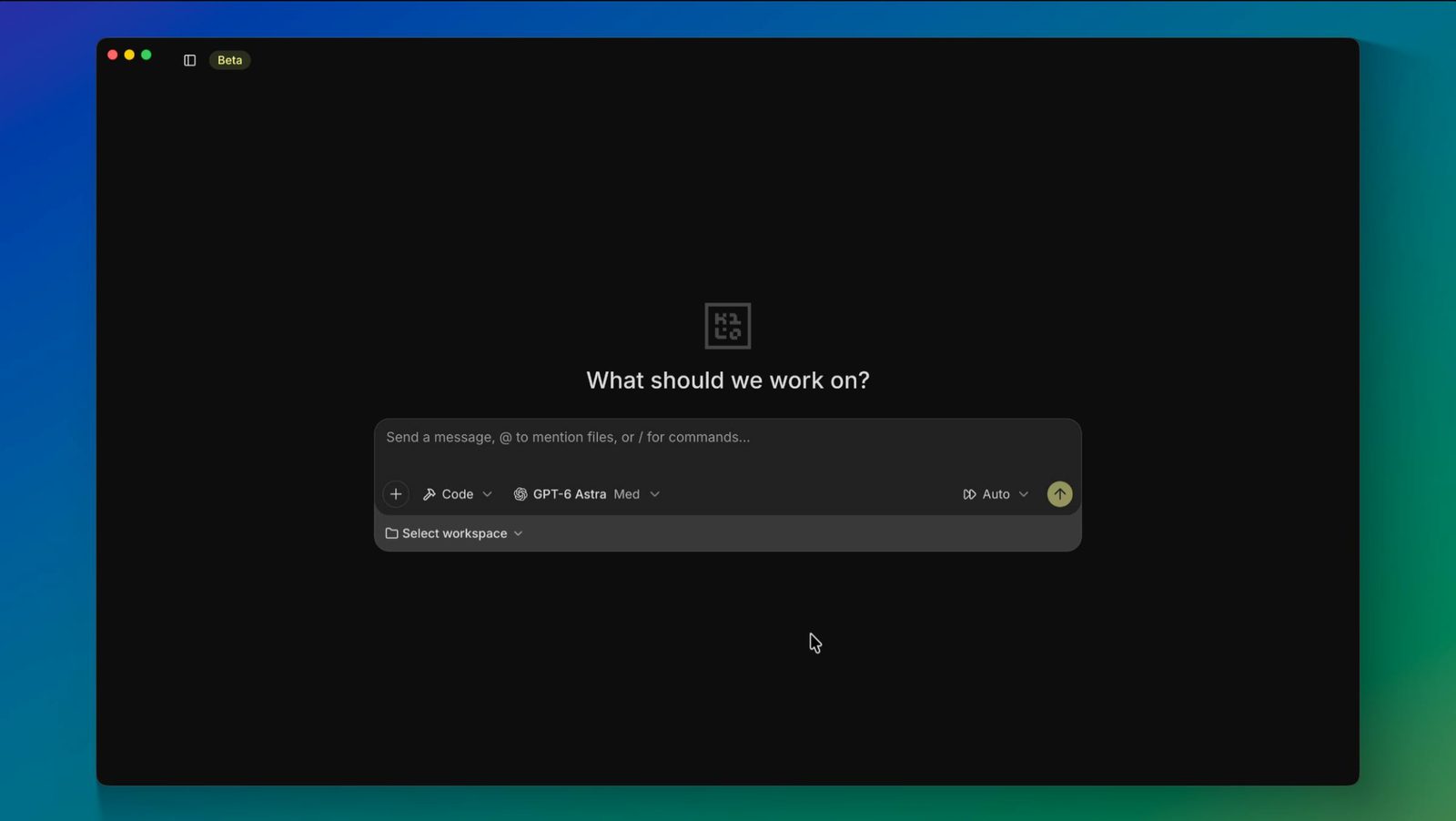
Kilo Desktop Brings Models, Notebooks and Agent Controls Into One App
Kilo Desktop, the newest surface in AI Workspaces, launches as the entry point to Anaconda's stack. It unites more than 500 models, planning agents, notebook editing, conda environments and admin policy controls in one app.
Kilo Desktop launches
Anaconda is releasing Kilo Desktop on October 6, 2026 as the newest surface in AI Workspaces and the entry point to the rest of its stack. The company says agents write most new code at the companies it talks to, while the actual work of an AI native builder is wider than code: it includes the notebook where analysis lives, the conda environment the notebook and service both depend on, the open weight model that would do routine work at a tenth of the cost, the local model required for data that cannot leave the building, and the security policy that decides what an agent may touch. Robert Björne, Product Owner at IntraPhone, told the company his team went from being blocked by two decades of backlog to running out of tickets. In a survey of AI native builders, 63% said they are moving toward agent swarms in some form.
Any model, planned work, native notebooks
Kilo Desktop gives native access to more than 500 models through one interface, with switching per task. Auto Efficient checks each request against Kilo Bench and routes it to the cheapest model that has proven capable of that kind of work. Models hosted or subscribed to elsewhere plug in through a custom endpoint with the user's own key, and a built-in local model server runs open models on the user's hardware with one setting that decides whether requests carry the full agent toolkit or run light without it. Sign in with ChatGPT opens every Kilo surface to users with existing OpenAI plans without extra logins or token costs.
Kilo Desktop has a planning mode. Its Plan agent reads the project and returns a step by step implementation plan without touching a line; after approval, the Code agent splits the plan into subtasks and runs them in parallel with sub-agents. Ask answers questions without changing anything, Debug finds what broke and fixes it, and custom agents cover the rest. Parallel sub-agents on the desktop are a smaller instance of the Agent Swarms also coming to VS Code today through Kilo. In the app, the agent edits notebooks directly while its cursor moves through the cell with the data loaded, creates and manages conda environments, and draws from a catalog of more than 19,000 vetted packages. A workspace is a named group of folders, and chats, notebooks, diffs and terminals open as tabs that can pop onto a second monitor and snap back.
Governance and the path to production
Enkrypt AI scanned 268,210 agent tools across 25,264 MCP servers over four months and found vulnerabilities in 73% of them. Administrators decide which models and providers people can use and from which geographies, what each agent may do, and which skills and MCP servers it can install, while the new Anaconda MCP extends the same vetting to agent tool calls. The same vetted packages, with 13,000 newly added this release, and curated models flow into Metaflow workflows; FastBakery turns the resulting dependency set, native libraries included, into reproducible container images that pip only tooling cannot produce. Autonomous red teaming attacks models, agents and MCPs across more than 300 attack categories and adapts as the target hardens, and guardrails approve, modify or block risky behavior at runtime. Anaconda also published the Agent Incident Registry, a verified, source backed record of publicly reported agent incidents. Kilo Desktop is available to download today, with more on the launch page and a live showing at Anaconda Scale on October 15; registration is open.
Sources: Hackernoon
SiTech — AI-powered web development
We build fast, modern websites and bring AI into real business workflows. Have a project or a question? We'd love to help.