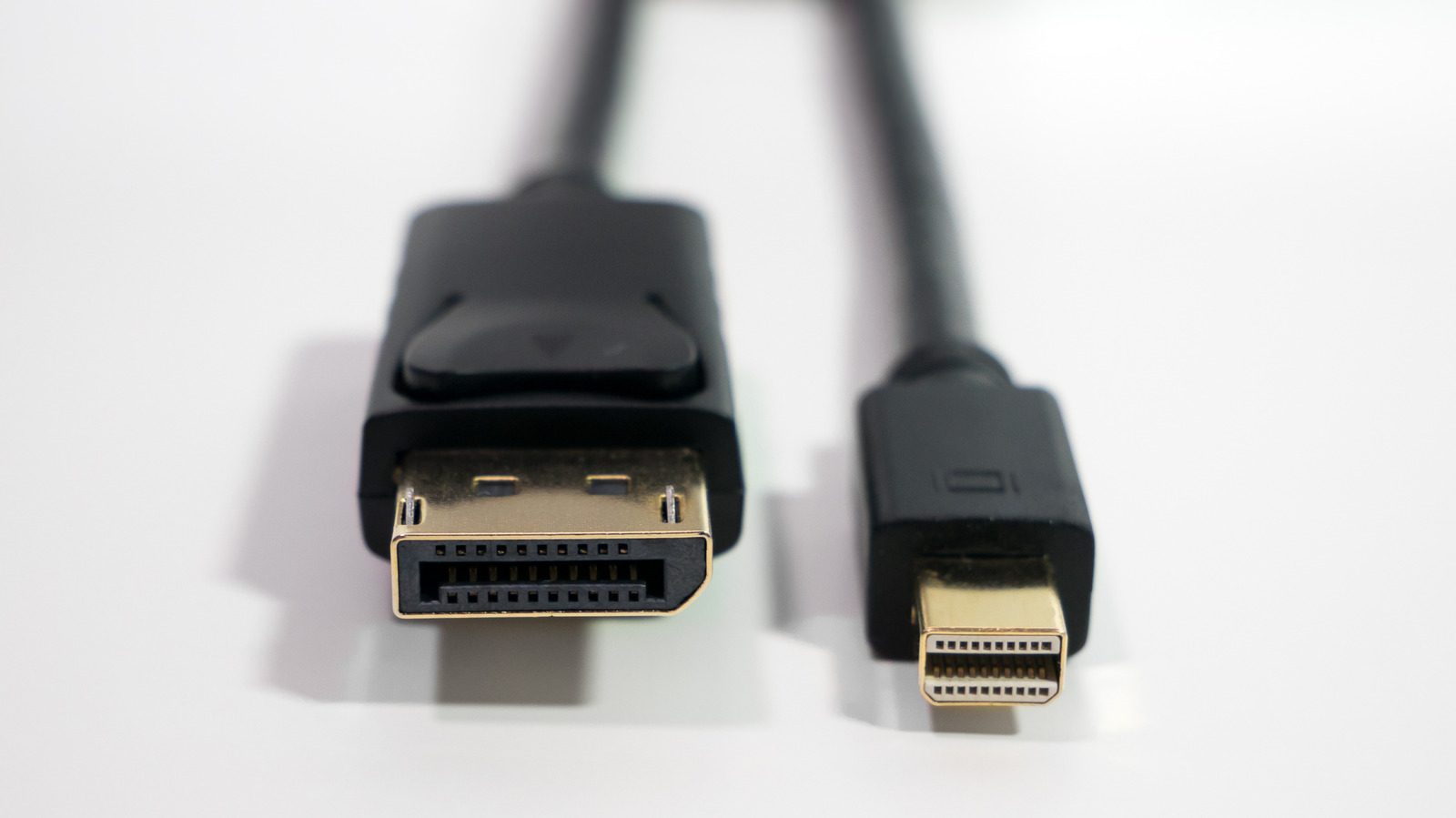
Why Mini DisplayPort Is Disappearing from Modern Devices
Mini DisplayPort, once a staple on Apple Macs, is vanishing from modern laptops. USB-C and Thunderbolt have replaced the dedicated video port, though full-size DisplayPort remains common on gaming monitors and workstations.
Why Mini DisplayPort Faded Out
Apple introduced Mini DisplayPort in 2008 to replace interfaces like VGA and DVI with a single, slimmer connector. For years, the tiny port appeared on most Mac models, and it fit easily on smaller computers such as MacBooks and the Mac mini. Both Mini DisplayPort and the full-size DisplayPort transmit video and audio through a single cable, offering much higher bandwidth than DVI or VGA, with support for resolutions up to 8K and high frame rates depending on the generation.
The decline began with Thunderbolt. The first two iterations of the Thunderbolt standard used the Mini DisplayPort connector, but added high-speed data transfer on top of video and audio, which made it suitable for accessories like the Apple Cinema Display. In late 2015 and 2016, Thunderbolt 3 arrived with the USB-C connector, and Apple and other PC manufacturers quickly moved to USB-C or HDMI, leaving Mini DisplayPort behind.
USB-C has since become the standard for nearly everything, handling data transfer, video, audio and the Thunderbolt protocol in a single small reversible connector. With DisplayPort Alternate Mode, compatible USB-C cables and ports can carry the same DisplayPort signal, giving PC makers no reason to keep the older Mini DP connector on new devices.
Where DisplayPort Still Makes Sense
The underlying technology is far from gone. Older hardware like past laptops and graphics cards still carries Mini DisplayPort, and a Mini DP-to-DP cable works fine with modern monitors since the protocol is the same. New hardware also continues to use the full-size DisplayPort, which remains the standard for many high-end monitors and graphics cards.
For extreme resolutions and refresh rates, such as 4K at 240Hz, DisplayPort remains the gold standard. While HDMI 2.1 offers up to 48 Gbps of bandwidth, DisplayPort 2.1 can reach 80 Gbps, and HDMI 2.2 pushes further to 96 Gbps, which may even the field once compatible devices are widely available.
Caveats remain for older gear. VR headsets can be picky about video signals and do not always play nice with Mini DisplayPort when using an adapter, and Apple states that the old Cinema Display does not work through a Thunderbolt adapter, though it does not hurt to try with the right cables on hand.
Sources: Engadget
SiTech — AI-powered web development
We build fast, modern websites and bring AI into real business workflows. Have a project or a question? We'd love to help.