Just the rumour of a bug is enough to find an exploit, maintainer writes
OCaml developer Anil Madhavapeddy has described how his server was probed for a cohttp path traversal bug minutes after he opened the fix, and argues that security embargoes no longer buy maintainers any time.
A fix that was being probed within minutes
Anil Madhavapeddy, an OCaml ecosystem developer and Cambridge researcher, published a note on 22 August about how the conventional open-source security process is changing. He released a security update for cohttp 6.3.0 fixing a path traversal issue. The report had arrived privately over a Slack channel via Jane Street and, in his words, was itself found with Claude Fable.
Normally the bug would be fixed privately, affected users informed, and a public advisory issued afterwards. This time he noticed probes carrying the exact bug pattern in his live webserver logs minutes after opening the pull request. He had also pointed his own agent at the affected code and built an exploit for a local server in under a minute, writing that ten minutes seems a long window for an automated attack to begin.
Embargoes no longer buy time
The second part of the note deals with the effectiveness of embargoes. The traditional process relies on keeping the details secret, but according to the author an agentic system today needs only a broad direction to search in. In a 2024 study by Fang and co-authors, a GPT-4-based agent exploited 87% of a 15-vulnerability benchmark when given the CVE description, and only 7% without it.
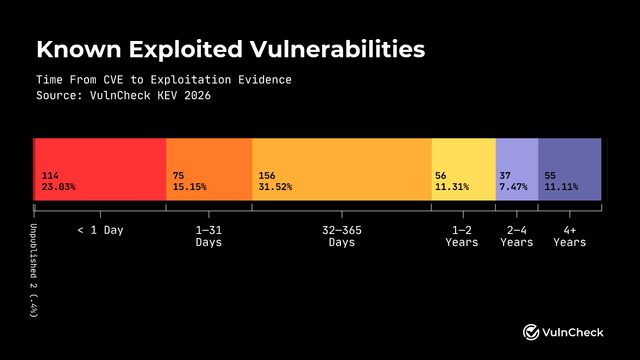
The mean time to exploit is now negative — about minus seven days, meaning exploitation precedes the patch. That figure was roughly 63 days in 2018-2019 and crossed zero in 2024. Two recent examples: the first exploitation attempt against marimo's CVE-2026-39987 came 9 hours after the advisory, despite no public proof-of-concept, and Langflow's CVE-2026-33017 took 20 hours.
The note also cites a May 2026 paper that coined the term bugonomics, arguing the bottleneck has moved to defender remediation throughput, since maintainer triage and release rates have stayed flat while language models generate exploits. The author points out that access to frontier models under Project Glasswing has been extended to 150 organisations in 15 countries, while small maintainers still lack it.
What maintainers can do
Three directions are discussed. First, developing fixes somewhere genuinely private; GitHub's temporary private forks only partly deliver this, because CI cannot access them and only a single pull request can merge into the fork. Second, dropping embargoes in favour of continuous shipping, as Chrome does with weekly security updates — the Linux kernel defers fixes by at most seven days, exceptionally fourteen. Third, defence at the protocol layer: normalising percent-encoded path separators can be implemented the moment a report arrives, while the full fix goes through review, testing and packaging.
Open source, the author writes, has no distribution mechanism for such rules outside a commercial CDN. Cloudflare deployed managed rules to plug Log4shell in 2021, but there is no comparable, fast-propagating defence for the wider ecosystem. The note closes with thanks to Sapphire Livingstone, who reported the issue, and to the reviewers of the fix, noting that the remediation was not a solo effort.
SiTech — AI-powered web development
We build fast, modern websites and bring AI into real business workflows. Have a project or a question? We'd love to help.