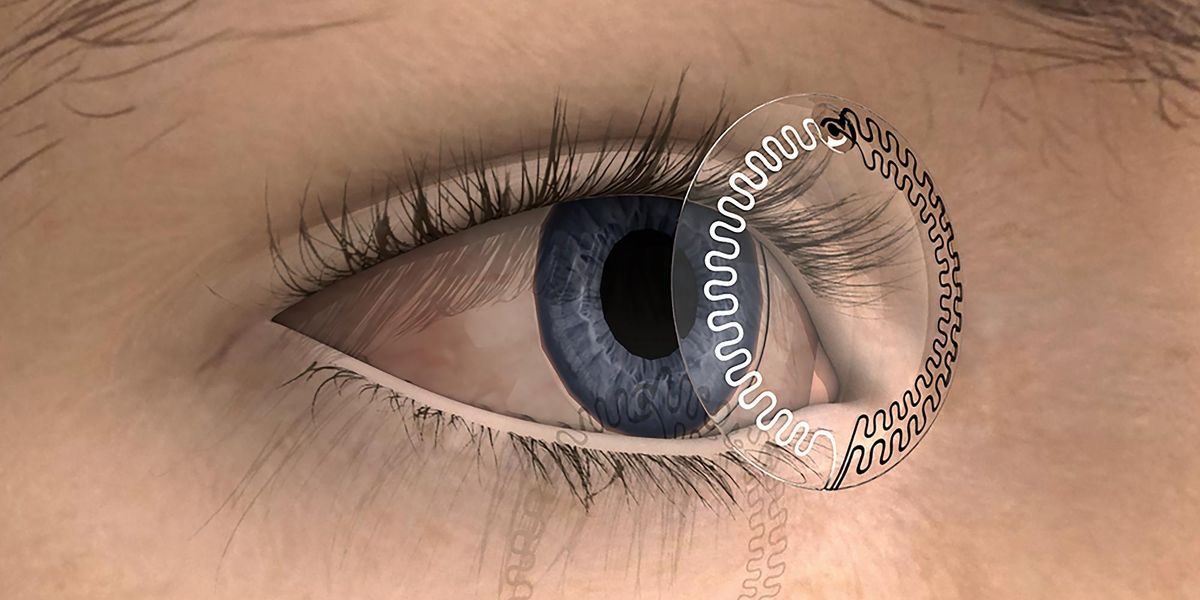
Lab on a Contact Lens Can Measure Stress Through Serotonin
Researchers have built a soft hydrogel contact lens with flexible graphene and silver electrodes that detects serotonin in tears, offering a possible noninvasive way to gauge stress without a blood draw.
A “lab on a contact lens” can measure the neurotransmitter serotonin in tears, potentially offering a new wearable way to analyze stress without a blood draw. The study appeared on 16 September in Science Translational Medicine, and the device was built at the Terasaki Institute for Biomedical Innovation in Los Angeles.
Serotonin as a stress signal
Stress is linked to disorders such as depression and schizophrenia, but doctors often gauge it with questionnaires or diaries that are highly subjective. Serotonin, often called a “feel-good” hormone, regulates mood and is found mostly in the digestive tract, blood and nervous system, with small amounts in tears.
“Tears could become a practical, noninvasive source of biochemical information that can be measured repeatedly over time,” says Yangzhi Zhu, director of the biomedical device center at the Terasaki Institute. Most biomarker testing still relies on blood draws, which provide only snapshots, he adds.
How the lens works
Zhu and his team fabricated soft, reusable hydrogel lenses containing flexible graphene and silver electrodes printed in serpentine patterns that tolerate repeated deformation. Ferrocene, bonded onto the graphene, helps detect serotonin in a strong, repeatable way. Because serotonin is present at very low concentrations, Zhu says, “a sensor needs to be extremely sensitive while still distinguishing serotonin from other molecules in tears.”
In lab dishes with artificial tears laced with serotonin, the lenses detected as little as 72-trillionths of a mole per liter, far below the roughly 15-billionths typical of human tears. They stayed functional after more than 28 days of repeated flipping, folding, stretching and twisting.
Volunteers, a pig and mice
The scientists measured tears from 10 volunteers five minutes before, immediately after and about 30 minutes after two stressful tasks: public speaking and math challenges. As expected, serotonin fell as stress rose. In another test, a lens sat on the eye of an anesthetized pig for about five minutes and detected serotonin in artificial tears containing 50 and 100 nanomolar levels of the hormone, with no sign of infection or irritation. In mice whose movement was limited a few hours a day to raise stress, serotonin dropped in both blood and tears similarly.
What comes next
In the lab and pig tests the lenses were wired to readout equipment with soft nickel wires. The team has also built a proof-of-concept wireless version with a miniaturized NFC chip and a stretchable antenna for battery-free sensing and smartphone data transfer, though further optimization, safety testing and validation are needed. Zhu says more work is needed to learn how tear serotonin varies across people, times of day and disease states, and how it relates to blood biomarkers. Wei Gao, a medical engineering professor at Caltech who was not involved, calls the work an exciting direction for wearable biosensing that moves beyond heart rate and temperature toward molecular monitoring.
SiTech — AI-powered web development
We build fast, modern websites and bring AI into real business workflows. Have a project or a question? We'd love to help.