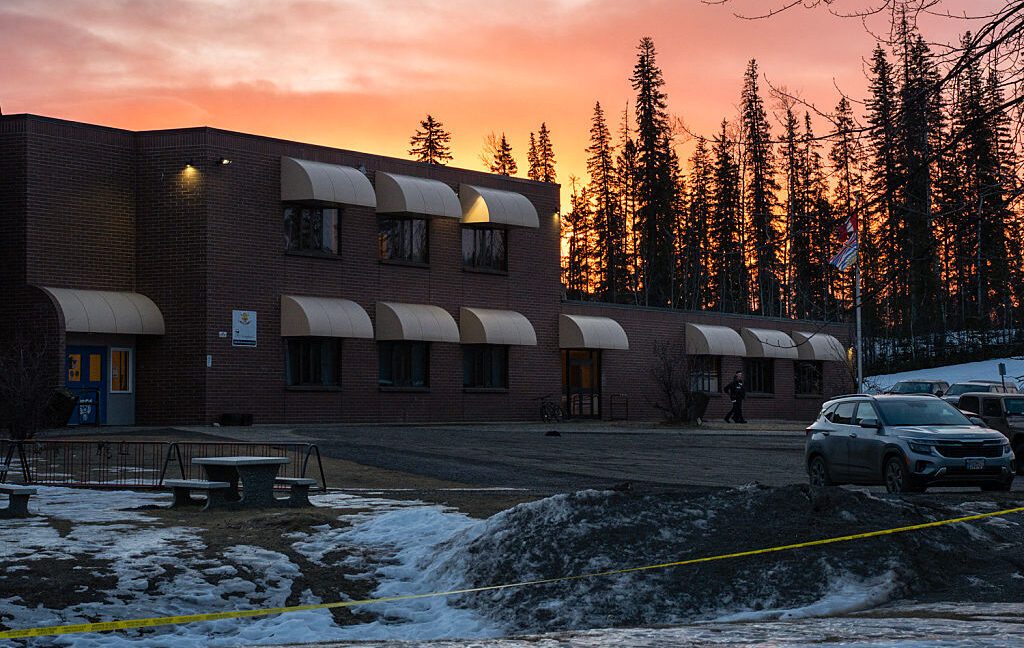
British Columbia sues OpenAI and Altman, demanding a new Tumbler Ridge school
The province's lawsuit says OpenAI should pay to rebuild the school demolished after the February 2026 shooting in Tumbler Ridge and cover emergency costs the town never expected to face.
British Columbia has sued OpenAI and its chief executive, Sam Altman, over the February 2026 mass shooting at Tumbler Ridge Secondary School, arguing that the company should pay to replace the school ChatGPT helped destroy.
The complaint, filed on Monday, details for the first time how costly the disaster response was for a remote mining town of about 2,700 people.
A school that could not be reopened
On 10 February 2026, an 18-year-old shooter, Jesse Van Rootselaar, killed five students and an education assistant at Tumbler Ridge Secondary School before taking their own life. Van Rootselaar had earlier shot their mother and half-brother, bringing the death toll to eight.
About 160 students, teachers and staff were trapped in classrooms and closets for hours, and the province says their trauma is too severe for them to return. Demolition began in August, and the community hopes a replacement school will be built at a new location by the end of the year. Students now attend a makeshift campus assembled from fourteen Ministry of Forestry trailers.
The district says it had to furnish the site and train replacement educators. In the three months after the shooting, Child & Youth Mental Health delivered over 900 counselling sessions to more than 100 children and families, and Northern Health treated over 130 adults.
What the province is asking for
British Columbia and the local Board of Education want OpenAI to cover the cost of the new school and the emergency expenses they say would never have been incurred but for the shooting and its foreseeable consequences. They also seek an order requiring OpenAI to terminate violent chats automatically, run regular independent audits and change the model instructions.
Most urgently, they want Van Rootselaar's chat logs released to the public. So far OpenAI has shared them only with the Royal Canadian Mounted Police, which declined to comment.
What OpenAI knew
OpenAI first detected the violent chats in June 2025. According to sources who spoke to The Wall Street Journal, human reviewers concluded the shooter posed a credible and specific risk of gun violence, but company leadership overruled them and blocked a report to law enforcement. The account was simply deactivated, which did not stop the shooter from opening a second one.
OpenAI says it was protecting the user's privacy; the province calls that rationale untrustworthy and accuses the company of hiding the logs to protect its valuation and a potential $1 trillion public offering. If the province wins, the company could face extensive damages, plus punitive damages if the failure to warn police is found willful. "There is no AI exemption to those criminal law principles," Attorney General Niki Sharma said.
SiTech — AI-powered web development
We build fast, modern websites and bring AI into real business workflows. Have a project or a question? We'd love to help.