Tailscale Previews Multi-Queue Processing, Netmap Caching and Memory Gains
Tailscale has previewed the work it is doing to speed up its network: packet processing on routing nodes, memory use for small packets, and startup speed when the control plane is slow to reach.
Tailscale has previewed the work it is doing to speed up its network: packet processing on routing nodes, memory use for small packets, and startup speed when the control plane is slow to reach.
It follows earlier gains: TCP throughput on Linux and wireguard-go past 10 Gb/s on bare metal.
Small packets, smaller memory overhead
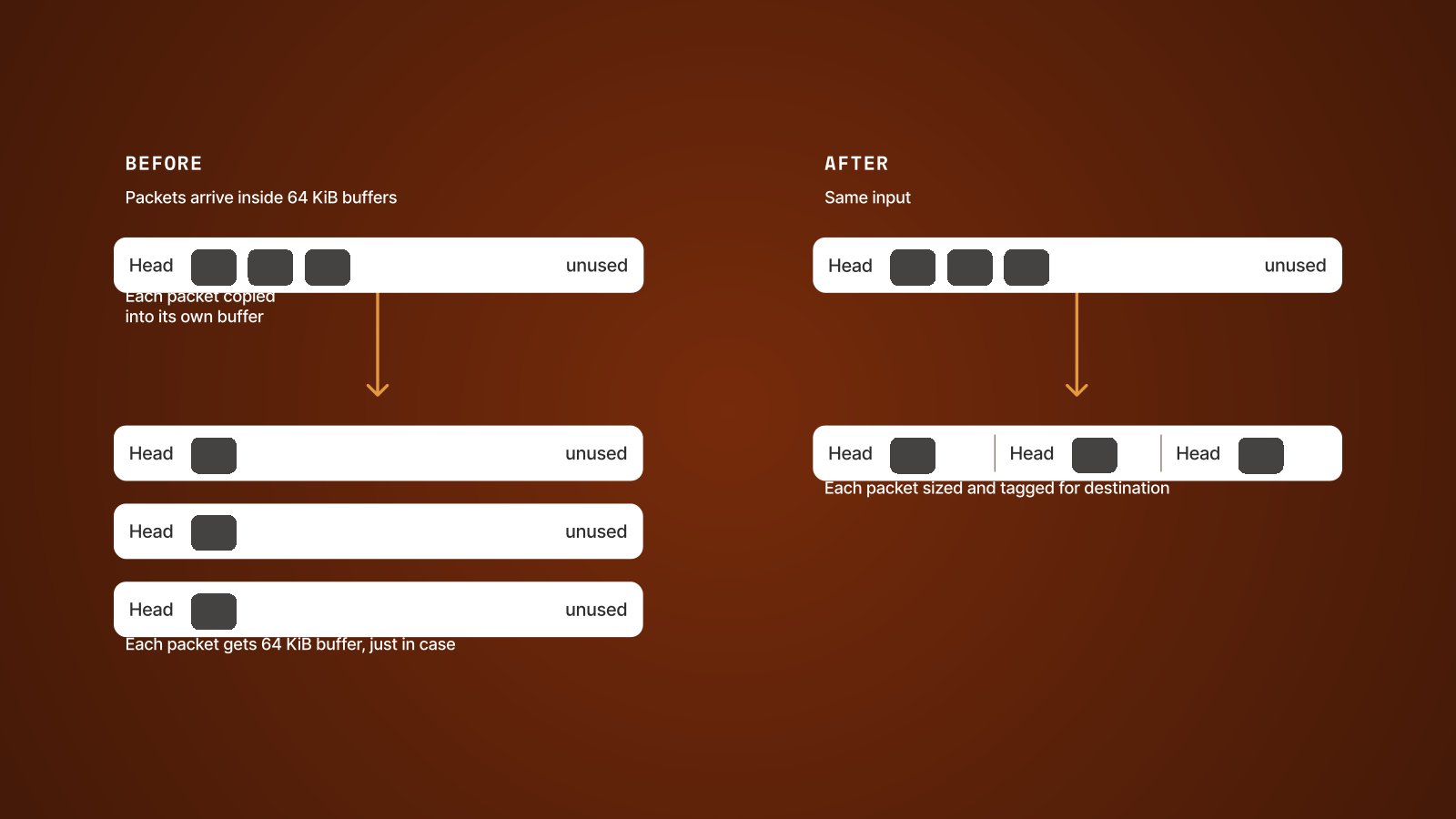
Most packets are tiny — about 1 KiB — but Tailscale reads in 64 KiB chunks. Since wireguard-go offered one 64 KiB buffer to unpack into, each small packet was copied into a full-size buffer of its own. On Linux and Android the client now leaves packets where they landed and marks each one's start and end inside the single large read, so many share one allocation — good for a roughly 5% speed-up in many configurations. Shorter queues freed more memory for subnet routers and app connectors.
Multi-queue and fewer copies
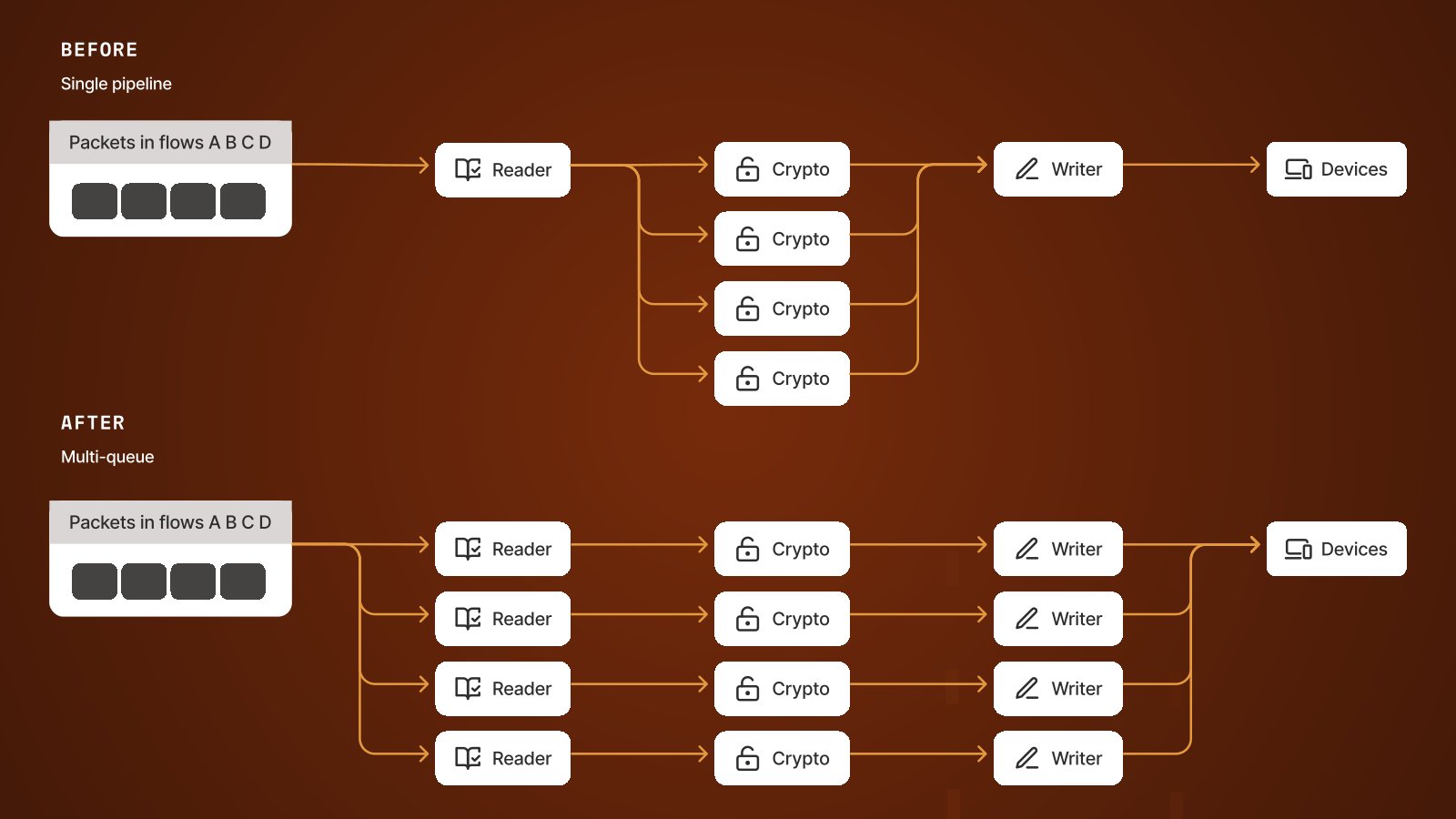
Subnet routers, app connectors and exit nodes once used a single ordered pipeline for all streams. The freed memory made room for multi-queue: several lanes, scaled to the machine's resources, each stream keeping its lane while the lanes run parallel across CPU cores. The result is higher aggregate capacity and shorter delays — a noticeable boost for app connectors and exit nodes with their many short-lived connections.
“This translates into lower latency — essentially faster processing of data from the moment we read it off the wire to the moment we send it to the OS,” said Alex Valiushko of Tailscale.
A separate change uses Linux's writev capability to hand several pieces of packet data to the kernel in one operation instead of copying them first — fewer copies, fewer writes, higher throughput.
Netmap caching for faster startup
A device joining a tailnet normally contacts the control plane first and receives its network map in about 100 milliseconds. On poor hotel or airplane Wi-Fi that contact can be slow or fail entirely. Netmap caching keeps the map on disk, so a client can establish direct connections at once; Tailscale says tailnets with poor control plane reachability began sending data one to two orders of magnitude faster from a warm cache.
Availability and testing tools
Memory reductions for Linux and Android arrive with the v1.104 client; multi-queue for subnet routers and app connectors is planned for a later release. Netmap caching is available behind a feature flag and should be on by default in v1.104. Tailscale is also exploring a Tailscale-native testing toolkit, because general tools cannot show whether a connection is direct or over DERP.
SiTech — AI-powered web development
We build fast, modern websites and bring AI into real business workflows. Have a project or a question? We'd love to help.