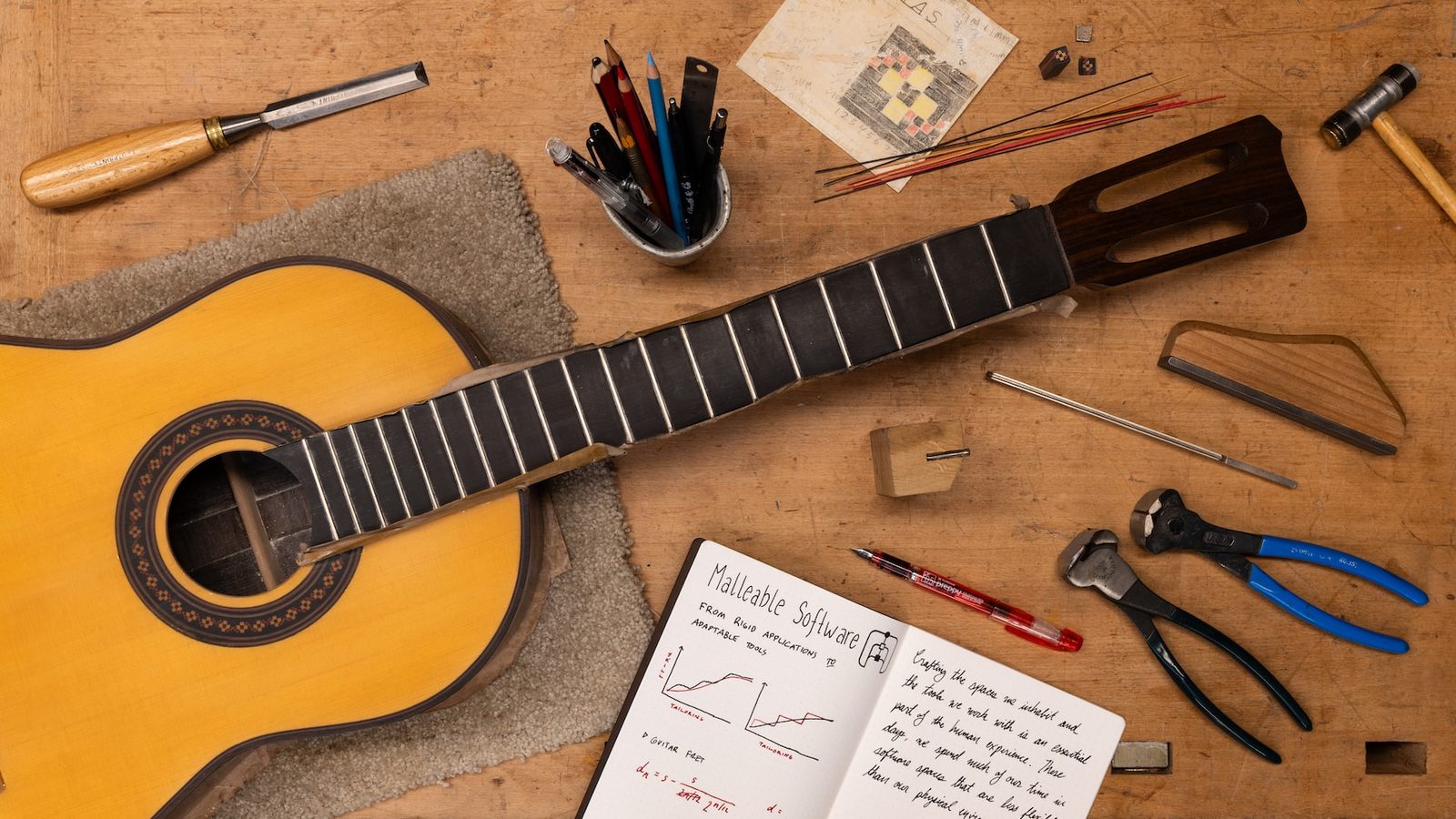
Ink & Switch: why locked-down apps cost users their agency
The research lab Ink & Switch argues that mass-produced software has stripped users of the ability to adapt their own tools, and sets out three design patterns that could restore it.
In an essay published in 2025, the research lab Ink & Switch argues that the way we build and distribute software has quietly taken something valuable from users: the ability to adapt their own tools. The essay, "Malleable software", is a design argument, not a product announcement.
Why mass-produced software is too rigid
One of the authors tracked his team's work with index cards taped to a wall. The board evolved constantly until the team moved to a web-based issue tracker for remote colleagues; then special zones of cards disappeared, because the tracker could not represent them. "Computerizing work led to a loss of agency," the authors write.
The essay also cites the doctor and writer Atul Gawande, who describes how computerization in medicine contributes to record levels of burnout: clinicians once skipped irrelevant fields on paper forms, and today the software forces them in. Ink & Switch does not blame individual developers: a centralized team cannot serve every user.
A gentle slope from user to creator
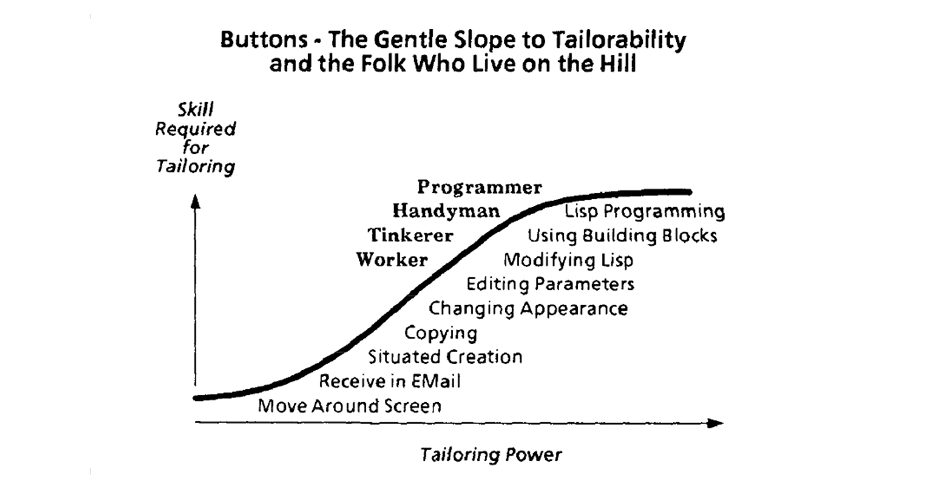
The first principle was set out in a 1990 paper by Allan MacLean and colleagues at EuroPARC, who plotted the depth of customization against the skill it demands and called the steep walls "cliffs". The remedy is a gentle slope: each extra increment of power should cost only a small increment of learning.
Their prototype, Buttons, left full Lisp programming for the top of the slope, much as spreadsheets let you read someone else's file, then change formatting, then edit formulas. Settings and plugins sit lower down, but settings expose only what developers included.
Tools, not apps
Applications are like an avocado slicer, the authors suggest: effortless for one task and useless for anything else, where a knife takes practice but handles far more. The deeper problem is isolation. Each app stores its data in a separate silo, so moving information between tools costs manual work.
Prototypes, communities and open questions
Malleable tools are not only an individual need: a hospital department or a family needs one shared system, and software written for a local group is often easier to build than software for the whole world, a pattern Clay Shirky called "situated software".
On a local-first foundation the lab built Automerge, then PushPin, Cambria, Farm and Patchwork, the environment where this essay was written. A word-counting tool there was built with AI assistance in minutes. AI alone is not enough, the authors insist.
SiTech — AI-powered web development
We build fast, modern websites and bring AI into real business workflows. Have a project or a question? We'd love to help.