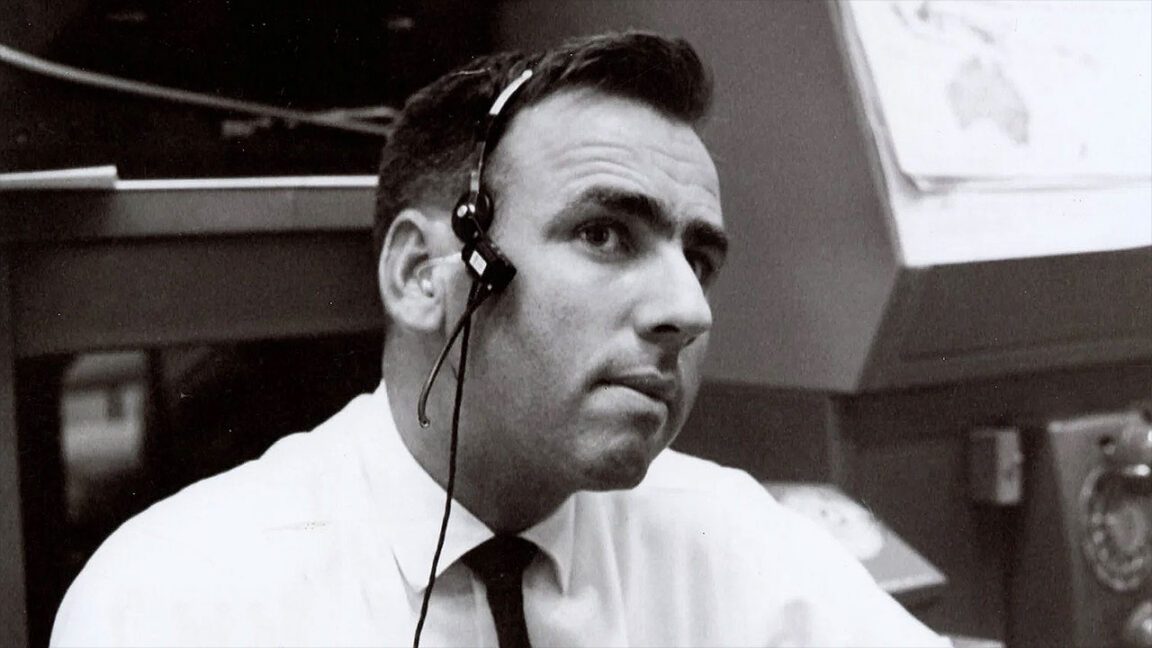
Milt Windler, NASA flight director for Apollo 13 recovery, dies at 94
Milt Windler, the NASA flight director who led Apollo 13 recovery operations and missions including Apollo 8, Apollo 10 and three Moon landings, died Thursday at 94, according to a brief online notice.
Leadership across Apollo
Milt Windler, one of the four leaders of Mission Control who directed the round-the-clock effort to bring the Apollo 13 astronauts home safely, died on Thursday at the age of 94. He was surrounded by his family, according to a brief notice posted online.
Windler became a NASA flight director in 1968 after working on recovery operations during the Mercury and Gemini programs. He led shifts for Apollo 8, the first mission to send humans beyond Earth orbit, Apollo 10's lunar landing dress rehearsal, and the Apollo 12, Apollo 14 and Apollo 15 Moon landings. He was the seventh person appointed flight director and led the team known as Maroon Flight.
Apollo 13 recovery mission
Windler served as lead flight director for Apollo 13. An explosion tore through the service module, crippling the spacecraft and venting the crew's oxygen supply into space. Instead of overseeing a third crewed Moon landing, Windler and Gold Flight director Gerry Griffin polled the flight controllers to develop three options for when, where and how long to fire the lunar module's engine to place Apollo 13 on a path back to Earth.
Windler later described Apollo's rapid pace as leaving little time for reflection. In a 2006 oral history interview for the University of North Texas, he said crews moved immediately from one mission into preparations for the next and that the missions' historical importance became clearer afterward.
Skylab and later spaceflight work
Windler was a flight director for all three crewed missions to Skylab, the United States' first space station. He worked with scientists to develop real-time flight-planning cycles, allowing objectives to be adjusted as scientific events occurred and work for the Apollo Telescope Mount to be scheduled.
After the Skylab missions, Windler worked on the space shuttle and the development of the remote manipulator system, or Canadarm, a robotic arm contributed to the shuttle program by Canada. He then joined private industry and consulted on International Space Station operations and verification procedures as modules were produced.
Career, honors and family
Born on Jan. 10, 1932, in Hampton, Virginia, Windler graduated from Virginia Tech in 1954 with a degree in aeronautical engineering. He joined the Air Force ROTC while at school, worked for the National Advisory Committee for Aeronautics and served four years in the Air Force before rejoining the committee at Langley Research Center during its transition to NASA.
Windler and the Apollo 13 Mission Control team received the Presidential Medal of Freedom from President Richard Nixon in 1970. He also received NASA's Exceptional Service Medal. Windler and his wife, Betty, née Selby, had three children and eight grandchildren.
SiTech — AI-powered web development
We build fast, modern websites and bring AI into real business workflows. Have a project or a question? We'd love to help.