NASA reworks Voyager 2's power supply to keep its instruments alive another year
Engineers switched off non-science systems and found lower-power alternatives so that Voyager 2's three remaining science instruments can keep operating for at least another year, NASA says.
A "Big Bang" power change
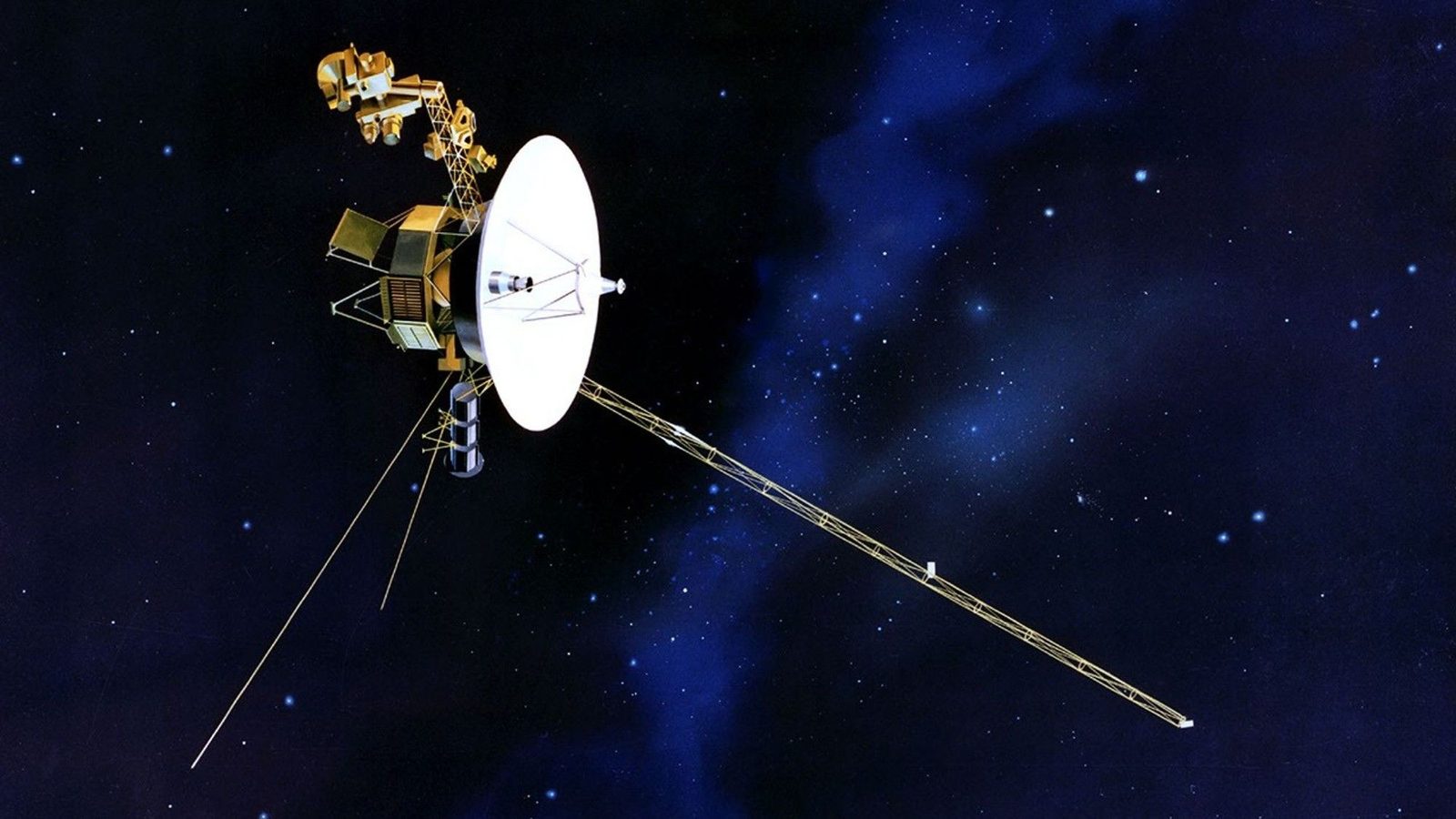
NASA has carried out a power reconfiguration on Voyager 2 that will let the probe keep all three of its remaining science instruments running for at least another year. The change, an internal power tweak engineers call the "Big Bang", was made by reducing the spacecraft's power requirements rather than by switching off another instrument, which the team had expected to have to do later this year.
Why the power keeps shrinking
Voyager 2 and its twin, Voyager 1, launched in 1977 and run on radioisotope thermoelectric generators, nuclear batteries that convert heat from the decay of plutonium into electricity. The available power falls by roughly four watts per year on each spacecraft, and NASA says the power margins have "grown razor thin". To slow the drain, engineers shut down a few non-science devices and replaced others with lower-power alternatives that still generate enough heat to keep the spacecraft warm in interstellar space.
Three instruments left
Each Voyager left Earth with ten instruments. Both spacecraft have switched off two science instruments each since 2024 alone — some after their planetary flybys were completed decades ago, others purely because of power limits. Voyager 2 is now down to three instruments, and the new configuration allows all three to operate "for at least another year". Voyager 1 will undergo the same power change "in the coming months".
One light-day from home
Voyager 1 is farther along than its twin and is nearing 171 astronomical units from the Sun, while Voyager 2 is at about 142 AU — roughly 142 times the Earth-Sun distance. A radio signal takes nearly 24 hours, or one light-day, to travel one way. Both probes were launched to exploit a rare alignment of the outer planets — Jupiter, Saturn, Uranus and Neptune — and both first flew past Jupiter and Saturn, returning unprecedented imagery of the planets and their moons.
SiTech — AI-powered web development
We build fast, modern websites and bring AI into real business workflows. Have a project or a question? We'd love to help.