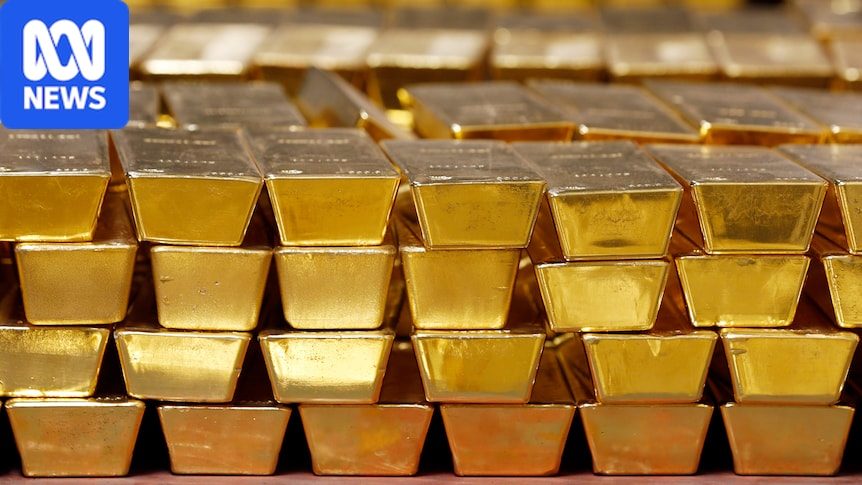
Netherlands pulls gold out of the US and Canada amid 'geopolitical unrest' fears
De Nederlandsche Bank moved 86 of the 313 tonnes it held in the US and Canada to the Bank of England, citing "crisis preparedness" and growing geopolitical uncertainty.
The central bank of the Netherlands has moved dozens of tonnes of its gold reserves out of the United States and Canada, saying the transfer is meant to strengthen the country's "crisis preparedness" amid "increasing geopolitical unrest".
86 tonnes moved to London
Between March and August, 86 of the 313 tonnes the Netherlands held in the US and Canada were moved to the Bank of England in central London. The De Nederlandsche Bank (DNB) said gold held with the Bank of England meets modern international trade standards and is regarded as the world's most easily tradable gold, making it the most readily available in a crisis, while reserves held in New York and Ottawa "cannot be utilised as quickly and directly in such a situation".
The transfer combined two methods. Fifty-nine tonnes held in New York were sold by the DNB, which then bought the same amount of bullion in London for storage at the Bank of England; another 27 tonnes held in the US and Canada were physically shipped to the Dutch town of Zeist.
Dutch reserves totalled 612.4 tonnes, valued at 72.2 billion euros ($116.7 billion) in 2025, and are held in Zeist, London, the US Federal Reserve in New York City and the Bank of Canada in Ottawa. DNB governor Olaf Sleijpen said the decision increased the reserves' economic usability: "We expect that we will never need to use them, but we do need to strengthen our resilience and preparedness."
Why experts point to Washington
Dr Emma Shortis, international and security affairs director at the Australia Institute, said threats made by the Trump administration against traditional allies such as Canada and Greenland appear to be the driving force. "Trump has shown himself entirely willing to trash the established norms and rules of international politics," she said, calling reserves held in the United States a potential vulnerability: "You can absolutely imagine a scenario where, for whatever reason, the Trump administration decides to hold onto them." She described the removal as strategic and said it could reflect rising European concern about the independence of the US Federal Reserve under Trump.
Rabobank senior market strategist Benjamin Picton said a reserve stored abroad carries counterparty risk: "Gold is a zero-counterparty asset, so if you buy a US Treasury and you hold that as your reserve asset your counterparty is the US Federal Reserve or the US Treasury... You're relying on them to make payments. There's a credit risk associated with that."
A decade of repatriation
The Netherlands is not the first to act. In April, the Banque de France said 129 tonnes — five per cent of French reserves held in New York — were sold in 2025 and replaced by gold bought in Europe and stored in Paris; the sale generated a capital profit of 11 billion euros ($17.8 billion), and governor Francois Villeroy de Galhau said in March the decision was not politically motivated. Germany's Deutsche Bundesbank repatriated 674 tonnes from Paris and New York between 2013 and 2017. Austria, Italy and Türkiye have also signalled interest, with Istanbul withdrawing its New York reserves in 2018.
SiTech — AI-powered web development
We build fast, modern websites and bring AI into real business workflows. Have a project or a question? We'd love to help.