Satellite Engine Could Use Earth's Atmosphere as Fuel to Stay in Orbit Indefinitely
A doctoral thesis from the University of Stuttgart describes a plasma engine that gathers the thin air of very low Earth orbit as propellant. Lab tests and modeling look promising, but no flight has proven the design yet.
A plasma engine that harvests fuel from the thin air around it performed well in laboratory tests and modeling, according to a doctoral thesis by Francesco Romano at the University of Stuttgart, posted on arXiv on July 1, 2026. The work asks whether a satellite can stay in very low Earth orbit indefinitely without carrying propellant.
Why very low orbits are hard to hold
Very low Earth orbit (VLEO), roughly 100 to 450 km up, gives sharper remote sensing images and cheaper communications, and atmospheric drag clears dead satellites on its own. The same drag slows working spacecraft, which need thrust almost continuously. Atmosphere-breathing electric propulsion (ABEP) turns the problem around: collect the sparse air, convert it into plasma and expel it backwards.
Atomic oxygen and three intake designs
The hard part is atomic oxygen (AO). Ultraviolet light splits oxygen molecules into single atoms that corrode electrodes, acceleration grids and the cathodes of standard Hall thrusters. A cathode neutralizes the spacecraft's charge; without it, expelled ions are drawn back and the engine loses thrust.
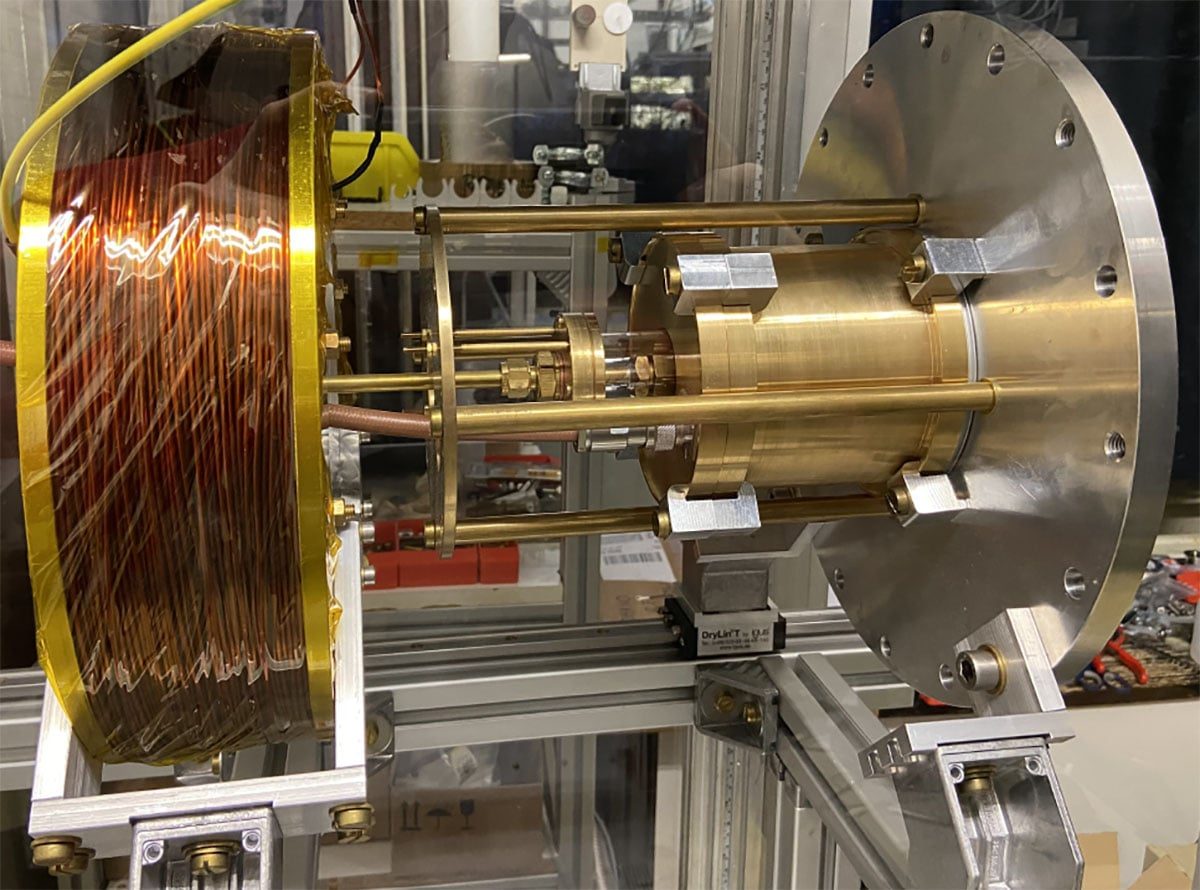
Romano tested three intakes: an enhanced funnel that traps sparse particles, a compact hexagonal diffuse intake of coated titanium alloy, and a specular intake, a parabolic mirror coated with graphite or silicon dioxide that bounces particles into the engine. The specular version won, collecting about 94.3% of air particles in a wind-tunnel test with atomic oxygen, argon and nitrogen; a 15-degree tilt cut efficiency by only 8%.
A plasma jet with no neutralizer
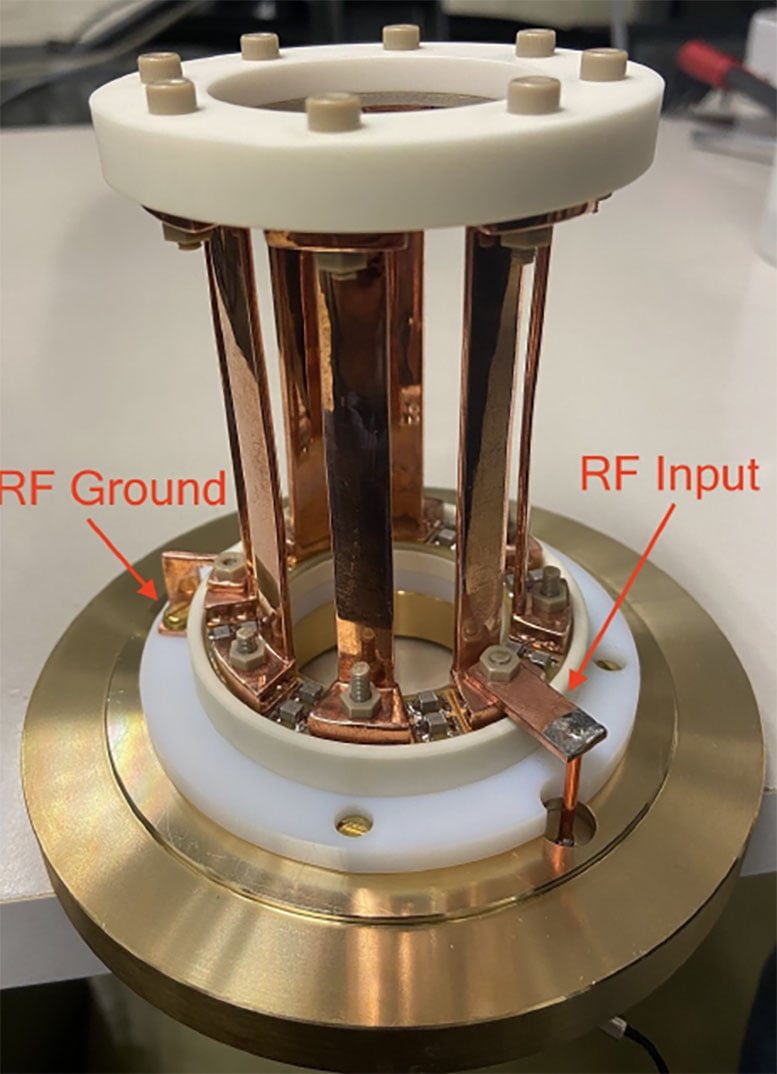
For the engine, Romano borrowed from medicine: a birdcage antenna of the kind used in MRI machines. It let 99% of the supplied electrical power enter the plasma, which ordinary wire coils cannot match because their reactance consumes part of it. A solenoid pushes plasma out the back as a quasi-neutral jet, so no separate neutralizer is needed. In a vacuum chamber set to VLEO gas concentrations, the engine produced steady plasma with only 50-60 W of radio-frequency power.
What the models say about Earth and Mars
Calculations in the thesis suggest the engine could hold a satellite between 190 and 250 km indefinitely using under 1.6 kW. The GOCE satellite shows the goal: it flew in VLEO on a xenon ion thruster and eventually ran out of fuel. Above Mars, where carbon dioxide dominates the atmosphere, the model supports indefinite operation at 120-160 km.
Nothing guarantees the engine will leave the laboratory, but the thesis argues that commercial applications become realistic if the technology is de-risked and proven in flight.
SiTech — AI-powered web development
We build fast, modern websites and bring AI into real business workflows. Have a project or a question? We'd love to help.