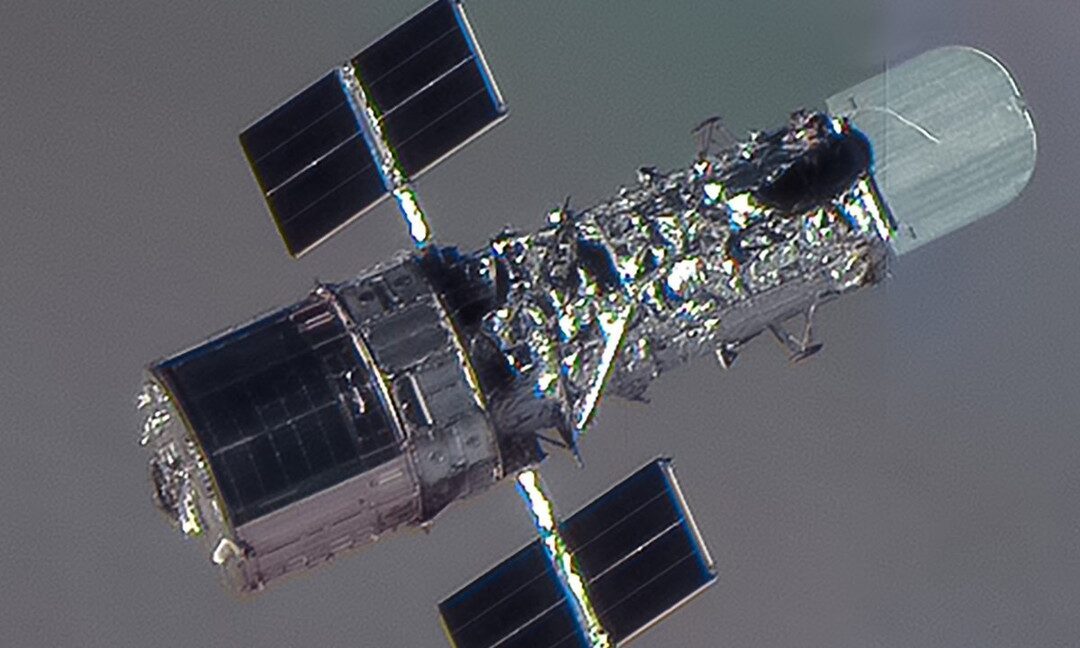
NASA Asks Companies for Ideas to Reboost or Service Hubble
NASA released a request for information on Thursday asking commercial companies for ideas to reboost, service, or guide Hubble to a controlled reentry, with responses due November 30.
NASA released a Request For Information on Thursday asking commercial companies for ideas to reboost, service, or guide the Hubble Space Telescope to a controlled reentry, with responses due November 30. The agency is not committing to a mission, but it wants to know who could reach Hubble before the telescope falls out of orbit and burns up. A reboost to at least 373 miles (600 km) could extend Hubble's life by at least 25 years.
What NASA wants
NASA is seeking information about current and near term capabilities for capturing Hubble and boosting it to an altitude of at least 373 miles (600 km), enhancing the telescope's performance, or guiding it to a controlled reentry. The requirement says the boost or servicing mission must not harm Hubble and is expected to occur by 2032. The contractor would provide the launch vehicle, servicing spacecraft, mission operations, and crew if applicable.
Why Hubble is at risk
Hubble has been in orbit for 36 years and lacks onboard propulsion. NASA last raised its orbit in 2002 during a Space Shuttle Columbia servicing mission, while the final shuttle servicing flight in 2009 did not reboost the telescope. Orbital dynamicists predict Hubble will likely reenter in 2033 or 2034 without intervention, though reentry forecasts can change with solar activity. It took 24 years for Hubble to glide from 362 miles (583 km) in 2002 to about 292 miles (470 km) today.
Earlier ideas and new industry context
In 2022, Jared Isaacman approached NASA about a servicing mission using SpaceX Dragon astronauts and proposed funding most of it, with a reboost of at least 30 miles (50 km). Engineers also studied using Dragon to attach a rescue pod with new gyroscopes to overcome problems with its debilitated pointing system. NASA's 2022 request drew eight responses, including a joint robotic proposal from Astroscale and Momentus, but officials said in 2024 they would not pursue a reboost. Isaacman is now NASA administrator, and the satellite servicing industry has matured, with Northrop Grumman launching a robotic servicing satellite with DARPA and startups such as Astroscale and Starfish Space holding servicing and refueling demo contracts.
Cost lessons and future telescopes
NASA's recent Swift rescue attempt showed a servicing mission need not cost billions of dollars: Katalyst Space Technologies received a $30 million contract and built a rescue satellite in nine months, reaching about 6 miles (10 km) from Swift before teams stopped because of power and reaction control problems. Hubble is a more expensive asset, so NASA would want more than $30 million and nine months if it proceeds. NASA has no funding allocated for a Hubble reboost or servicing mission. Isaacman said Hubble still has important science ahead and that extending its life would mean more discoveries. A crewed mission is unlikely now because SpaceX aims to retire Crew Dragon by 2030, and Isaacman expects the new request to draw interest from robotics companies. Hubble observes visible and ultraviolet light, while Webb and Roman focus on infrared, and astronomers may wait until the 2040s for the Habitable Worlds Observatory for a similar visible and ultraviolet advance. NASA science official Nicky Fox said commercial industry capabilities have rapidly evolved and the agency is eager to explore options while it develops the flagship mission to follow.
Sources: Ars Technica · The Register
SiTech — AI-powered web development
We build fast, modern websites and bring AI into real business workflows. Have a project or a question? We'd love to help.