
Analysis: OpenAI is well positioned to fast-follow Jev
A new analysis from Arcturus Labs argues OpenAI could replicate TypeSafe's Jev in short order, or fold calibrated classification into its own models and agents. The open question is how deep TypeSafe's training-data moat really is.
TypeSafe's Jev — the model that returns calibrated decisions instead of generated text — has spread fast: Vercel calls it the fastest-adopted model in AI Gateway history. An Arcturus Labs analysis published September 21 argues OpenAI is well positioned to fast-follow.
LLMs have been classifying all along
The starting assumption: Jev runs on something close to a conventional large language model — Latent Space reports that many early Jev clones are LLM-based. On that reading, Jev reads the probability distribution over the next token at a single step: a yes/no question comes down to the relative probabilities of true and false, a choice question to the named options.
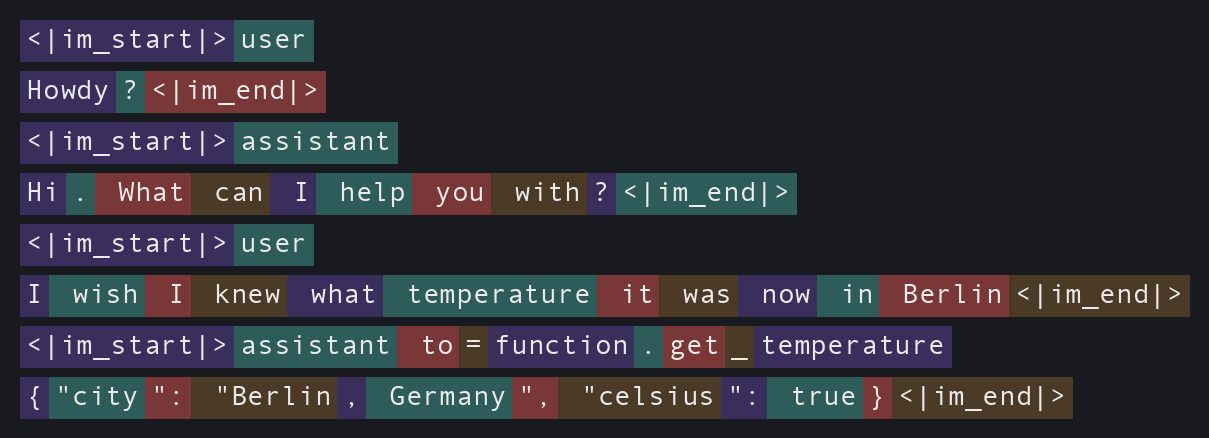
OpenAI has done a narrower version of this since tool calling arrived. Internally, the first token after the assistant header acts as a classifier deciding whether a tool is invoked at all, and the next tokens pick which tool. Those classifiers are specialists, the post notes — Jev's are meant to be general.
The moat: training data and reinforcement learning
Architecture offers little protection, the analysis argues; the likelier moat is TypeSafe's training data and process. On X, cofounder Diogo Almeida said the company considers itself "a data research lab", building data that is "truly general (ala a cognitive core)" and "100% synthetic".
The author speculates that such a dataset pairs situations with known outcomes to train general calibration rather than domain knowledge, with reinforcement learning. None of it is a moat unless Jev is accurate, he cautions, and says he has found domains where its probabilities don't hold up.
OpenAI's likely next move
The obvious path is to copy Jev and ship a new model type; OpenAI has the skill, hardware and funding. The more interesting one is to build classification into a regular LLM: the model could emit a tag such as <prediction> mid-thought, and the serving stack would read the logits for true and false at that position, write the calibrated result back as text.
That would let a model check its own assumptions as it thinks, flag an unsafe tool call or a prompt-injection attempt, and route work between bigger and smaller models.
What it means for TypeSafe
If the moat is genuinely hard to copy, TypeSafe will probably be fine, and might even be acquired by OpenAI rather than out-competed; if it is thin, TypeSafe's window closes fast. Almeida told Latent Space: "If model quality matters, then we are going to be in a very good position for a long time."
SiTech — AI-powered web development
We build fast, modern websites and bring AI into real business workflows. Have a project or a question? We'd love to help.