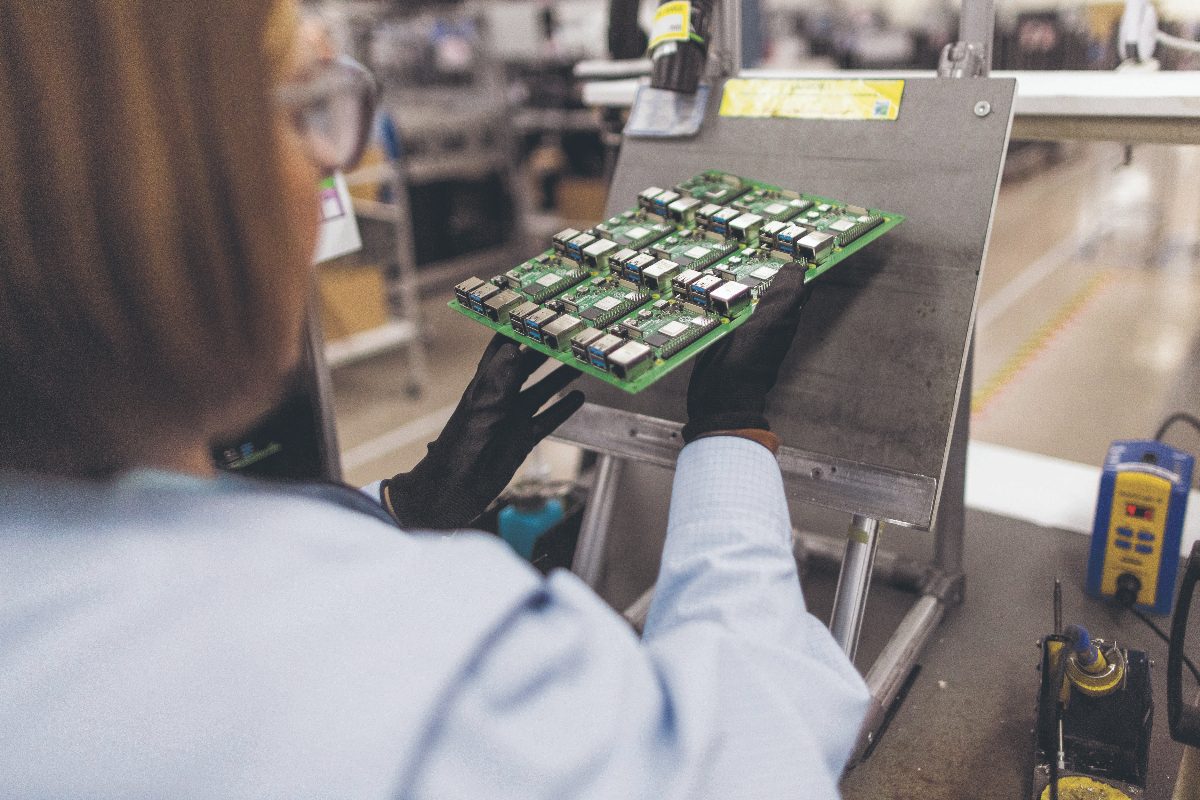
Raspberry Pi rides memory crunch to record first half
Raspberry Pi reported record first-half revenue of $256.9 million, up 90 percent year on year, as a strategic memory stockpile built in FY 2025 kept its boards shipping while rivals struggled for allocation.
Raspberry Pi has posted a record first half after a well-timed memory stockpile helped it ride out soaring prices and shortages, The Register reports.
The Cambridge-based company reported revenue of $256.9 million for the six months ended June 30, up 90 percent from $135.5 million a year earlier. Pre-tax profit more than tripled to $19.6 million. Raspberry Pi shipped 4.2 million boards in the period, up 17 percent year on year, while its order backlog doubled to 2.6 million units.
A bet that paid off
Behind those numbers is a decision made in FY 2025, when Raspberry Pi built up a sizeable stash of memory before the market tightened. "The decision in FY 2025 to build significant strategic memory inventory has allowed us to maintain product availability at a time when smaller competitors have struggled to secure allocation," CEO Eben Upton said.
Gross profit per board climbed from $8 a year ago to $12.20, helped by price rises on the company's products and by cheaper memory acquired during 2025. Overall gross profit rose 79 percent to $59.4 million.
Cheap memory runs out
The company said the "exceptional unit economics" seen in the first half have since moderated as the cheaper inventory was used up. It has not stopped stockpiling, it is simply paying far more to do it: the average cost of memory in inventory stood at $13.30 per GB at the end of June, up from $3.60 per GB at the end of 2025.
At the end of June, Raspberry Pi held 2.4 million LPDDR4 devices representing 5.8 million GB. By the end of August that had grown to 8.3 million GB, roughly three months of sales for the products that use it. Between that stockpile and confirmed orders, the company says it has enough memory for its production targets for the rest of 2026, with further purchases planned to enter 2027 with significant inventory.
Pi Zero shortage and rising demand
The squeeze has not left Raspberry Pi untouched. Pi Zero sales fell 9 percent after production congestion at a Taiwanese company packaging one of its core components restricted supply; about 1 million units sit on back order.
Elsewhere customers appear willing to swallow the higher prices. Direct sales of Raspberry Pi 4 and Pi 5 boards rose 69 percent and 47 percent respectively, with continued demand for the pricier 8GB variants. Direct shipments rose 26 percent to 3.4 million units, with particularly strong demand from the smart home and aerospace and defense sectors. The company expects to ship more units in the second half than in the first.
SiTech — AI-powered web development
We build fast, modern websites and bring AI into real business workflows. Have a project or a question? We'd love to help.