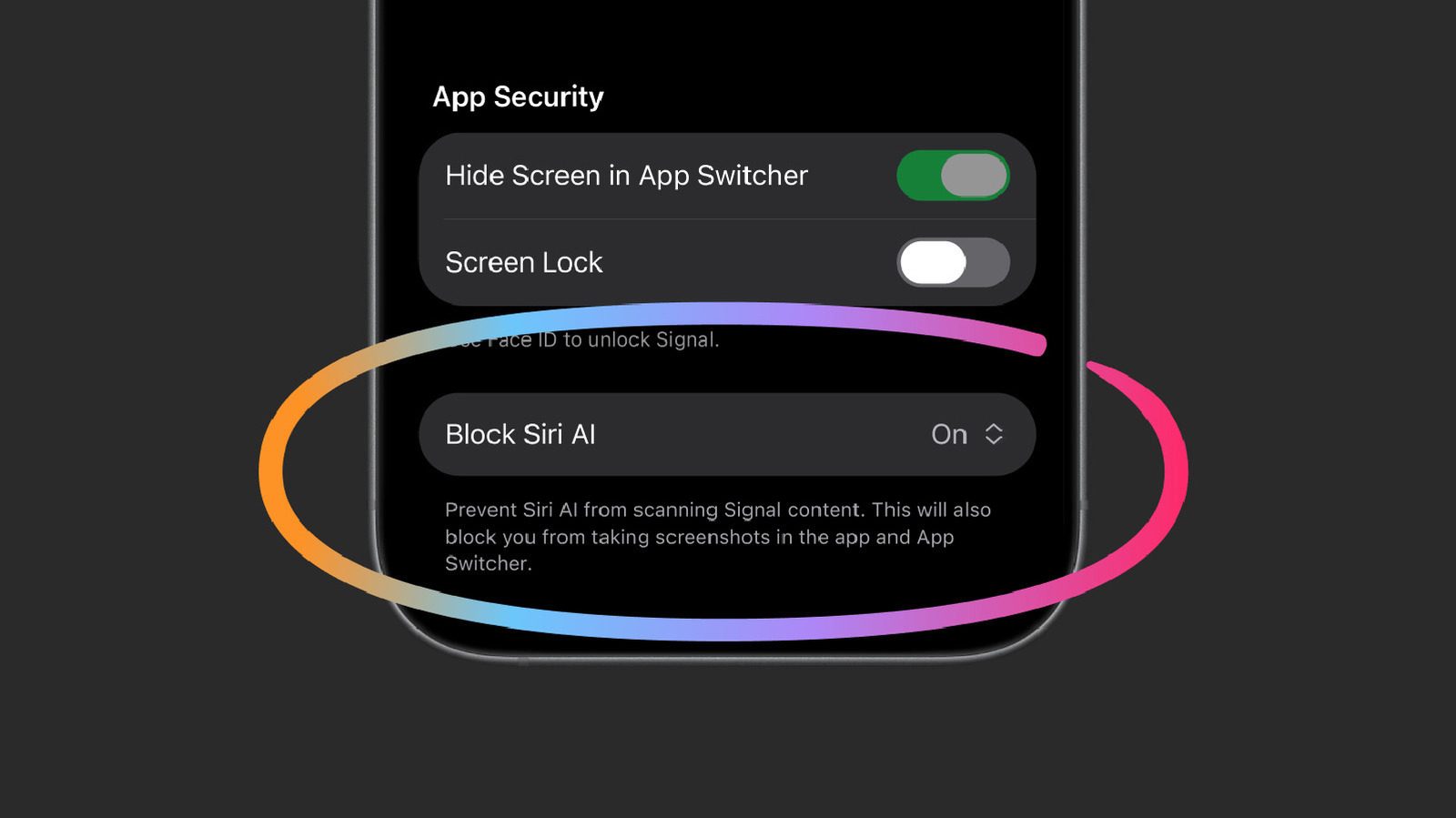
Signal Now Blocks Screenshots By Default To Stymie AI Agents
Signal says it will block screenshots by default on iOS 27 and on Android when AI assistants try to capture the screen, while seeking a system level way for developers to opt out of AI snooping.
Signal said Friday it will block screenshots by default on iOS 27, and on Android when AI assistants try to capture the screen. The encrypted messaging app said the measures are meant to keep Apple's Siri AI and Google's Gemini Intelligence from reading chats. Signal views AI agents built into phones as an "existential threat," the company said.
New default screenshot blocking
On iPhone, a new "Block Siri AI" setting is on by default. On Android, Signal uses its existing "Screen security" option. On both platforms, users see a prompt offering to turn the protection off when it detects either a screenshot on iOS or an AI assistant reading the screen on Android. The move echoes one from last year, when Signal blocked Microsoft's Recall from snapshotting chats on Windows 11.
Concerns about built-in and third-party agents
The assistants are designed to help users by reading what is on the screen and pulling in information to better answer questions; the byproduct is that chats meant to be private, including encrypted ones, can end up on a remote server outside the user's or Signal's control. Signal is also worried about third-party agents such as Meta's Muse, which Reuters caught reading Signal messages via permissions granted during setup. On Android, it read messages from notifications; on Mac, it used accessibility permissions, which Signal warns can be exploited "as a skeleton key."
Limits on other devices and people
The protection only goes so far. If the other person has switched protections off, blocking screenshots on your end will not stop an AI assistant or agent from reading your messages on the other person's device. It also will not prevent third-party agents from reading notifications or digging through files. On Mac, Signal said it has no user protections at all because operating system makers do not offer a way for developers to restrict AI access "without making drastic compromises to the core user experience."
Call for a system-level standard
Signal said it wants a standard, system-level way to block AI agents from reading apps' content. It said it is talking with Apple and Google and is cautiously optimistic about where that is headed. The issue also mirrors the debate over AI glasses, which can record bystanders without their knowledge or consent, leading to bans in some public places such as courtrooms and schools and to the devices being shunned as "perv glasses." Privacy in the age of AI is becoming less of an individual setting and more of a communal choice, with laws and social shaming among the few recourses individuals have. Until then, "privacy" remains a relative term at best.
Sources: Engadget · The Decoder
SiTech — AI-powered web development
We build fast, modern websites and bring AI into real business workflows. Have a project or a question? We'd love to help.