ICFO Solar Panel Design Targets Light Emission Loss
Researchers at ICFO report a solar cell design that reduces emitted light losses and could raise efficiency toward about 43 percent, above the 33.16 percent Shockley-Queisser limit.
Researchers at the Institut de Ciències Fotòniques (ICFO) have reported a new solar panel design that addresses Boltzmann loss, the energy lost to light that solar panels emit, and could raise efficiency toward about 43 percent from the current theoretical limit of 33.16 percent. The work was published in Energy & Environmental Science and showed an efficiency improvement of around 0.85 percent in an experimental organic solar cell. The underlying principle should apply to all kinds of photovoltaic cells, according to the researchers.
Capping light emission
At their simplest, solar panels contain semiconducting material, most commonly crystalline silicon, that releases electrons when exposed to sunlight, creating an electric current. Some solar energy turns into heat or is re-emitted as light. Scientists have explored methods to reduce thermal energy loss, including changing a panel's semiconductor, but the light component has been trickier to address.
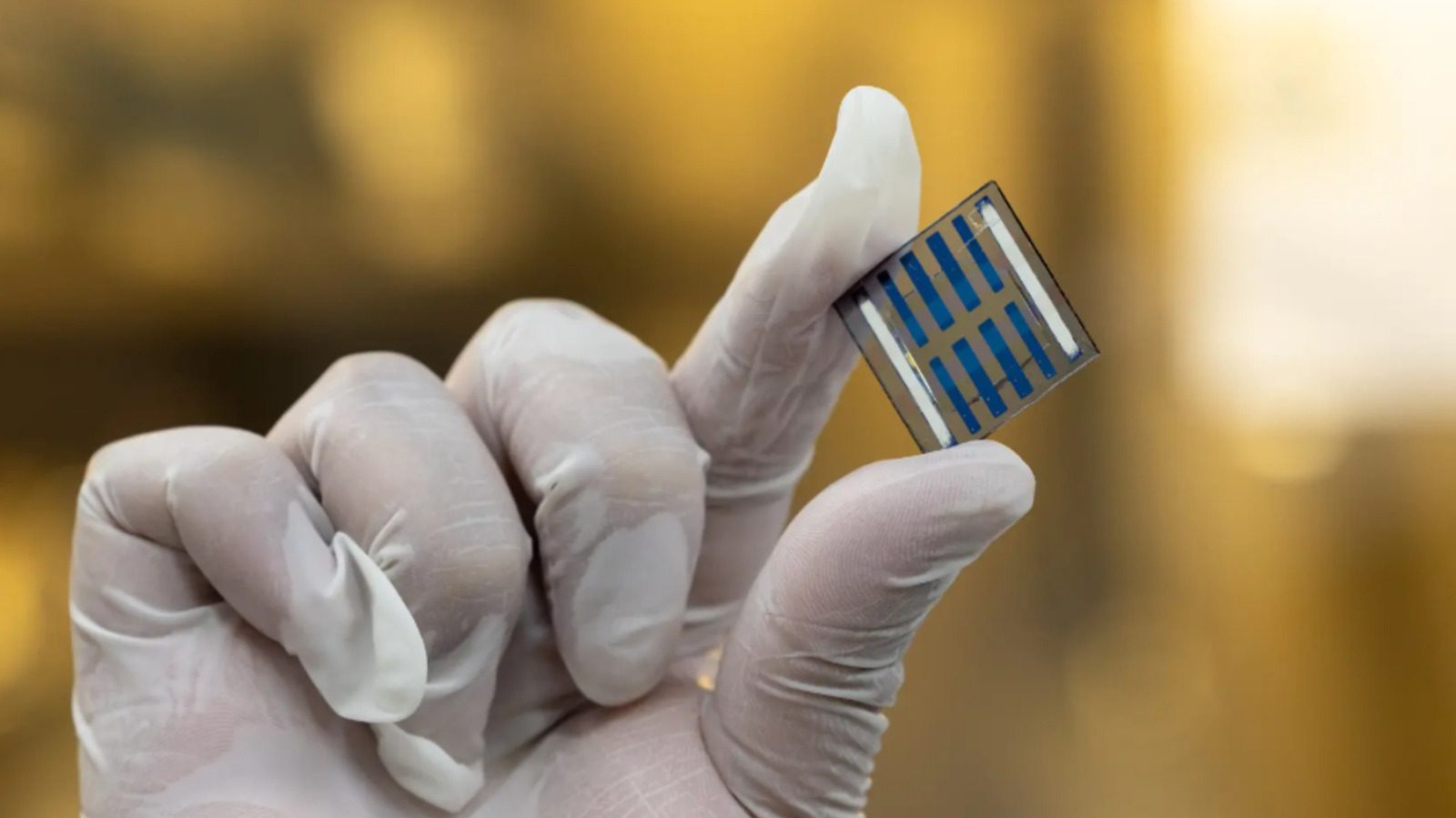
In the paper, the ICFO researchers addressed "the mismatch between the narrow sunlight absorption and the wider emission cones" of solar panels. They started with an organic solar cell, replaced its indium tin oxide front electrode with a thin silver one, and converted the cell into an optical cavity. The cell still let sunlight in but emitted less light at wide angles.
What the result means
The change improved the efficiency of their solar cell by around 0.85 percent. Dr. Francisco Bernal Texca, first author on the study, said in an ICFO press release that if the emission cone can be narrowed to more closely match the absorption cone of incoming sunlight, solar cells will in principle be able to approach efficiencies close to 43 percent.
The current theoretical limit is 33.16 percent, known as the Shockley-Queisser limit, while consumer solar panels typically perform at 20 to 23 percent. If efficiency can be boosted from 33.16 percent to roughly 43 percent, there could be significant trickle-down benefits for consumer solar panels.
Other recent progress
This is not the only recent breakthrough in solar panel technology in 2026. Chinese firm LONGi unveiled a solar cell with 35.5 percent efficiency in July and claimed the PV cell it uses is also theoretically capable of achieving 43 percent. Plug-in balcony solar panels are also becoming more common in the US, though the new research does not mean consumers will be able to buy a more capable panel tomorrow.
Sources: Engadget
SiTech — AI-powered web development
We build fast, modern websites and bring AI into real business workflows. Have a project or a question? We'd love to help.