SpaceX's Starship reaches orbit for the first time, deploys next-gen Starlinks
SpaceX's Starship flew its first true orbital mission on Monday, deploying 26 next-generation Starlink V3 satellites after engine problems forced flight controllers to weigh an early abort.
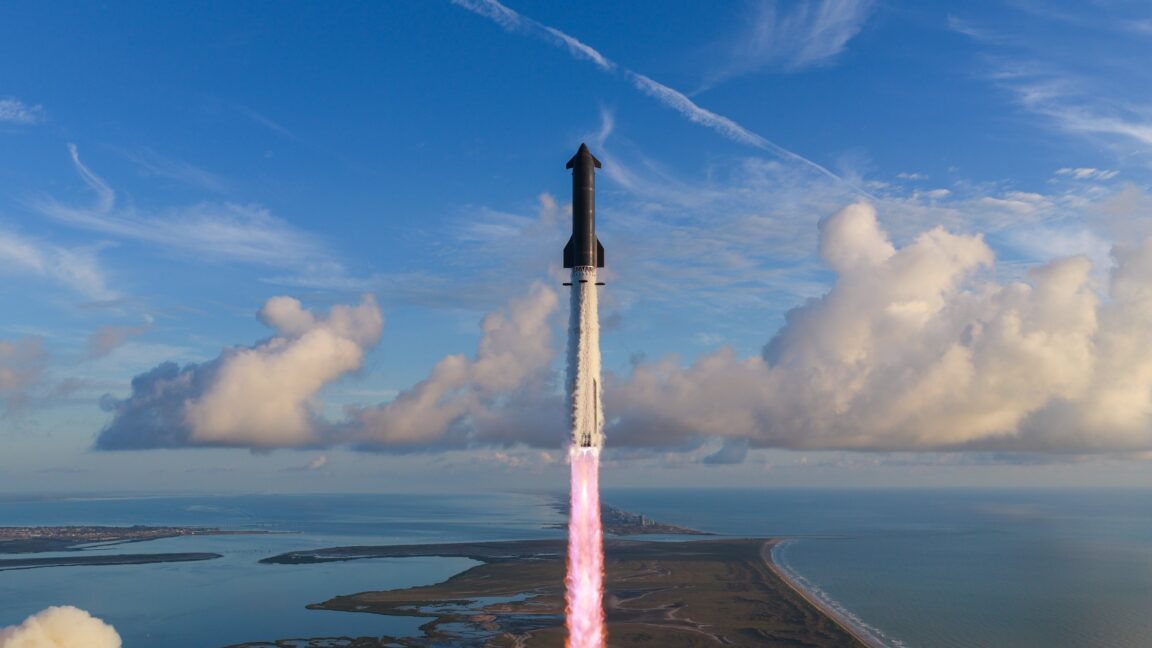
SpaceX's Starship rocket flew its 14th test flight from Starbase, Texas, on Monday, September 28, and reached orbital velocity for the first time. Every earlier flight followed a deliberately suborbital trajectory, slow enough for gravity to pull the ship back into the atmosphere before it could complete a lap around the planet.
Liftoff came at 7:49 am local time (12:49 UTC) as 33 methane-fueled Raptor engines pushed the 124-meter rocket off the pad. The Super Heavy booster separated and made a controlled splashdown in the Gulf of Mexico just off the coast of Starbase.
The first orbital insertion burn
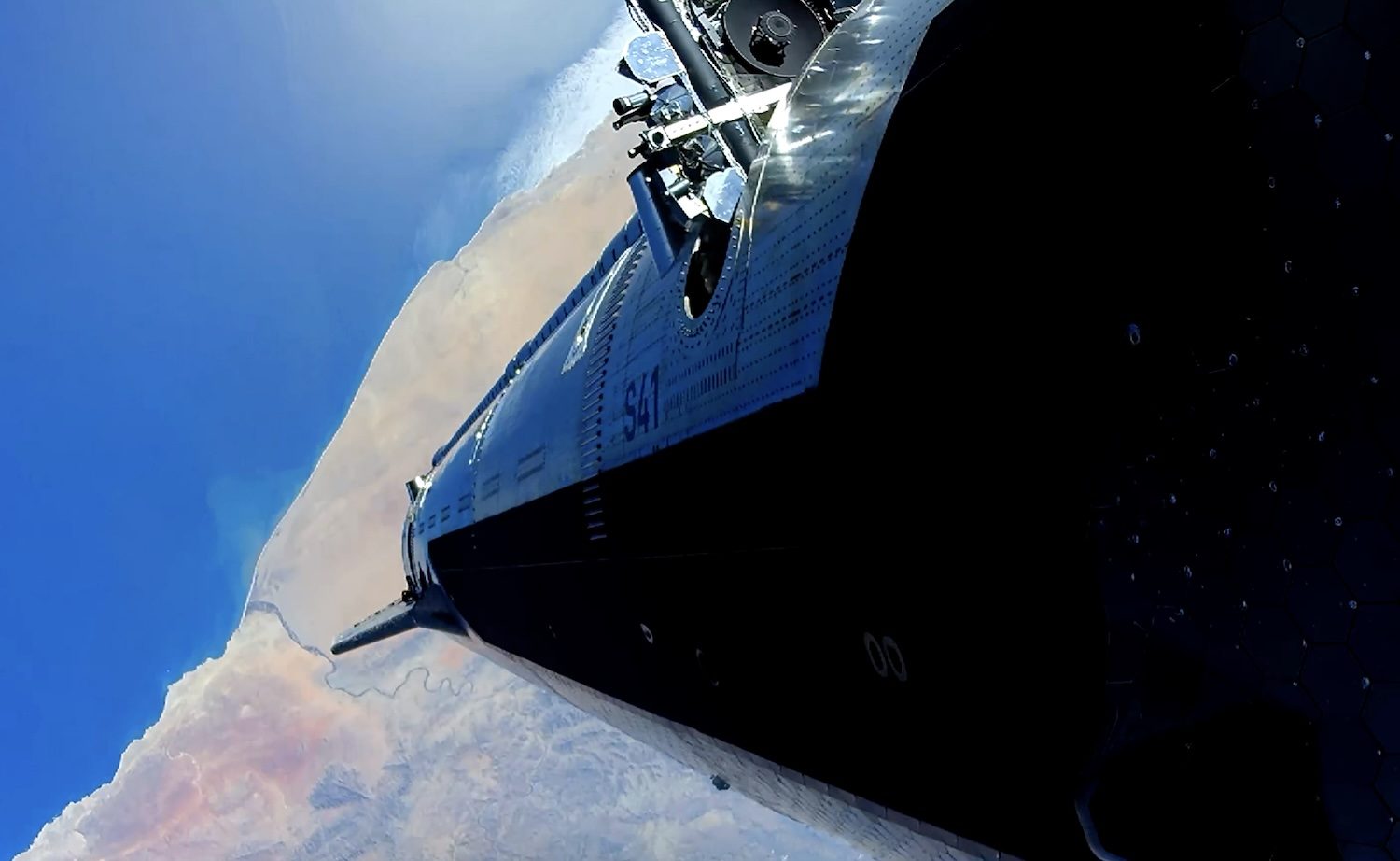
The upper stage shut down its Raptors a little more than eight minutes into flight. Flight controllers then had a few minutes to decide whether to restart one engine and add the last bit of speed needed for orbit. The burn lasted 19 seconds, adding roughly 204 mph, a little more than 1 percent of the rocket's velocity, and placed Starship in a stable orbit about 276 kilometers above Earth.
SpaceX commentator Dan Huot said engineers were being extremely conservative. The worst case would have been stranding the 100-ton vehicle in orbit, where it could have fallen back uncontrolled and posed a risk to public safety.
26 Starlink V3 satellites
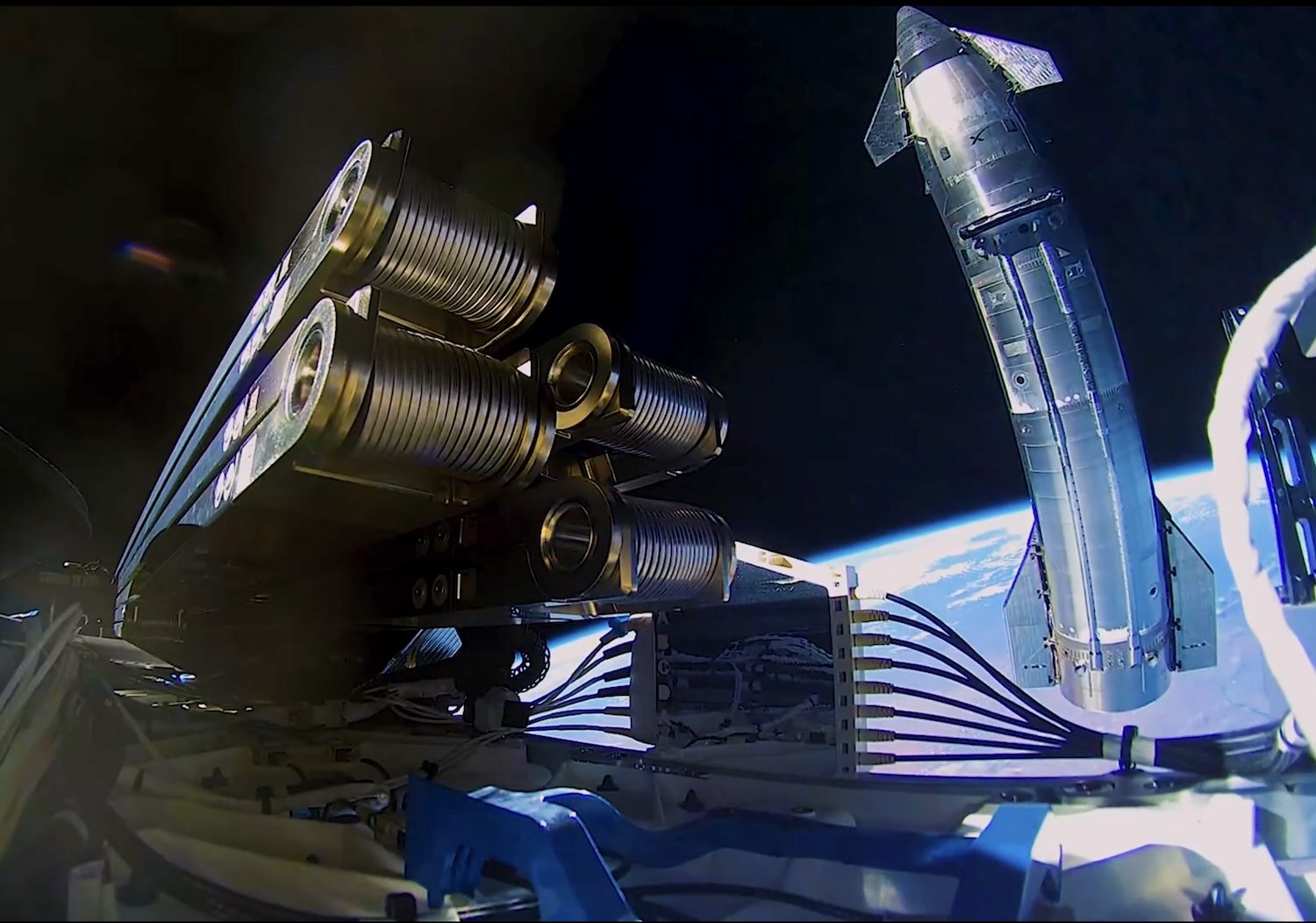
With orbit achieved, Starship released 26 of SpaceX's newest Starlink V3 broadband satellites. The flat-packed spacecraft are too large for Falcon 9's payload fairing, so they can only launch on Starship. Each weighs about 2 metric tons at launch.
According to SpaceX, each Starlink V3 adds 1 Tbps of capacity to the network, 10 times more than the older satellites launched on Falcon 9. SpaceX said it established contact with all 26 satellites. Future Starships could carry up to 60 V3s per flight.
Raptor trouble and what comes next
The flight was not flawless. One of Starship's six Raptors shut down prematurely during ascent, and the other five burned longer to compensate. Two of the 33 Raptors on Super Heavy also apparently failed. SpaceX then cut short the time in orbit and brought the ship home earlier than planned.
Splashdown came a little more than three hours after liftoff, against an original plan of nearly 10 hours. Engine trouble has now struck all three flights that used the Raptor 3 variant. The FAA said no formal mishap investigation is required. Next, SpaceX is expected to attempt catching Starship back at Starbase with the launch tower's arms, then fly longer orbital missions and demonstrate in-orbit refueling, a prerequisite for the Artemis Moon landings.
SiTech — AI-powered web development
We build fast, modern websites and bring AI into real business workflows. Have a project or a question? We'd love to help.