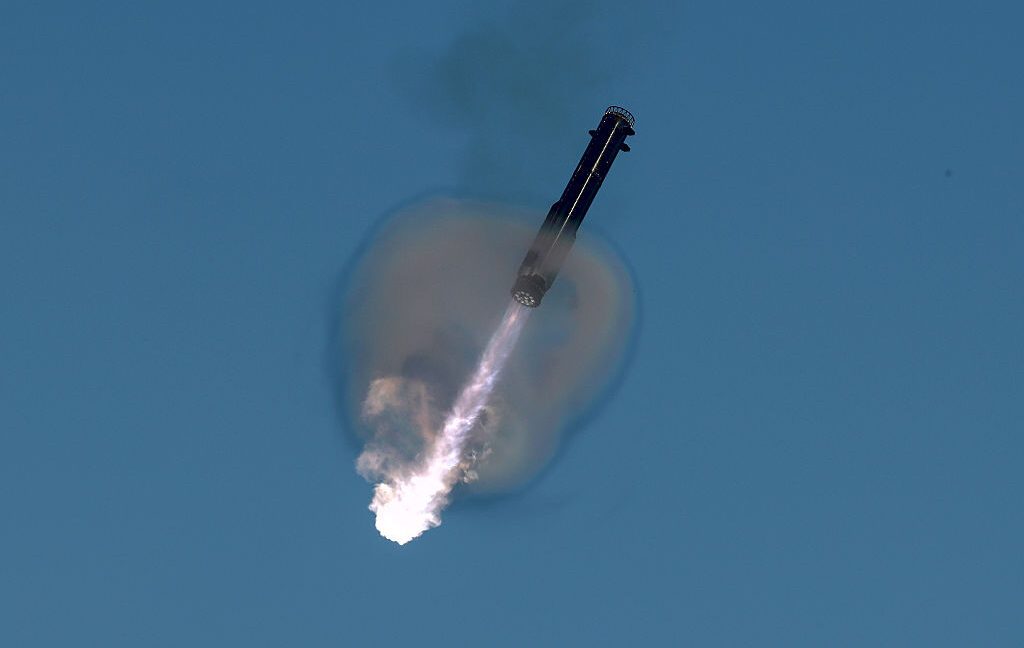
Starship flight 15 reaches orbit, setting up possible Saturday catch
Starship's 15th test flight reached low-Earth orbit from South Texas on Friday, deployed 26 Starlink V3 satellites, and diverted its booster to the Gulf. SpaceX may still try to catch the upper stage on Saturday.
Starship lifted off on schedule Friday from Starbase in South Texas on its 15th test flight, reaching a nominal low-Earth orbit and deploying 26 Starlink V3 satellites. The first stage could not be caught and was diverted into the Gulf of Mexico, while SpaceX may still attempt to catch the upper stage on Saturday if it passes health checks.
Orbit and satellite deployment
The first stage ascended flawlessly and released the upper stage above the Gulf of Mexico. The upper stage then ignited its Raptor engines and entered a nominal orbit, marking the second time SpaceX has flown Starship into low-Earth orbit. About 40 minutes into the flight, Starship deployed 26 Starlink V3 satellites through a narrow door at the base of the spacecraft. All 26 satellites reached orbit safely and will use onboard propulsion to raise their altitude; their solar panels stretch 60 meters end to end when fully deployed. The mission means Starship is now an operational, orbital rocket, and it is the largest and most powerful machine humans have ever launched into space.
Booster diversion
SpaceX had hoped to return the first-stage booster to Starbase, refurbish it, and fly it again. Instead, due to an unspecified issue, the vehicle was commanded to divert into the Gulf of Mexico rather than return to the launch tower. It dropped like a rock and created a powerful explosion, even for observers more than 10 miles away. SpaceX has previously landed and reflown Starship boosters, but it has not done so with the latest version 3 vehicle.
Possible Saturday catch
SpaceX has never attempted to catch the Starship upper stage. Doing so will require the vehicle to pass health checks in orbit and during its return to Earth. The checks matter because Starship will pass over parts of Mexico and the United States before returning to Starbase, and SpaceX does not want to endanger people on the ground or risk damage to its launch towers. If Starship passes the checks, it would land at about 3:15 pm local time in Texas, or 21:15 UTC. If it does not, the company has earlier options to de-orbit the vehicle into an ocean.
Heat shield work
Successfully returning the upper stage would also give SpaceX information about reentry performance. One major hurdle is the heat shield, which must protect the upper stage during atmospheric return and support rapid reuse with light, resilient tiles. SpaceX has experimented with tiles since the start of the program to find a combination of low mass, heat resistance, and durability that requires minimal refurbishment. For this flight, SpaceX said it is applying lessons from the previous September test flight, including additional retention mechanisms on tiles in areas at highest risk of falling off during ascent and addressing areas where plasma could flow behind tiles. The company also said this Starship has a large portion of its heat shield equipped with a curved tile design that has shown the ability to reduce heating in gaps between tiles.
Sources: Ars Technica
SiTech — AI-powered web development
We build fast, modern websites and bring AI into real business workflows. Have a project or a question? We'd love to help.