Unsecured database exposes 2 billion credential records, researcher says
Security researcher Jeremiah Fowler found a publicly accessible database with 8,471 folders of plaintext credentials, tokens, cookies and device data from multiple suspected leak sources.
Security researcher Jeremiah Fowler discovered an unsecured, publicly accessible database containing 8,471 folders of plaintext credentials and account information. The collection includes about 2 billion records from multiple suspected leak sources, though duplicates mean it does not represent 2 billion separate people.
What the database contained
A limited sampling found email, login names, passwords, session tokens, cookies, device data, saved application credentials, browser passwords, authentication artifacts, logs, and other application identifiers. The dataset is a collection of infostealer logs and other data leaks from multiple suspected cybercriminal data sources and underground credential operations. Fowler said some documents were segmented by country, with abbreviations such as US, UK, FR, DE, ES, and MX in file names.
He highlighted 400,000 documents that appeared to come from sophisticated malware that profiled individuals by creating separate folders, while other logs appeared to come from other malware strains. Those folders included names such as applications, cookies, edge, important files, and operating systems, along with text documents labeled system, process, clipboard, brute force, and passwords. Together, these could provide a detailed profile of each victim, Fowler said.
Scale and affected accounts
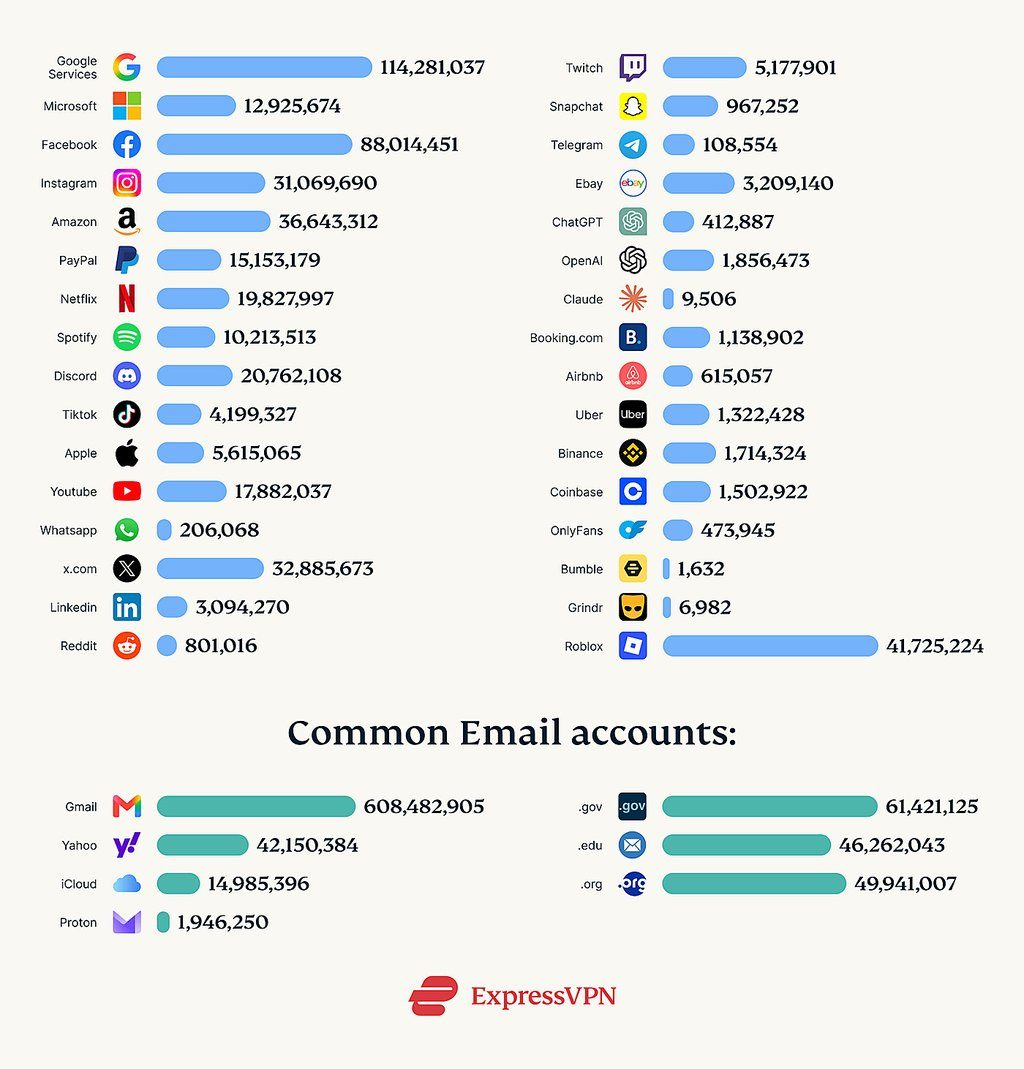
The total count of 2 billion records includes duplicates, and some accounts appeared in multiple documents. A single infected device can yield dozens of accounts and other data, and some credentials may already be expired or rotated. The most numerous exposed credentials are Gmail accounts, at 608 million records, and other Google services, at 114.3 million records.
The leak also exposes tens of millions of accounts from Facebook, Instagram, Amazon, Roblox, Yahoo, Microsoft, and X. It includes over 61 million government .gov email accounts, 46 million education .edu email accounts, and almost 50 million .org email accounts. Cybercriminals might also be exposed because the data includes thousands of Tor .onion addresses with corresponding account names and passwords.
Origins and protection advice
Fowler said this was the first time he had seen a large number of dark web accounts in breached credentials. The origins are unclear: the dataset could be used by cybercriminals underground, or it might have been accidentally left unprotected by other researchers. The researcher suspects it might have been aggregated for a criminal marketplace or other stolen data resale operation, or it could have belonged to an individual reseller or private data archivist. The server owner could not be identified, and the researcher reviewed only a limited number of samples before responsibly notifying relevant parties.
The report highlights risks from infostealer malware, keyloggers, and similar threats, including direct theft of money and cryptocurrency, account hijacking, and scams or phishing targeting victims or their contacts. Users should keep devices up to date, run only trusted software, use endpoint security solutions, and protect accounts with multi-factor authentication wherever possible. Advanced malware often shows no obvious symptoms, removal may not be enough, and attackers can still control accounts and sessions, so professional help is recommended if an infostealer infection is suspected.
Sources: Cybernews
SiTech — AI-powered web development
We build fast, modern websites and bring AI into real business workflows. Have a project or a question? We'd love to help.