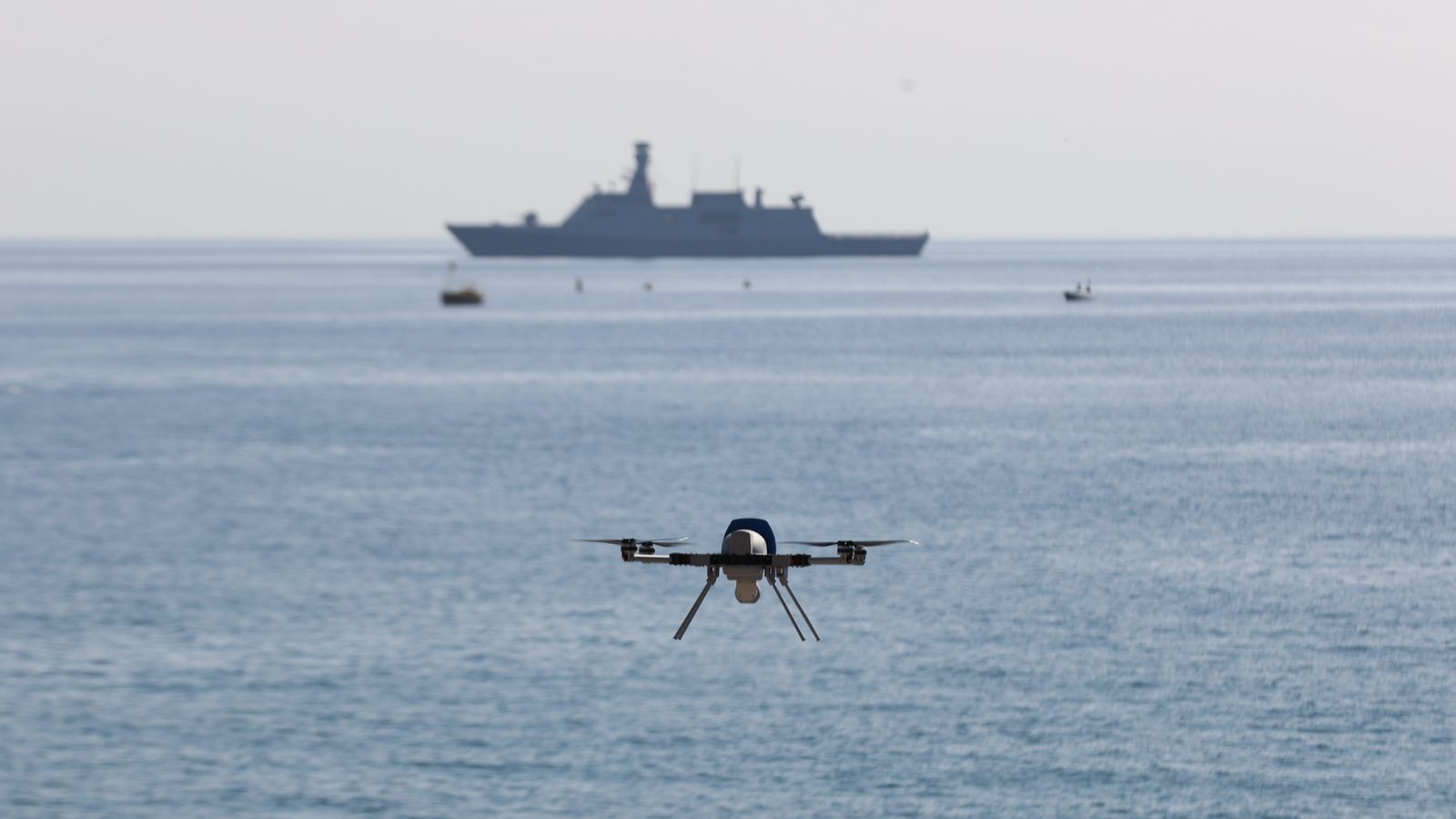
Taiwan Develops Autonomous Drone Swarms for Maritime Surveillance
Taiwan’s Ocean Affairs Council is developing autonomous drone fleets with National Cheng Kung University to counter China’s grey-zone tactics, after completing simulations of two 10-drone fleets.
Taiwan’s Ocean Affairs Council is developing an autonomous drone system that would let fleets coordinate and execute missions without human intervention, in response to grey-zone activities carried out by China. The council is working with National Cheng Kung University, which has completed simultaneous flight simulations of two drone fleets, each with 10 units. The project is intended to help Taiwan’s Coast Guard Administration counter Beijing’s grey-zone tactics in waters around the island.
Simulation progress and next steps
According to the South China Morning Post, the simulations mark the second step of the process, moving from individual aircraft control to coordination of two drone detachments. The council said the next stage would involve hardware-in-the-loop testing, prototype integration and flight trials over actual maritime areas to assess reliability under different sea and weather conditions. The researchers programmed the drones to keep a minimum separation of 100 feet in 3D space, and they are incorporating leader-follower formation flying and dynamic obstacle avoidance.
Maritime surveillance goals
The system is designed primarily for maritime surveillance. It would allow different types of drones to coordinate movements, divide tasks and plan routes. This could let Taiwan use different drone types for various missions, similar to how different air forces use different aircraft types. The project follows instances of civilian Chinese ships damaging undersea cables that Taipei relies on; the Coast Guard Administration has increased defensive patrols around 24 undersea cables and closely monitors nearly a hundred China-linked boats. Chinese research vessels continue to loiter over Taiwan-U.S. undersea cables, mimicking the activities of Russian trawlers in the Atlantic.
Drones selected for the project
The project is focusing on three Western-made drones: the Jump 20, V-BAT and Flexrotor. The Ocean Affairs Council has received the V-BAT, a VTOL drone built by U.S. defense firm Shield AI. It can take off vertically from the relatively constrained deck space of non-aircraft carrier ships and offers endurance of over 12 hours, which could suit Coast Guard operations without major ship renovations.
Sources: Tom's Hardware
SiTech — AI-powered web development
We build fast, modern websites and bring AI into real business workflows. Have a project or a question? We'd love to help.