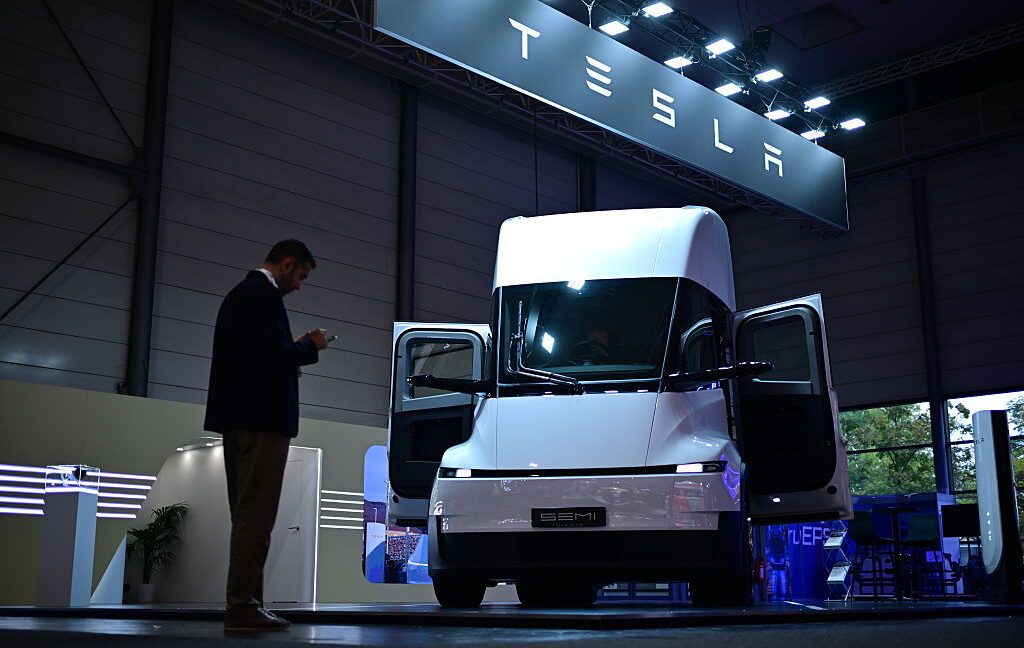
Tesla's Semi arrives, but the megawatt charging network is missing
Tesla has started volume production of the Semi electric truck, but the harder problem is charging: the company lists just two public megawatt chargers, both near Los Angeles, and plans to open 30 by the end of the year.
Tesla has put its long-awaited Semi electric truck into high-volume production at an invite-only event at its factory in Sparks, Nevada. The long-range version will travel an estimated 500 miles per charge and the standard version 325 miles, Tesla vice president of vehicle engineering Lars Moravy confirmed. For the fleet managers the company is courting, the harder question is where to charge a truck that covers hundreds of miles a day.
Charging became the central theme of the event: the Semi, shown as a concept in 2017, faces an infrastructure bottleneck rather than an autonomy one.
Two public megawatt chargers, thirty planned
Electric semis need a countrywide network of specialized megawatt chargers able to fill large batteries in hours. Tesla's website lists two such public chargers, both in the Los Angeles area; Dan Priestley, who leads the Semi program, says 30 should open by the end of the year.
The gap shows in the sales numbers. Electric trucks are nearly 30 percent of heavy-duty truck sales in China, according to state media, but the US start has been slow and electric semis cost two to three times more upfront. Competitors advertise 155 to 430 miles of range, so the Semi's 500 miles lead the field, but range only helps if there is somewhere to plug in.
Policy and diesel prices pull in opposite directions
Last year the Trump administration and Republicans cut billions in federal support for electric vehicles, and the administration is now working to lower fuel economy standards for truck engines. Heavy trucks alone account for about 7 percent of US greenhouse gas emissions.
This month diesel prices hit record highs as the Iran War keeps disrupting oil production and shipping in the Middle East, and they are up nearly double from a year earlier. In pre-taped remarks, Musk said the truck "is going to make a ton of sense economically because the cost of electricity is much less than the cost of diesel."
A record order will test the network
This week an alliance of shippers including Microsoft and PepsiCo placed a record order for 2,500 Tesla Semis, delivered from this year through the next 18 months. If the trucks reach customers, they would nearly double the number of heavy-duty electric trucks on US roads.
Meena Bibra of the nonprofit Smart Freight Centre told WIRED the group chose Tesla after "assessing price, performance, production capability, and service support." Pooling demand brought prices down. Full Self-Driving (Supervised) is not yet available on the Semi; Musk said it would debut "in the very near future."
SiTech — AI-powered web development
We build fast, modern websites and bring AI into real business workflows. Have a project or a question? We'd love to help.