Undersea Internet Cables Face Rising Sabotage Risks Amid Geopolitical Tension
Most global internet traffic still travels through subsea fiber-optic cables. A new book warns that sabotage risks are rising as international agreements weaken and suspicious anchor-dragging incidents multiply.
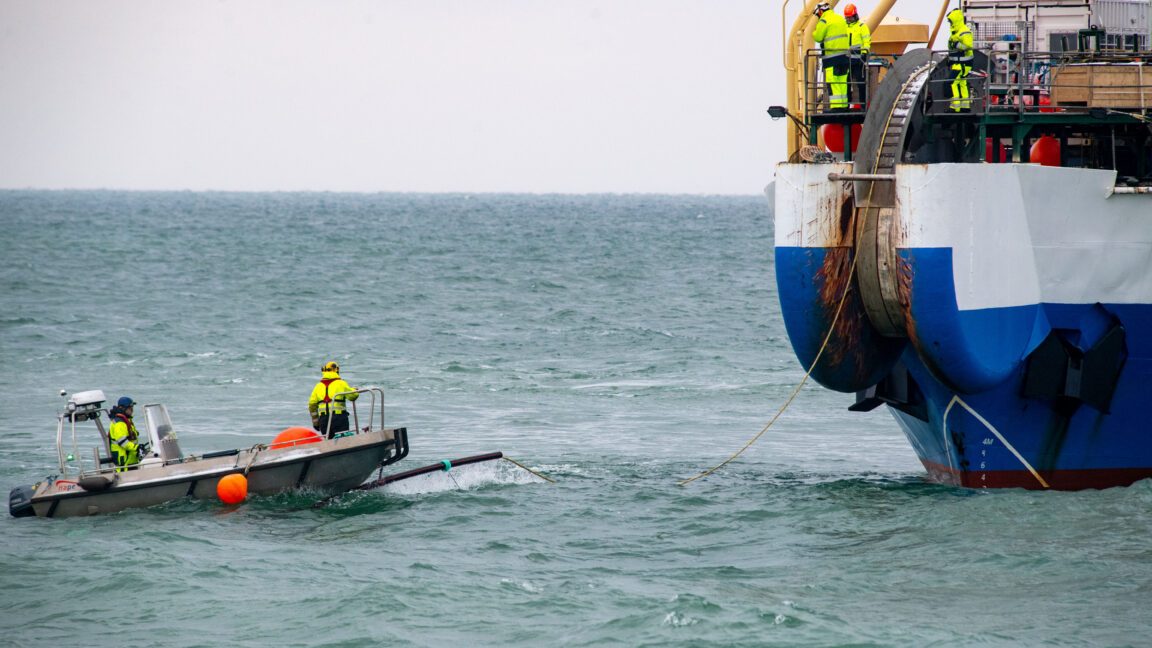
Despite the expansion of Starlink and other communications satellite services, most of the world's internet traffic still travels through subsea fiber-optic cables crisscrossing the ocean floors. Those cables coexist with oil and gas pipelines and submarine power cables, and all these crucial links now face growing sabotage risks as gray-zone warfare and open conflicts have become widespread. The rising risks are the main subject of a new book, "Undersea War," by Elisabeth Braw, a senior fellow at the Atlantic Council who leads the Threats to the Global Maritime Order Initiative.
Suspicious anchor incidents in the Baltic
About 60 percent of undersea cable damage is primarily due to human error during fishing and shipping activities, when weighted nets or anchors drag across the seabed. Natural hazards like storms and undersea landslides also account for a smaller proportion. In total, between 150 and 200 cables are damaged each year and usually repaired quickly. But international tension and open war have led to increased scrutiny of cable-cutting incidents, with governments investigating and sometimes prosecuting crews for allegedly causing deliberate damage.
One notorious incident documented in the book is the "Christmas Day massacre" of 2024, when the Russian-linked oil tanker Eagle S dragged its anchor across the seabed for about 56 miles (90 kilometers), cutting or damaging four data cables and the Estlink 2 submarine power cable connecting the Baltic and Nordic power grids. One of those data cables had also previously been severed by the Chinese cargo ship Yi Peng 3 in November 2024, when that ship damaged two data cables in the Baltic region. The Yi Peng 3 crew was not prosecuted by European authorities, whereas the Finnish government has attempted to prosecute three senior officers of the Eagle S.
On the other side of the world, the captain of the Chinese-owned ship Hong Tai was convicted by a court in Taiwan of severing an undersea telecommunications cable in February 2025 and sentenced to three years in prison in June 2025. Taiwan's legislature later amended its laws to increase penalties for intentional damage to undersea cables or pipelines and allow for up to seven years in prison.
Threats in the Strait of Hormuz and the Arctic
Iranian efforts to impose fees on operators of undersea cables running through the contested Strait of Hormuz represent another front. One third of India's westbound internet traffic goes through the Persian Gulf, illustrating how important these cables are even to countries not immediately connected. When war began, three cable projects in the region had to be suspended or abandoned because installation ships are stationary and extremely vulnerable. Companies declared force majeure.
Separately, a joint operation involving the UK, Norway, and the United States confronted Russian submarines that were practicing using a new technology to disable undersea cables in Arctic waters near Norway's Svalbard archipelago. Braw also notes that Russian and Chinese research vessels increasingly loiter around subsea cables, raising questions about what they are measuring.
Private ownership, public interest
Virtually all cables are privately owned today, typically by consortia, and hyperscalers are now building their own cables for their own traffic. This creates a clash: companies often conclude that the risk of malicious damage is smaller than the expense of adding redundant cables, while national governments would clearly want more redundancy. The only alternative is government subsidies, as happened with the Matsu Islands, but such funding is not available to create backups for every cable on the seabed.
Sources: Ars Technica
SiTech — AI-powered web development
We build fast, modern websites and bring AI into real business workflows. Have a project or a question? We'd love to help.