NASA's Venus Missions Gain Momentum as DAVINCI and VERITAS Launch Dates Move Up
NASA's DAVINCI mission to Venus is now targeting a December 2030 launch, a year earlier than planned, while VERITAS is set for November 2032. Scientists at the VEXAG meeting expressed optimism after years of budget threats.
Venus Missions Back on Track
After years of budget uncertainty, NASA's first missions to Venus in a generation are moving forward with accelerated timelines. At a meeting of the Venus Exploration Analysis Group (VEXAG) last week, scientists reported that the DAVINCI mission is now scheduled to launch in December 2030, a year earlier than previously planned, while VERITAS is funded for a November 2032 launch.
"We have some good news for Venus," said Jim Garvin, a planetary scientist at NASA's Goddard Space Flight Center and principal investigator for DAVINCI.
What the Missions Will Do
DAVINCI will send a parachute-assisted descent probe through the atmosphere of Venus, returning the first direct images of the planet's surface since 1982. The battery-powered titanium descent craft will take about an hour to travel from space to the surface, relaying all imagery and data to Earth through a radio link with the carrier spacecraft before going over the horizon. A flyby of Venus in early 2032 will set up the probe's release for descent on October 3, 2032.
VERITAS will follow with a launch in November 2032 to map the Venusian surface by radar from orbit, vastly improving on the resolution of NASA's Magellan mission, which launched in 1989 and ended in 1994. The orbiter will focus on regions with active volcanoes and arrive at Venus near the middle of 2033 for a phase of aerobraking before routine science observations begin.
A Rocky Road to Launch
The path to these launch dates was not guaranteed. Less than two years after NASA and the European Space Agency selected three Venus missions for development in June 2021, NASA officials considered canceling VERITAS amid budget pressures largely stemming from delays and cost overruns with the Psyche mission. The project survived, and NASA also pulled out of a partnership to supply a key radar instrument for ESA's Envision orbiter, which is now launching to Venus in 2032 with a European-built radar.
Ending support for Envision and canceling the Mars Sample Return mission freed up enough funding for NASA to move forward with DAVINCI and VERITAS and buy back some of their past delays. DAVINCI's launch was accelerated by 54 weeks using a low delta-V trajectory, and the revised flight plan should leave the carrier spacecraft with enough fuel to enter orbit around Venus on a later pass.
Testing and a Private Precursor
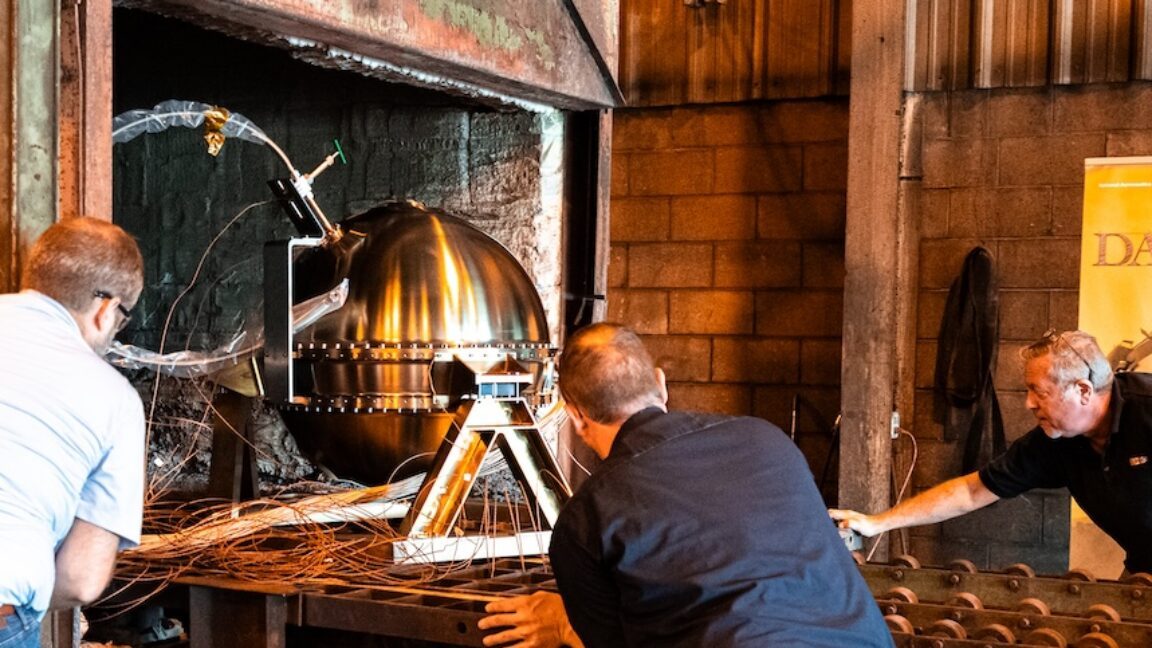
Engineers recently completed experiments showing how DAVINCI's cameras and instruments will capture data during the one-shot descent, and a prototype entry probe survived extreme temperature testing, keeping internal components below 86 degrees Fahrenheit. The Venus armada could begin as soon as late 2027, when Rocket Lab aims to launch a privately funded probe to search for signs of organic material in the planet's high-altitude clouds.
Sources: Ars Technica
SiTech — AI-powered web development
We build fast, modern websites and bring AI into real business workflows. Have a project or a question? We'd love to help.