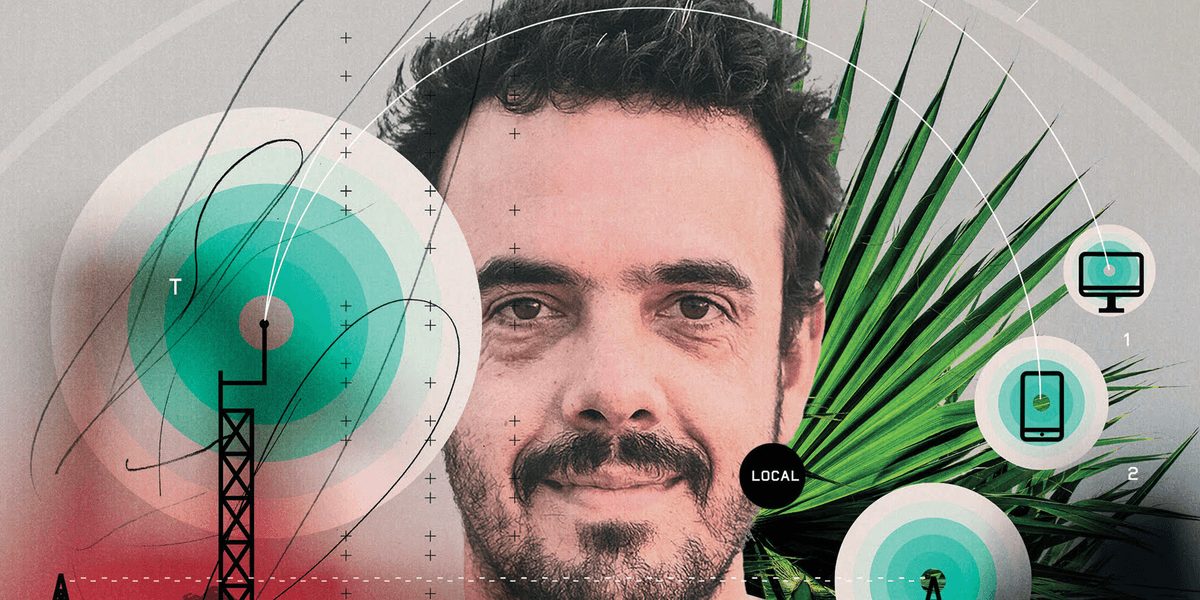
HERMES Digital Shortwave Radio Connects the World's Remotest Locations
Rhizomatica's open-source HERMES system sends files, photos and encrypted messages over HF radio, using the ionosphere instead of satellites and reaching 400–600 km links at about 20 watts.
Shortwave, rebuilt for data
Shortwave radio can link one point on Earth to almost any other with minimal infrastructure, but its digital data rates are a weak spot: on conventional equipment they are typically measured in just hundreds of bits per second. Peter Bloom, founder of the Philadelphia-based nonprofit Rhizomatica, has spent years working on that gap. His organisation has open-sourced a digital shortwave radio set called HERMES — the High-frequency Emergency and Rural Multimedia Exchange System.
The set operates in the high-frequency (HF) band from 3 to 30 megahertz, as does Mercury, its digital modem. Rhizomatica staff travel to remote locations in countries such as Bangladesh, Brazil and Ecuador, using HERMES to help locals connect with the rest of the world. Bloom discussed the project in an interview with IEEE Spectrum, published in the magazine's October 2026 issue.
The ionosphere instead of a satellite
"We use the ionosphere as our satellite — or mirror — which helps us move information, voice and data over really long distances," Bloom said. The radios are small, put out about 20 watts of power, and can pretty reliably do 400- to 600-kilometre links between two radios. The target is places that are not easy to reach and where laying terrestrial infrastructure is not simple.
HERMES is a software stack — a set of programs that work together to send data over HF. It allows you to send pretty much any file; whether it is a photo, an email or a voice memo, it is sent as a file. Bloom describes it as a data pipeline over HF.
Why files matter more than voice
According to Bloom, the value lies in what is awkward to say out loud. In emergency situations, people send their latitude and longitude over HF to say where they are. Manifests, parts lists and telemedicine requests — here is what we have, here is what we need — are far easier to send as a file than to read out over the air. The same goes for photos: evidence that an area was logged illegally can be sent over HF rather than spending days getting down the river to deliver it.
Encryption is built in but optional, switched on or off by the operator. Bloom said regulations for amateur radio operators differ from country to country, and some of Rhizomatica's partners work in sensitive areas where they do not want information to be easily captured and used against them.
A rescue in the Bay of Bengal
The clearest result so far comes from a pilot project with artisanal fishers in Bangladesh. Ten or eleven boats were fitted with HERMES systems. Pretty soon after installation, one boat had a mechanical issue in the Bay of Bengal, 100 or 200 kilometres offshore. The crew were able to send their GPS position and an SOS and to coordinate the rescue of the crew and the boat. Bloom called it a moment of HERMES in action.
SiTech — AI-powered web development
We build fast, modern websites and bring AI into real business workflows. Have a project or a question? We'd love to help.