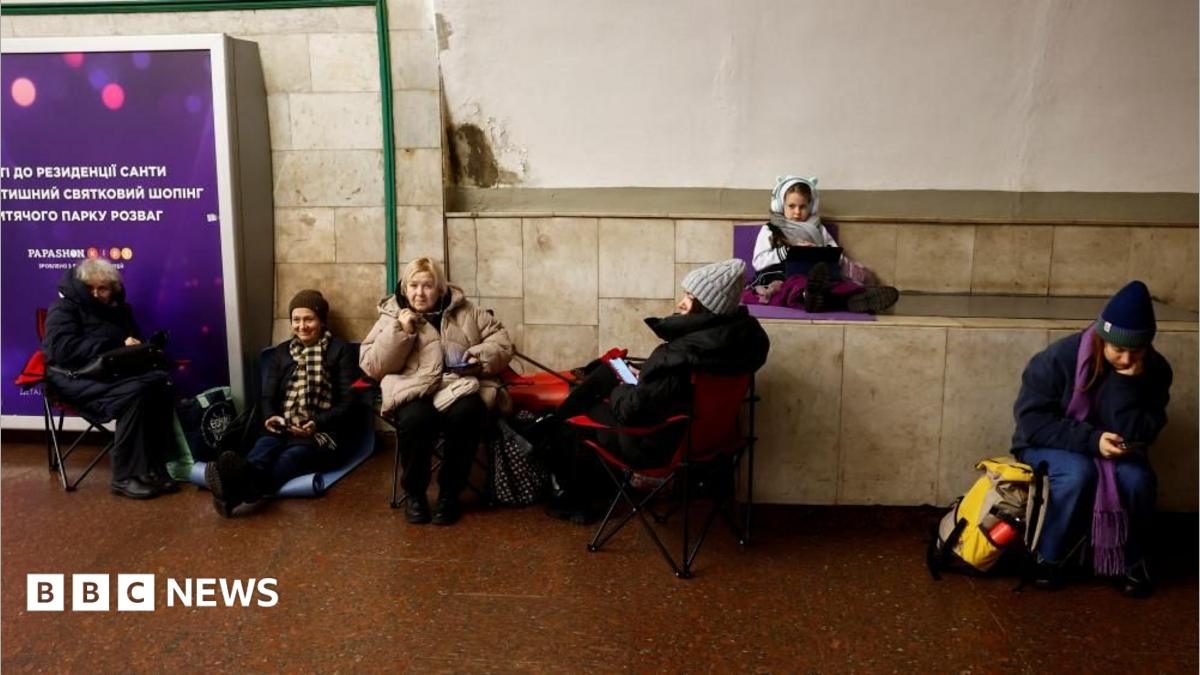
Fake nuclear warnings issued after Ukrainian and Russian air alert apps hacked
Ukraine and Russia said air alert apps were hacked on Sunday night, sending fake warnings that included nuclear attack alerts to users. Officials urged calm and said the messages were not legitimate.
Ukraine and Russia said air alert apps were hacked on Sunday night, sending fake warnings that included nuclear attack alerts to users. Officials in both countries urged calm and said the messages were not legitimate, while it remained unclear who carried out the attacks or whether the two incidents were connected.
Ukraine app disabled after fake alerts
Ukraine's widely used app sent red-level air raid warnings across the country, with additional warnings of radiation, chemical attacks and street fighting sent to some residents, including in Kyiv. The air force said on Telegram the app had probably been subjected to hostile interference and that there was no radiation threat, urging users to stay calm and follow its channel. The government temporarily disabled the app for maintenance, saying it had apparently been compromised. Stepan Tanasiychuk, who leads Ukraine's Air Raid Alert project, said on Monday the app was gradually being restored, with new yellow and red alert levels available on the map. The fake messages were written in Russian, which would have alerted many users to the fact they were not legitimate.
Russian app also targeted
A few hours later, Russian authorities said a similar app had been hacked after fake alerts, some containing foul language, were triggered. The government said the app was targeted by a massive cyberattack that sent fake information to the public. A purported screenshot shared on Telegram by Atesh, a partisan Ukrainian group operating inside Russian-held territory, warned some users that nuclear warheads mounted on P1-Suns, described as a Ukrainian attack drone, had been launched at all regions of Russia. The alert included profanities and opened with a message telling residents there was a risk of things getting lively, telling them to stock up urgently on food for three weeks and hide. On Monday morning there was no sense the messages caused widespread panic in Russia and the incident was not being prominently featured on media outlets.
Officials and experts respond
Herbert Lin, senior research scholar for cyber policy and security at Stanford University, told BBC World Service's Newsday programme it was the first time it had happened to an official Ukrainian information app, but that he suspected it would not be the last. Oleksander Merezhko, chair of the foreign affairs committee in the Ukrainian parliament, told the BBC the attack did not cause panic or extreme reaction. He said Ukrainians, especially in Kyiv, were used to practically non-stop alerts, and that the Russian language of the message immediately aroused suspicions. Merezhko said it was an unpleasant fact but part of cyber war, and that people in Ukraine were prepared for such possibilities. Kremlin spokesman Dmitry Peskov did not address the breach specifically but said all Russian government internet resources were under constant cyberattacks, including the presidential site, which is targeted round the clock. He said the proliferation of AI technology was contributing to an increase in cyberattacks.
Kherson ceasefire context
The alerts in Ukraine were sent minutes before the end of a localised ceasefire in Ukraine's front-line Kherson region, which was implemented last Tuesday. Fighting continued elsewhere while the Kherson ceasefire was in place, which was brokered in part by US First Lady Melania Trump to allow civilians to evacuate the Russian-occupied city of Oleshky. Russia launched a full-scale invasion of Ukraine in February 2022.
Sources: BBC · CNN · NBC News · Al Jazeera
SiTech — AI-powered web development
We build fast, modern websites and bring AI into real business workflows. Have a project or a question? We'd love to help.