ULA Plans Vulcan Return to Flight on November 13 With Amazon Leo Satellites
United Launch Alliance plans to return Vulcan to flight on November 13, launching 40 Amazon Leo satellites from Cape Canaveral. The mission follows solid rocket booster nozzle failures on two earlier Vulcan flights.
United Launch Alliance plans to return its Vulcan rocket to flight on November 13, launching 40 satellites for Amazon Leo from Cape Canaveral Space Force Station in Florida. The mission is the first of 38 Vulcan flights Amazon has booked for its broadband constellation and is pending range approval. It follows nozzle failures on solid rocket boosters during two of Vulcan's first four missions, most recently in February.
Booster anomaly and improvements
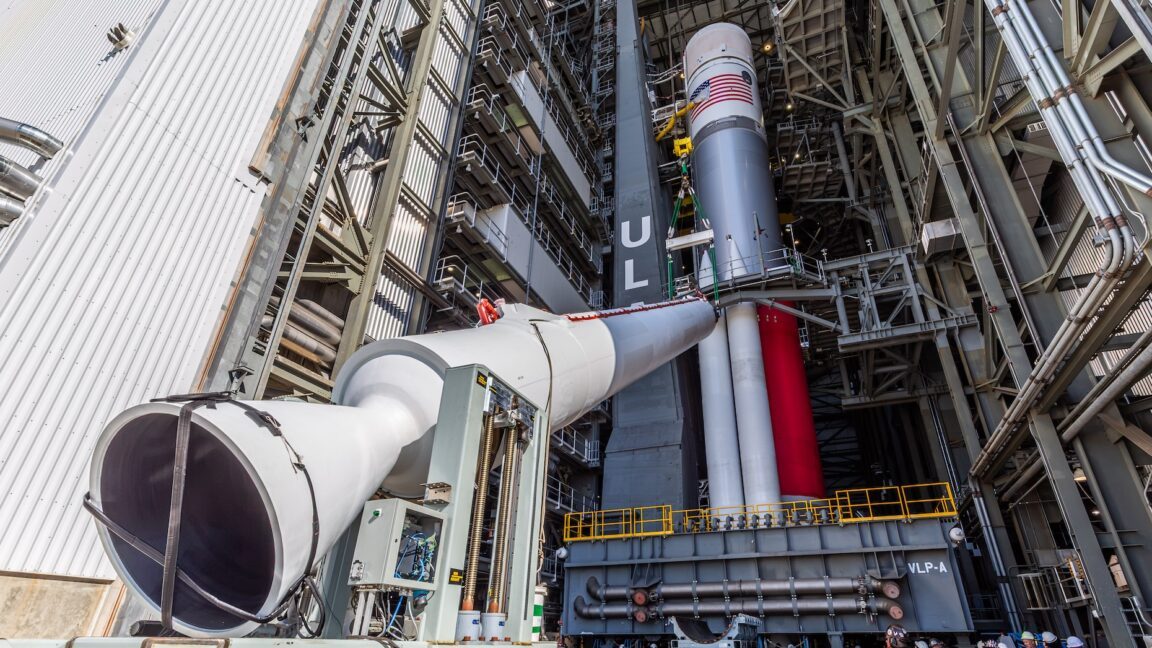
ULA said engineers "made great strides" in understanding the February booster anomaly and identified several potential contributors. The company said those issues were mitigated through design and process improvements to the nozzle, and the upcoming launch will use the improved nozzle design while testing and analysis continue in parallel. ULA and booster manufacturer Northrop Grumman have not publicly identified the root cause of the February malfunction. Investigators blamed the first 2024 occurrence on a manufacturing defect in an insulator meant to protect the nozzle's metallic structure from superheated exhaust.
National security confidence
The launch is important for ULA because the US Space Force, its primary customer, lost confidence in Vulcan after the nozzle failures, even though the rocket completed both affected missions. The Pentagon has entrusted Vulcan with roughly half of its major launches through the early 2030s. The Space Force certified the rocket for national security launches in 2025 and flew two missions on Vulcan before grounding it after the February booster incident. ULA is a 50-50 joint venture between Boeing and Lockheed Martin, and the Space Force is counting on it to deliver a backlog of military communications, navigation, missile warning, and surveillance satellites. Brig. Gen. Eric Zarybnisky said the military wants data from commercial Vulcan flights before clearing ULA to resume national security launches, with at least two Amazon Leo missions expected before another national security flight, perhaps early next year. "Those flights will have a significant number of solids," Zarybnisky said.
Mission swaps and launch manifest
Because of ULA delays, the Space Force moved six missions from Vulcan to SpaceX Falcon 9 and Falcon Heavy rockets, while ULA received six future missions originally assigned to SpaceX. The swaps included three GPS satellites moved off Vulcan for launches last year and earlier this year on Falcon 9 rockets, one launch for the Space Development Agency, the Air Force Research Laboratory's Oracle-M lunar mission, and a large strategic missile warning satellite. The Oracle-M mission will now fly on Falcon Heavy instead of Vulcan, which will receive a future SpaceX-assigned launch in compensation, and the missile warning satellite moved from Vulcan to Falcon Heavy. A Space Systems Command spokesperson said the swaps were executed with support from both launch providers to help deliver capabilities to the warfighter.
New hardware on the flight
The November mission will be the first Vulcan flight with a full complement of six solid rocket boosters. It will also debut an extended payload fairing and a shortened Centaur upper stage optimized for low-Earth orbit missions. The extended fairing brings the rocket's total height to 221 feet (67.4 meters). ULA says the Vulcan rocket is fully stacked with 40 Amazon Leo satellites in its payload fairing.
Sources: Ars Technica
SiTech — AI-powered web development
We build fast, modern websites and bring AI into real business workflows. Have a project or a question? We'd love to help.